
The technical challenges encountered during the July heatwave underscore the inherent unpredictability of managing a complex, state-wide electrical network. During a period of intense atmospheric heat, New York’s power infrastructure was pushed to its absolute limits, revealing vulnerabilities that had been theorized but not yet fully experienced in such a concentrated timeframe. Earlier in the operational cycle, the New York Independent System Operator had identified a precarious narrowing of the reliability margin, prompting a highly scrutinized decision to extend the operational life of several aging fossil fuel-fired generators. These “peaker” plants were originally slated for decommissioning to meet environmental targets, but the planners argued that the incoming renewable supply was not yet robust enough to handle peak summer loads. This debate highlighted a fundamental friction between the desire for rapid decarbonization and the objective physical requirement to keep the lights on during extreme weather conditions.
The Impact of Unforeseen Infrastructure Failures
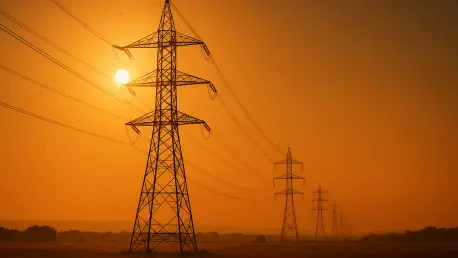
The necessity of maintaining older generation assets became strikingly clear when the Champlain Hudson Power Express, a centerpiece of the state’s clean energy strategy, experienced significant and unexpected outages during the height of the heatwave. This transmission line, designed to funnel vast amounts of Canadian hydropower into the high-demand environment of New York City, was expected to be a primary pillar of the summer reliability plan. However, the system’s failure to deliver its full rated capacity coincided with several other localized generator malfunctions, creating a perfect storm of supply constraints. Had the independent system operator followed the more aggressive decommissioning schedule suggested by external policy advocates, the state would have faced a catastrophic shortfall in available power. The situation demonstrated that even the most advanced technological solutions are subject to technical glitches and environmental stressors that cannot always be predicted by software models.
Beyond the failure of specific high-capacity lines, the heatwave highlighted a broader issue regarding the reliability of new energy imports versus localized generation. During the peak stress hours of the July event, the margin of safety for the entire state narrowed to nearly zero, requiring immediate intervention from grid operators to prevent cascading blackouts. This incident served as a potent validation of the “prudent conservatism” philosophy, which prioritizes the stability of the bulk power system over the achievement of timeline-based policy goals. The reliance on optimistic completion dates for new infrastructure projects often ignores the practical realities of construction delays and technical integration hurdles. By accounting for a worst-case scenario where new projects might underperform, the independent planners were able to secure enough reserve capacity to absorb the impact of the outages and subsequent generator trips, ensuring that public safety and economic activity remained largely uninterrupted.
Strategic Imperatives: Lessons From the Heatwave
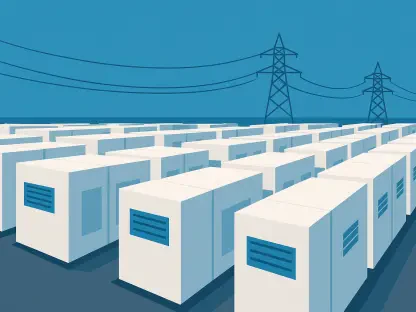
Moving forward from 2026 to 2028, the focus must shift toward a massive acceleration in both transmission expansion and the deployment of long-duration energy storage systems. While the temporary retention of older fossil fuel plants provided a necessary bridge during the recent crisis, it is not a sustainable long-term strategy for a state committed to deep decarbonization. To replace these units without compromising reliability, the industry must prioritize the development of physical infrastructure that can move power from remote renewable sites to urban centers more efficiently. Furthermore, the integration of smart grid technologies and demand-response programs will play a larger role in smoothing out the consumption spikes that occur during heatwaves. These technical solutions require significant capital investment and a streamlined regulatory environment that allows for faster project approval. Ensuring that the independent operator remains the primary arbiter of these needs will be essential for maintaining a coherent and functional state-wide strategy.
The resolution of the July energy crisis provided a clear roadmap for the necessary evolution of New York’s power landscape. It was established that the immediate investment in grid resilience was a non-negotiable prerequisite for a successful energy transition. The planners successfully demonstrated that a conservative approach to retiring older assets was the only factor that prevented a state-wide emergency. Consequently, the state began to prioritize the construction of new high-voltage lines and the incentivization of storage projects that offered more than four hours of capacity. The incident also confirmed that an independent oversight model was the most effective way to safeguard the interests of consumers against both market volatility and political short-sightedness. By emphasizing data-driven planning over optimistic forecasting, the system avoided a catastrophe and instead created a precedent for how to manage the complex transition to a carbon-free future without sacrificing the stability of the electrical supply.