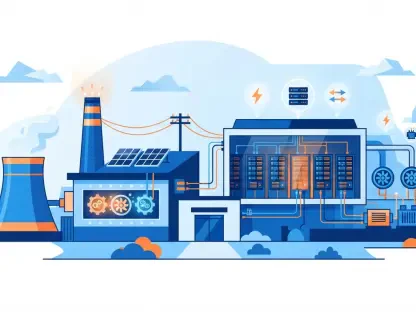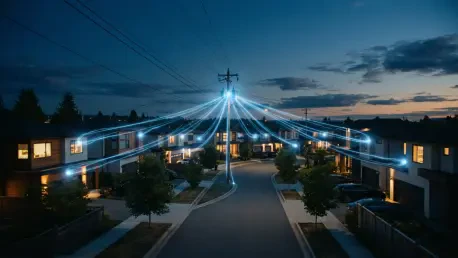

Research from the Lawrence Berkeley National Laboratory confirms that smart HVAC control and residential load data provide substantial and reliable demand response. This finding emerges at a pivotal moment as the national power infrastructure grapples with an unprecedented surge in demand driven by the rapid expansion of artificial intelligence data centers and the widespread adoption of electric vehicles. While utilities have invested heavily in hardware-based solutions, such as advanced sensors and modern metering systems, the underlying fragility of the grid persists. The traditional focus has largely been on building a bigger pipe, yet the missing component remains the active engagement of the end-user. By failing to integrate the human element into real-time management, operators are missing out on a dynamic resource that can buffer the system against extreme weather and peak volatility. Stabilizing the network requires a shift from viewing residents as passive bill-payers to seeing them as essential grid participants.
The Strategic Shift: Redefining the Customer as a Grid Asset
Transitioning from a purely technical mindset to a behavioral one requires a complete overhaul of the utility business model. Historically, consumer interaction was delegated to customer service departments, focusing on administrative tasks or basic outreach. However, the modern regulatory landscape, exemplified by frameworks like Texas House Bill 2555, is forcing a shift toward comprehensive System Resiliency Plans. These strategies recognize that human responsiveness is not just a marketing goal but a core operational input that must be quantified and dispatched. When thousands of households adjust their thermostats or delay appliance use, they act as a collective shock absorber for the distribution network. This behavioral layer provides a level of immediate flexibility that physical infrastructure upgrades, which often take years to permit and build, simply cannot match. Integrating this human resource into the daily dispatch routine creates a more robust defense against sudden spikes.
This behavioral approach serves as the essential human interface that allows technical innovations like Virtual Power Plants to reach their full potential. While a VPP focuses on the automated aggregation of batteries, smart thermostats, and solar inverters, the behavioral layer addresses the human decision-making process that governs asset availability. For instance, an automated system might attempt to throttle an air conditioner, but if the resident finds the temperature uncomfortable, they will manually override the setting, negating the grid benefit. By aligning human motivation with technical requirements, utilities can ensure that these distributed resources remain available when the grid needs them most. This synergy between human habit and hardware automation transforms the residential sector into a reliable energy reservoir. Instead of struggling against consumer preferences, grid operators can leverage them to create a dynamic, two-way relationship that enhances overall system reliability.
Engagement Tactics: Operationalizing Human Behavior through Incentives
To successfully transform the consumer into a functional grid asset, utilities must bridge the significant gap between distribution engineering and daily human habits. One of the most persistent failures in current grid management is the reliance on technical jargon that alienates the average resident. Concepts like feeder loading, partial discharge, or reactive power are meaningless to the general public and fail to inspire action. The solution lies in translating these engineering constraints into clear, mission-based objectives that resonate with local communities. Effective operationalization requires a strategy known as incentive stacking, which moves beyond simple bill credits. Relying on a single motivator is rarely enough to sustain long-term engagement during multiple peak events. Instead, utilities should combine immediate economic rewards with broader social proofing and civic identity, making energy conservation a shared community goal that provides both personal and collective benefits.
Borrowing successful tactics from the digital health and fitness industries can provide a roadmap for maintaining high levels of consumer participation. Gamification techniques, such as the use of digital badges, status tiers, and visual progress tracking, have proven effective at turning complex tasks into rewarding habits. For example, just as smartwatches use activity rings to encourage physical health, utilities can deploy localized grid-health indicators on mobile apps to trigger an emotional impulse for conservation. When a resident sees their neighborhood’s energy status moving into a critical zone, they are more likely to participate in a “save the grid” challenge. By creating a sense of urgency and accomplishment, these digital tools turn a mundane utility relationship into an interactive experience. This approach fosters a deeper sense of responsibility, ensuring that when the call for demand response goes out, the response is not technical, but a conscious participation by a motivated population.
The Technical Backbone: Bridging the IT and OT Divide
The transition to a behavior-based grid requires a robust technological foundation that unifies Information Technology and Operational Technology. For years, these two departments operated in silos, with data scientists and field engineers rarely sharing insights. Bridging these environments is now essential for converting raw grid data into actionable signals that consumers can understand. Modern utilities are deploying scalable data integration infrastructures, including cloud computing and edge processing, to manage the massive influx of information from smart appliances and meters. This technical backbone allows for the creation of Grid-Interactive Efficient Buildings, which the U.S. Department of Energy now classifies as formal energy resources. By streamlining the flow of data from the distribution transformer all the way to the customer’s smartphone, utilities can create a seamless feedback loop. This connectivity ensures that behavioral interventions are based on real-time network conditions rather than vague estimates.
Deployment of physics-based digital twins and AI-driven forecasting models provides grid operators with a precise view of upcoming network stress. When these digital models are combined with high-resolution climatological data, operators can achieve circuit-level forecasting up to five days in advance. This predictive capability allows utilities to move from a reactive posture, where they only respond to emergencies, to a proactive managed state. Instead of issuing broad, city-wide alerts that residents eventually ignore, operators can send highly targeted behavioral challenges to specific neighborhoods where transformers are reaching their thermal limits. This precision targeting prevents alert fatigue and ensures that consumer action is requested only when and where it is truly needed. By utilizing artificial intelligence to analyze usage patterns alongside real-time sensing data, utilities can anticipate the human response to specific incentives, allowing them to fine-tune their strategies for maximum impact.
Resilience and Security: Future Considerations for Grid Management
The analysis of current grid trends determined that technical infrastructure alone could not secure the distribution networks of the future. It was concluded that utility leaders had to stop viewing behavioral strategies as elective marketing programs and start recognizing them as hard operational necessities. This shift required unprecedented collaboration between engineering teams and customer experience units to ensure that human behavior became a dispatchable resource. Furthermore, as the grid became more digitized and dependent on sensitive consumer data, the implementation of zero-trust access controls and high-level encryption was established as a paramount security priority. Protecting the integrity of communication signals was found to be just as vital as maintaining the physical wires. Moving forward, the industry prepared to adopt a dual mandate where physical hardening and behavioral flexibility worked in tandem. These actions represented a viable path toward a resilient energy ecosystem.
To ensure these behavioral strategies remained effective, utilities prioritized the development of transparent data-sharing protocols that built trust with their communities. It was observed that when residents understood how their data contributed to local stability, participation rates increased significantly. Organizations also invested in workforce retraining, ensuring that grid operators possessed the skills to manage both hardware assets and human-centric demand signals. By integrating these disparate elements into a unified management strategy, the energy sector successfully moved beyond the limitations of legacy infrastructure. The focus shifted toward creating a circular energy economy where the consumer was no longer the end of the line, but a vital partner in the regulation of power. These systemic changes ultimately secured a more reliable path for the integration of renewable energy and the expansion of heavy industrial loads, ensuring the lights stayed on during the most challenging conditions.