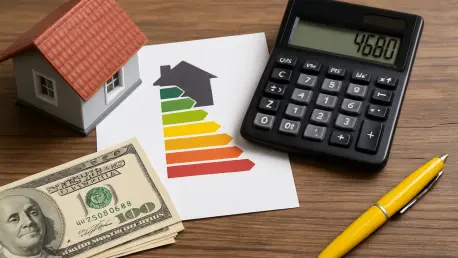

Current environmental mandates require landlords to achieve a rating of C within the next six years, making the identification of affordable and realistic upgrade paths a top priority. As the calendar moves further into 2026, the urgency for property owners in England and Wales to align with these stringent efficiency standards has become a defining characteristic of the housing market. The private rental sector faces a complex transition, primarily driven by the upcoming deadline of October 1, 2030, which necessitates a substantial overhaul of energy performance across thousands of homes. For many landlords, the primary obstacle has not been a lack of willingness to participate in environmental stewardship, but rather a significant lack of clarity regarding the most effective financial investments. Navigating the various paths to an Energy Performance Certificate rating of C often involves wading through dense technical requirements and unpredictable contractor quotes, leaving many to wonder if the mandated investment cap of £10,000 will be enough to achieve the required results without compromising their long-term financial stability.
Navigating the Technical Landscape: Strategies for Residential Retrofitting
Advanced Geospatial DatThe Foundation of Property Modeling
The centerpiece of this newly established technological initiative is the Kamma Climate Property Upgrade Tool, a sophisticated digital resource designed to simplify complex retrofit decisions. By utilizing advanced geospatial data, the platform allows members of the National Residential Landlords Association to generate property-specific upgrade plans in under two minutes. This rapid analysis provides a radical departure from traditional methods, which often required expensive and time-consuming manual surveys just to begin the planning phase. The tool functions by cross-referencing vast databases of building characteristics with current energy efficiency metrics, offering a customized roadmap for each individual dwelling. This level of precision ensures that property owners are not merely guessing which improvements—be it solar panels, heat pumps, or advanced insulation—will yield the highest impact on their rating. Instead, they are presented with a data-backed strategy that prioritizes the most efficient upgrades first, allowing for a more logical and structured approach to compliance.
Practical Economic Insights: Cost-Benefit Analysis of Improvements
Beyond providing technical clarity, the collaboration has yielded significant insights into the actual costs associated with reaching higher efficiency standards. While the government-imposed investment cap of £10,000 remains a significant concern for many, data from Kamma Climate suggests that the financial burden may be far lower than initially anticipated for the average property. Their optimization technology has identified that the average cost of necessary improvements can often be reduced to approximately £4,500 when the upgrades are selected based on specific building characteristics rather than generic recommendations. This finding is critical because it challenges the prevailing narrative that energy compliance must be prohibitively expensive for small-scale landlords. By avoiding unnecessary or ineffective expenditures through better planning, landlords can preserve their capital while still meeting the rigorous requirements of the 2030 mandate. This transition from a fear-based investment model to a data-driven strategy allows for a much more sustainable evolution of the housing stock.
Strengthening Operational Viability: Support for Private Landlords
Expert Guidance: Strategic Integration of Professional Consultations
Supporting these digital tools are tangible financial incentives and professional services that facilitate the physical implementation of property upgrades. The National Residential Landlords Association has leveraged its significant membership base of over 111,000 individuals to secure specific benefits, including a 5% discount on comprehensive in-person retrofit assessments. These assessments are vital because they bridge the gap between digital modeling and the physical realities of older construction, ensuring that the theoretical plans generated by the tool are practically feasible. Furthermore, the partnership provides access to free consultations with local specialists who can navigate the complexities of contractor quotes and identify potential grant funding opportunities. This multi-layered support system addresses both the financial and technical anxieties of landlords, providing a safety net for those who might otherwise feel overwhelmed by the process. By connecting owners with verified experts, the program effectively reduces the risk of substandard work and ensures every pound spent is a direct investment.
Long-Term Outlook: Future Perspectives on Sustainable Management
This strategic alliance successfully transformed the challenge of environmental compliance into a manageable roadmap for property management in 2026. By integrating high-level geospatial data with the practical needs of the rental market, the initiative removed the ambiguity that previously stalled progress on energy efficiency. Landlords moved away from reactive, last-minute decision-making and instead adopted a proactive approach that protected both their investments and their tenants’ comfort. The resulting framework provided a clear set of actionable steps: owners first utilized the digital tool for rapid assessment, then refined those findings through discounted professional consultations to secure the most cost-effective quotes. This methodology not only ensured that the 2030 targets remained within reach but also fostered a more resilient housing sector where utility costs were lower and property values were stabilized. Ultimately, the focus shifted from simple compliance to the long-term enhancement of the living environment, proving that environmental goals and financial viability could coexist through intelligent cooperation and technological innovation.