
The relentless appetite of artificial intelligence and high-density computing is forcing a radical reimagining of how the United States generates and transmits electricity to its most power-hungry regions. As digital infrastructure consumes an ever-larger slice of the national energy pie, utilities are under immense pressure to expand capacity without abandoning their environmental commitments. This shift has culminated in a monumental financial pivot that seeks to bridge the gap between the carbon-free goals of the future and the immediate, staggering demands of the silicon-based economy.
Xcel Energy’s updated capital investment strategy represents a definitive answer to this modern challenge, earmarking $70 billion for a comprehensive five-year roadmap. This figure marks a 17% increase over previous projections, reflecting a broader industrial trend where keeping the lights on is no longer just about maintenance, but about a total grid reconstruction. The plan is a high-stakes bet on the ability of renewable energy and modernized transmission to sustain the rapid expansion of data centers while protecting the interests of everyday residential consumers.
The Massive Expansion: Rebuilding the American Power Grid
The decision to increase capital spending by $10 billion highlights a transformative era for the utility sector, where traditional growth models are being eclipsed by the needs of an AI-driven society. This $70 billion roadmap is not merely a budgetary adjustment; it is an aggressive financial commitment to ensure the American power grid does not become a bottleneck for technological progress. By prioritizing this scale of investment, Xcel aims to transition from a period of incremental grid updates to one of fundamental structural evolution.
This massive expansion is a response to a utility landscape that has changed more in the last few years than in the previous several decades. As the digital economy matures, the demand for electricity is growing at a rate that necessitates a front-loaded investment strategy. The focus remains squarely on building a more resilient and flexible network that can handle the massive influx of energy-intensive projects while maintaining the stability that urban and rural communities rely on for their daily lives.
Navigating the Intersection: Clean Energy and Data Demands
As the data center boom continues to accelerate, the utility sector faces a dual-pronged mandate that is as complex as it is vital. Xcel must harmonize the urgent need for new power with ambitious carbon-free goals, ensuring that the energy supporting our digital lives remains both sustainable and affordable. This requires a sophisticated approach to grid management where the integration of high-growth industrial loads does not derail the long-term objective of a cleaner energy mix.
Furthermore, this strategy must account for the increasing frequency of climate-driven threats that pose a direct risk to infrastructure. Modernizing the grid means more than just adding wires; it involves building a system that is resilient against extreme weather events and potential wildfires. By addressing these challenges simultaneously, the utility is attempting to create a template for how large-scale energy providers can serve the tech industry while fulfilling their fundamental duty to the public and the environment.
Breaking Down the Plan: A $70 Billion Infrastructure Overhaul
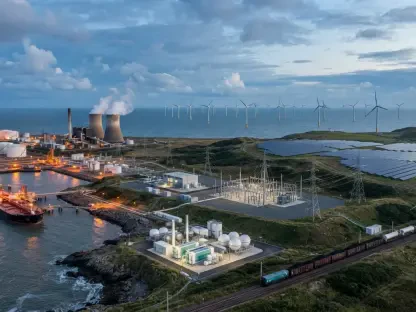
The heart of this investment is a massive overhaul of energy production and delivery systems designed to accommodate a staggering 25 GW project pipeline. To build a renewable energy backbone, the utility has allocated $21.7 billion toward the development of 9.2 GW of clean generation and 2.3 GW of storage capacity. This mix is intended to maximize carbon reduction while providing the raw power needed by emerging industrial hubs that operate around the clock.
To ensure the grid remains stable even when the wind isn’t blowing or the sun isn’t shining, the plan integrates 3.3 GW of natural gas generation as a critical firm capacity backup. This is complemented by the construction of 2,400 miles of new high-voltage transmission lines, which are essential for transporting clean energy from remote generation sites to the urban data hubs where it is needed most. Additionally, $4 billion has been dedicated specifically to wildfire mitigation to safeguard these new assets and the communities they serve.
Financial Resilience: Expert Insights and Industry Performance
This ambitious expansion is fueled by a period of significant financial strength, characterized by an 83% jump in net income that reached $960 million in a single quarter. Industry analysts point to favorable weather conditions and successful rate cases in Minnesota and Colorado as the primary engines providing the liquidity for such a large-scale scale-up. These revenue drivers have allowed the company to move forward with confidence, even as the cost of infrastructure development continues to rise across the national utility market.
However, funding a $70 billion roadmap requires a complex balancing of debt and equity, with the utility planning to utilize $26 billion in new debt and $8 billion in equity. While managing this capital infusion, the company is also navigating the legal complexities of historical fire settlements and strategic asset divestments. By selling off non-core assets, the utility is sharpening its focus on high-growth regional markets where the demand for clean, reliable power is most concentrated.
Sustainable Development: Strategies for Responsible Growth
To ensure long-term viability, Xcel is implementing a “no subsidy” principle to protect its existing customer base from the costs of this rapid expansion. This framework ensures that the infrastructure required for massive data centers is funded by the industrial entities themselves, rather than through the monthly bills of residential families. By setting clear contracting standards, the utility aims to foster a development environment that is both fair and sustainable for all stakeholders involved in the energy transition.
The timeline for these projects is equally aggressive, with a target to meet 4 GW of data center capacity by late 2027 through streamlined procurement and faster development cycles. This shift toward regional clean energy hubs allows for a more efficient allocation of resources and reduces the long-term operational costs associated with traditional grid models. These strategies collectively ensure that the digital boom provides an economic benefit to the region without compromising the affordability of essential services.
The 2026 roadmap established a definitive blueprint for how modern utilities managed the collision of technological necessity and environmental duty. Stakeholders prioritized a tiered investment strategy that decoupled residential costs from industrial growth, ensuring that the expansion of the digital economy remained equitable. The integration of high-capacity transmission lines successfully moved the focus toward regional hubs, which maximized the efficiency of the renewable energy transition. This proactive approach provided the necessary infrastructure to sustain the data boom while reinforcing the resilience of the national power grid against external threats.