
The American energy landscape is currently undergoing its most significant transformation in nearly half a century as the demand for electricity, which remained largely stagnant for decades, suddenly surges to meet the voracious needs of artificial intelligence. This shift is not merely a matter of adding more generation; it represents a fundamental change in how the grid operates and how large-scale consumers interact with public infrastructure. As data centers expand at an unprecedented rate, the traditional model of providing a steady, uninterrupted flow of power is being challenged by the necessity of grid reliability. This has led to a critical negotiation between utility providers and technology firms, where the focus has moved toward load flexibility as the primary solution for keeping the lights on while fostering innovation. By adjusting power consumption in real-time, data centers can serve as a buffer for the grid, allowing for a more resilient system that can handle the intermittent nature of renewable energy sources and the sheer volume of new digital demand. This collaborative approach marks a departure from the historical customer-provider relationship, turning these massive facilities into active participants in national energy security and efficiency. Recent federal mandates have further solidified this trend, emphasizing that the ability to provide flexibility is no longer a secondary benefit but a necessary component for any large-scale connection to the modern power grid.
Navigating the Economic Landscape: Growth and Public Utility Pressures
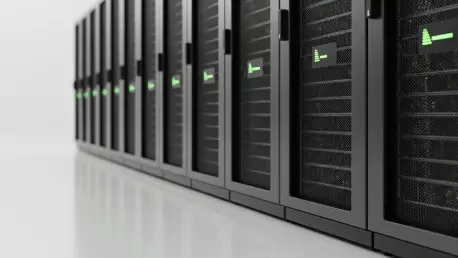
The financial scale of the current technological expansion is almost difficult to comprehend, with major cloud service providers reporting annual revenue growth exceeding sixty percent as they race to build out the hardware required for generative artificial intelligence. This rapid scaling has placed an immense burden on the physical infrastructure of the United States, as the sheer volume of electricity required to cool and power these massive server farms continues to climb. Projections indicate that if current trends persist, data centers could account for nearly one-fifth of the entire nation’s electricity consumption within the next few years. Such a drastic increase in demand naturally creates friction with local communities and regulators who are concerned about the long-term impacts on the energy market. There is a persistent fear that the massive capital expenditures required to build new power plants, substations, and high-voltage transmission lines will be passed down to everyday residential consumers in the form of higher monthly utility bills. This tension has forced a reevaluation of how these facilities are integrated into the community, pushing for solutions that can mitigate the financial risks associated with such a fast-paced industrial buildup.
Fortunately, recent research into the economic impacts of load flexibility suggests that the presence of large, adaptable energy users can actually be a benefit to local economies rather than a drain. When a data center agrees to reduce its power consumption during periods of peak demand, it helps the utility avoid the need to activate expensive and often less efficient “peaker” plants that only run a few hours a year. By smoothing out these peaks, the overall cost of operating the grid decreases, which can lead to lower electricity rates for all participants in the market. This creates a symbiotic environment where the data center gains the “speed to power” it needs to remain competitive, while the utility gains a powerful tool for managing the daily and seasonal fluctuations of the energy supply. The move toward flexible power models is therefore not just a technical necessity but a fiscal strategy aimed at protecting ratepayers and ensuring that the digital revolution does not come at the expense of energy affordability. As more operators adopt these flexible strategies, the narrative around data centers is shifting from one of environmental and economic concern to one of partnership and regional stability.
Categorizing Response: The FlexMosaic Framework and Technical Standards
To move beyond theoretical discussions and into the practical implementation of energy management, the industry has turned to standardized frameworks such as the FlexMosaic system developed by the Electric Power Research Institute. This framework is essential because it provides a common language for both utility engineers and data center operators to describe exactly how much power can be adjusted and how quickly that change can occur. FlexMosaic categorizes load flexibility into five distinct classes, ranging from basic emergency responses during extreme weather events to highly sophisticated, second-by-second frequency stabilization. In the latter case, data centers act as a stabilizer for the entire grid, making tiny adjustments to their power draw to keep the electrical frequency at exactly sixty hertz, which is vital for preventing equipment damage and large-scale blackouts. Having these clearly defined categories allows for more transparent contracts, as utilities can now request specific types of “flexibility products” that match their immediate operational needs. This standardization is a crucial step in moving away from ad-hoc agreements toward a more mature and predictable energy market that treats computational load as a fungible resource.
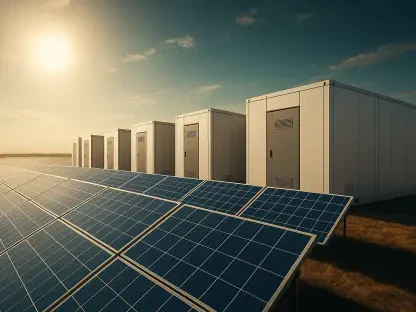
The actual execution of this flexibility relies on three primary technological pillars within the data center environment: workload management, cooling system adjustments, and the strategic use of onsite energy assets. Workload management involves shifting non-critical tasks—such as back-office data processing or the training of large language models—to times when electricity is more abundant or the grid is less stressed. Cooling systems, which represent a significant portion of a facility’s total energy draw, can also be modulated by allowing temperatures to rise slightly within safe operational bounds for short periods. Furthermore, the integration of onsite battery storage and backup generators allows a facility to maintain its digital operations while drastically reducing the amount of power it pulls from the public grid. When these three pillars are orchestrated effectively, a data center can provide a predictable and reliable response to grid stress without any interruption to the services provided to its customers. This level of technical sophistication ensures that the data center remains a high-performance environment while simultaneously serving as a critical asset for the regional utility provider, bridging the gap between digital ambition and physical reality.
Redefining Workloads: Artificial Intelligence as a Virtual Battery
The traditional perception of data centers as static, always-on consumers of electricity is being replaced by a more nuanced understanding of how artificial intelligence tasks can be managed. Unlike historical enterprise applications that required constant, millisecond-level availability, many of the processes associated with modern AI are remarkably malleable in terms of when and where they occur. For example, the intensive process of training a new AI model can take weeks or even months and can often be paused or throttled without losing progress, making it an ideal candidate for load-shedding during periods of grid congestion. Even the “inference” phase—where the AI generates a response to a specific user prompt—can be handled with a degree of flexibility that was previously impossible. Through a concept known as spatial flexibility, a technology company can seamlessly redirect incoming AI queries from a data center in a region experiencing a heatwave to a different facility where power is currently more plentiful. This capability effectively turns a global network of data centers into a massive, distributed virtual battery that can absorb excess energy or reduce demand exactly where it is needed most.
This shift toward treating computational load as a flexible resource allows for a much more efficient use of the existing power grid, particularly as more renewable energy comes online. Wind and solar power are inherently variable, often producing more energy than the grid can use during certain times of the day, which can lead to “curtailment” where clean energy is simply wasted. Data centers that are capable of ramping up their power usage during these periods of surplus can capture that green energy to perform intensive AI training, effectively storing the value of that electricity in the form of a completed digital model. Conversely, when the wind stops blowing or the sun sets, these same facilities can scale back their operations to ensure that there is enough power available for homes and essential services. This dynamic relationship between the digital and physical worlds is a hallmark of the modern energy economy, proving that the growth of artificial intelligence does not have to be at odds with environmental goals. By embracing this role as a virtual energy reservoir, data center operators are finding new ways to optimize their costs while contributing to a more sustainable and reliable national power architecture.
Orchestration Systems: The Role of Specialized Software in Grid Stability
Bridging the gap between a utility’s need for power and a data center’s need for uptime requires a sophisticated layer of optimization software that can act as a neutral intermediary. These orchestration platforms, such as Emerald AI, are designed to translate complex grid signals into actionable instructions for the data center’s internal management systems. When a utility issues a request for a reduction in power, the software automatically analyzes the current state of the data center, evaluating which workloads can be paused, how much the cooling can be adjusted, and whether onsite batteries should be deployed. This process happens in real-time and without the need for manual intervention, ensuring that the response is both rapid and accurate. Crucially, these platforms operate within strict “guardrails” defined by the data center operator, ensuring that the utility never has direct control over the sensitive hardware or the core business operations. This separation of concerns is vital for building trust between the two parties, as it allows the utility to get the flexibility it needs while the data center retains full autonomy over its mission-critical digital environment.
The implementation of this orchestration layer also allows for a much higher level of precision in how energy is managed, moving away from “all-or-nothing” power cuts toward more subtle and effective adjustments. For instance, instead of shutting down an entire wing of a facility, the software can fine-tune the power usage of thousands of individual servers, achieving the same total reduction with significantly less impact on performance. It can also provide the utility with detailed, verifiable data on the exact amount of power that was shed, which is essential for the financial settlements associated with flexibility programs. This level of transparency and automation is what makes large-scale load flexibility a viable long-term strategy for the industry, as it reduces the administrative burden on both the utility and the data center. As these software tools continue to evolve, they are becoming an integral part of the data center stack, enabling a level of agility that was once considered impossible for such massive industrial operations. This technological evolution is the key to unlocking the full potential of flexible interconnections, paving the way for a more integrated and efficient relationship between the digital economy and the electrical grid.
Practical Validations: Lessons from Field Pilots and Real-World Tests
The theoretical benefits of load flexibility have been repeatedly confirmed through a series of successful pilot programs and real-world simulations conducted across the United States. In the desert landscape of Arizona, researchers recently demonstrated the ability to ramp up an artificial intelligence workload by twenty-five percent during a period of peak renewable energy production, proving that data centers can effectively “soak up” excess green power. Similarly, simulations in Oregon showed that data centers could provide significant power reductions during simulated weather emergencies, helping to stabilize the local grid without impacting the quality of service for end-users. These tests are critical because they provide the empirical evidence that both regulators and utility operators need to move forward with new types of interconnection agreements. They show that data centers are not just passive consumers but are capable of being highly responsive assets that can be counted on during times of crisis. The data gathered from these pilots is now being used to refine the technical standards and contractual terms that will define the next generation of grid-integrated data centers.
Looking ahead, the industry is seeing the emergence of projects like the 96-megawatt Aurora AI Factory, which is being designed from the ground up with the principle of load flexibility as a core feature. This project represents a shift away from retrofitting existing facilities toward a new architectural philosophy where energy adaptability is integrated into every aspect of the site’s design. By including massive onsite energy storage and advanced liquid cooling systems that can act as thermal buffers, the Aurora project aims to set a new standard for how large-scale AI infrastructure can exist in harmony with a modern power grid. These initiatives are being watched closely by other operators and utilities alike, as they provide a blueprint for how to navigate the complex challenges of “speed to power” in a constrained energy environment. The success of these early adopters is proving that flexibility is not a hindrance to growth but rather a competitive advantage that allows for faster deployment and more favorable regulatory treatment. As these concepts move from the pilot stage to wide-scale adoption, they are fundamentally reshaping the expectations for what a modern, responsible data center should look like.
Forward-Looking Strategies: Establishing New Governance and Integration Models
The successful integration of flexible load strategies proved that the perceived conflict between industrial growth and grid stability was a solvable technical challenge that required a shift in perspective. Industry leaders recognized that the traditional, adversarial relationship between high-demand customers and utility providers was no longer sustainable in an era of rapid technological change. By adopting standardized frameworks like FlexMosaic, stakeholders established a clear roadmap for how these two sectors could cooperate to ensure mutual success. These efforts led to the creation of more sophisticated contractual agreements that balanced the utility’s need for grid control with the data center’s requirement for operational autonomy. Operators who were willing to negotiate flexible terms achieved significantly faster access to power, allowing them to bring new AI capacity online months or even years earlier than those who remained wedded to rigid, always-on power profiles. This shift toward a more dynamic energy model ultimately demonstrated that the digital economy could grow without compromising the reliability of the physical infrastructure upon which it depends.
Moreover, the widespread implementation of specialized orchestration software facilitated a level of transparency and trust that was previously absent in utility negotiations. By providing verifiable data on energy adjustments, data centers transformed themselves from unpredictable liabilities into reliable, active assets for the national power system. This evolution not only protected local communities from the excessive costs of rapid infrastructure expansion but also ensured that the energy required for the next generation of artificial intelligence was used as efficiently as possible. Looking back on this transition, it is clear that the move toward load flexibility was the defining factor in the successful expansion of the American AI infrastructure. For future projects, the primary takeaway was that technical agility and open communication are the most effective tools for overcoming the constraints of a physical power grid. As the industry continues to advance, these principles of flexibility and partnership will remain the foundation of a sustainable and resilient energy future, ensuring that the digital and physical worlds remain in balance for the benefit of all.