
The transition from fossil-based energy systems to sustainable alternatives represents the most significant shift in industrial history since the first steam engines roared to life. Repsol, long known for its dominance in traditional oil and gas, is now actively redefining its corporate identity by spearheading large-scale renewable fuel production at its Puertollano complex. This transformation is not merely a symbolic gesture toward environmentalism but a fundamental restructuring of how energy is refined and distributed across the Iberian Peninsula. By repurposing legacy infrastructure to handle organic waste, the company is bridging the gap between historical refining practices and the demands of a low-carbon economy. This strategic pivot ensures that established industrial sites remain relevant in a world where carbon intensity is penalized by both regulation and market sentiment. The Puertollano site now serves as a model for how existing assets can be modernized rather than abandoned during the global energy transition.
Advancing Technical Infrastructure: The Industrial Biofuel Conversion
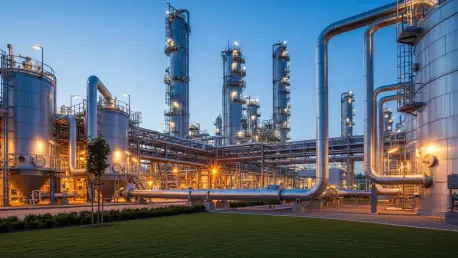
The Puertollano unit has successfully added 200,000 tons of annual capacity to the company’s portfolio, bringing its total renewable fuel output to a staggering 450,000 tons. Achieving this required a meticulous retrofitting process, marking the first time a major refinery on the Iberian Peninsula has been fully adapted to process biological feedstocks like used cooking oils instead of conventional crude oil. A massive investment of €130 million was funneled into the installation of advanced reactors and the modification of auxiliary logistics systems to accommodate the unique chemical properties of organic raw materials. Unlike crude oil, which has a relatively consistent composition, biological waste requires specialized treatment to remove impurities and ensure the final fuel meets rigorous performance standards. This technical achievement demonstrates that the path to a sustainable future does not always require building entirely new facilities from the ground up, as legacy sites can be effectively transformed.
Further enhancing the facility’s sustainability profile, Repsol dedicated an additional €16 million to integrate renewable hydrogen directly into the refining process. By substituting conventional natural gas with biogas derived from organic waste, the facility can now produce diesel with a carbon footprint that is up to 98% lower than traditional petroleum-based alternatives. This focus on life-cycle emissions is critical, as it addresses the environmental impact of the fuel from its point of origin to its eventual combustion in an engine. The integration of hydrogen produced via renewable sources ensures that every step of the conversion process is as clean as possible, setting a new benchmark for industrial decarbonization. Such a comprehensive approach to refining allows the company to offer a product that is not only chemically superior but also aligns with the strictest international climate targets. This investment in green hydrogen technology highlights the synergy between different renewable energy vectors within a single integrated industrial complex.
Sustainable Transport Solutions: Impact on Road and Aviation Sectors
The environmental impact of the Puertollano expansion is profound, with the facility projected to prevent roughly 700,000 tons of carbon dioxide emissions from entering the atmosphere every year. One of the primary advantages of these renewable fuels is their classification as “drop-in” solutions, which means they are chemically identical to the fossil fuels they replace. Consequently, these fuels require absolutely no modifications to existing vehicle engines, storage tanks, or refueling infrastructure, allowing for immediate adoption across the transportation industry. This is particularly important for the trucking and shipping sectors, where the cost of replacing entire fleets with electric alternatives would be prohibitively expensive and logistically complex. By providing a fuel that works seamlessly with current technology, Repsol is enabling a rapid reduction in emissions without disrupting the global supply chains that rely on heavy-duty internal combustion engines. This pragmatic approach offers an immediate solution to carbon reduction.
Beyond road-based logistics, the Puertollano facility plays a vital role in the production of Sustainable Aviation Fuel, commonly referred to as SAF. This is a critical development for the airline industry, which faces unique challenges in decarbonization because electrification remains impractical for long-haul flights and heavy cargo transport. Liquid renewable fuels provide the necessary energy density required for aviation while significantly lowering the sector’s overall carbon footprint. By establishing a reliable supply of SAF, Repsol is positioning itself as an essential partner for airlines seeking to meet their climate obligations without sacrificing flight range or performance. The ability to produce both renewable diesel and aviation fuel from the same organic waste streams allows for a highly flexible production model that can adapt to shifting market demands. This strategy effectively addresses the urgent need to decarbonize hard-to-abate sectors of the economy, ensuring that essential global transport links can continue to operate responsibly.
Regional Economic Resilience: Diversification and Market Growth
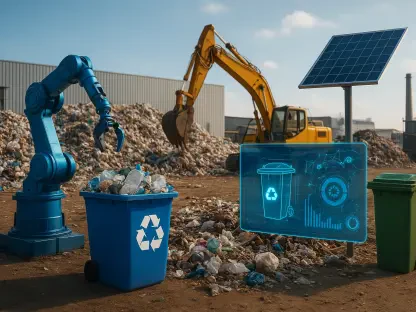
The Puertollano project has functioned as a powerful economic engine for the surrounding region, generating over 650,000 work hours and involving dozens of local subcontractors during the construction phase. This industrial evolution does more than just reduce emissions; it preserves high-quality technical jobs and shifts the local workforce toward the burgeoning green energy economy. Furthermore, the site is diversifying its output to include advanced materials, such as high-strength polymers designed for use in the medical and defense industries. By integrating the production of recycled plastics made from post-consumer waste, the complex is evolving into a hub for the circular economy. This diversification ensures that the facility is not dependent on a single product line, providing long-term economic stability for the Puertollano community. The transition from a traditional refinery to a multi-energy hub demonstrates how industrial regions can reinvent themselves to thrive in a changing global landscape while maintaining their core manufacturing expertise.
To ensure these sustainable products reach the end consumer, Repsol is currently rolling out its Nexa Diesel at more than 1,600 service stations across Spain and Portugal. This widespread retail presence makes renewable energy accessible to both individual drivers and commercial fleet operators who are looking for ways to reduce their environmental impact. By combining large-scale industrial repurposing with a robust distribution network, the company is creating a scalable blueprint for the refinery of the future. This model prioritizes both energy security and environmental responsibility, ensuring that consumers have access to reliable fuel sources that do not contribute to long-term climate degradation. The integration of these fuels into the existing retail landscape proves that the transition to a low-carbon future can be achieved without requiring radical changes in consumer behavior or massive new infrastructure spending. This strategy solidifies the company’s role as a leader in the multi-energy sector, bridging the gap between fuel supply and clean energy demands.
It was determined that the most effective next step for the industry involved the expansion of waste collection networks to secure a diverse array of biological feedstocks. Researchers and engineers found that the continuous optimization of catalyst performance was essential to maintaining high conversion efficiency in the newly installed reactors. Policy makers concluded that incentivizing the use of renewable hydrogen across all refining stages was a necessary solution for maximizing the life-cycle carbon reductions of biofuels. It was also noted that the training of the regional workforce in green technologies provided a stable foundation for the long-term operation of the multi-energy hub. The success of the retail rollout indicated that expanding the availability of sustainable fuels at the pump was a critical factor in consumer adoption. Financial analysts observed that the diversification into high-value polymers and recycled plastics provided a necessary hedge against energy market volatility. These insights formed a comprehensive framework for future industrial projects aimed at achieving deep decarbonization.