
The rapid maturation of the electric vehicle market has necessitated a radical shift in how industrial stakeholders perceive the lingering value within depleted lithium-ion power cells. This evolution is no longer a theoretical pursuit of environmentalists but a core strategy for automotive manufacturers looking to optimize asset lifecycles and reduce operational volatility. The partnership between Rivian and Redwood Materials, formalized in early 2026, serves as a primary example of this transition. By integrating second-life battery packs into a massive energy storage system at a high-volume manufacturing hub, these companies are demonstrating that the transition toward a circular economy is both technically feasible and economically imperative for the survival of heavy industry.
The Evolution of the Circular Battery Economy: Origins and Significance
Historically, the end of an automotive battery’s life was treated as a liability, often resulting in immediate and energy-intensive recycling processes. However, as the initial waves of early-adoption electric vehicles began to age, the market recognized a massive opportunity for repurposing these assets. Foundational data shows that even when a battery pack can no longer provide the rapid discharge rates required for high-performance driving, it typically retains nearly 80% of its total capacity. This realization shifted the industry landscape from a traditional linear model to a sophisticated circular framework where the battery remains a productive asset for decades.
Understanding this background is essential for grasping why industrial giants are currently investing billions into secondary applications. The move away from a “cradle-to-grave” mindset toward a “cradle-to-cradle” approach has allowed companies to mitigate the high costs associated with raw material extraction. By prioritizing secondary use, the industry can extend the utility of the original carbon investment made during the manufacturing phase. This shift has created a new category of energy infrastructure that sits between the automotive sector and the public utility grid, offering a buffer that stabilizes both.
Engineering the Second-Life Battery Ecosystem: A New Industrial Standard
Technical Architecture: Industrial Energy Management and Load Balancing
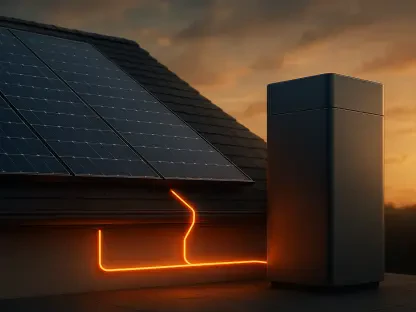
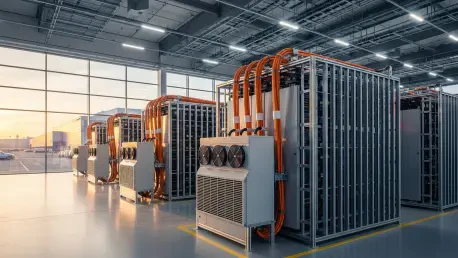
The core of the current project involves the deployment of over 100 utilized battery packs into a sophisticated 10 megawatt-hour energy storage architecture. In a manufacturing environment like the plant in Normal, Illinois, energy demand is notoriously volatile, often leading to exorbitant peak-hour utility charges that strain profitability. This “behind-the-meter” system allows the facility to store electricity during off-peak hours when rates are at their lowest and discharge that power during high-demand windows. This strategy effectively decouples industrial production from the fluctuations of the energy market.
Beyond mere cost savings, this technical implementation serves as a vital tool for grid resilience. When heavy machinery and vehicle assembly lines draw massive amounts of power simultaneously, they can create localized instability in the electrical infrastructure. The second-life storage system acts as a shock absorber, smoothing out these spikes and preventing disruptions that could affect nearby residential or commercial areas. This symbiotic relationship between a factory and the local grid is becoming the blueprint for future industrial development across North America.
The Strategic Mission: Redwood Energy and Scalable Infrastructure
This collaboration serves as a critical validation for Redwood Energy, a dedicated business unit launched to move beyond basic material recovery. While the parent company is renowned for extracting lithium and cobalt, this division focuses on the assembly of low-cost, stationary storage systems that utilize existing hardware. The strategic pool of domestic battery assets in the United States is now viewed as a resource that can be deployed far faster than traditional power plants. Because these systems use pre-existing modules, they bypass many of the supply chain bottlenecks associated with new mineral mining.
The demand for such scalable solutions is being further accelerated by the rise of artificial intelligence and massive data centers. These facilities require consistent, high-capacity power supplies that traditional grid upgrades often cannot provide within the necessary timelines. By utilizing “proven and safe” battery modules that have already survived years of real-world vehicle operation, developers can offer a reliable alternative to traditional fossil-fuel-based backup systems. This approach provides a pathway for rapid infrastructure expansion that matches the speed of technological innovation.
Industry Convergence: The Competitive Landscape of Automotive Energy
The shift by Rivian and Redwood reflects a broader trend where automakers are increasingly identifying as energy companies. Major competitors like General Motors and Ford have launched similar initiatives, recognizing that battery technology is a foundational element of the global energy transition rather than just a vehicle component. For instance, the move to manufacture large-scale storage systems for utilities suggests a growing consensus that the ability to monetize battery assets through stationary storage provides a vital secondary revenue stream during periods of fluctuating vehicle demand.
This competition is driving innovation in battery management software, which must now handle disparate modules from various vehicle models with differing states of health. As these systems become more reliable and economically viable, they are attracting interest from a wide range of commercial sectors, including retail logistics and telecommunications. The convergence of these industries is blurring the lines between transportation and power generation, creating a more integrated and flexible economic environment that can better withstand external shocks.
Future Trends: Grid Stabilization and Global Scaling
Looking ahead, the demand for energy storage is projected to grow exponentially, with market estimates suggesting a requirement for over 600 gigawatt-hours of capacity by 2030. This growth is being driven by the dual necessity of balancing intermittent renewable energy sources and meeting the surging power requirements of industrial automation. Regulatory shifts are expected to further incentivize the use of repurposed batteries through tax credits and sustainability mandates, making it increasingly difficult for businesses to ignore the financial benefits of second-life storage.
Technological breakthroughs in “smart” battery management systems will likely allow for even more seamless integration of these assets into regional power networks. We can expect to see the Rivian-Redwood model scale globally as other nations seek to modernize their aging infrastructure. The ability to transform what was once considered waste into a critical tool for grid flexibility will be the hallmark of a successful transition to a fully electrified economy. This trend suggests that the most successful companies of the next decade will be those that master the art of resource efficiency.
Strategic Takeaways: Insights for a Resilient Future
The transition to second-life battery storage offers several actionable insights for the broader industrial sector. First, businesses should view energy storage not just as a backup solution but as a tool for financial hedging against volatile utility prices. Second, the success of these partnerships highlights the importance of cross-industry collaboration; pairing automotive expertise in safety with recycling expertise in material handling creates a robust and reliable value chain. This cooperation is essential for overcoming the technical hurdles inherent in repurposing complex chemical systems.
For professionals in the energy and technology sectors, the primary recommendation is to prioritize scalability and modularity. Starting with pilot programs allows for the rigorous testing of safety protocols and discharge cycles before rolling out larger, grid-scale installations. Furthermore, companies should begin documenting the lifecycle data of their battery assets from day one, as this transparency will significantly increase the resale and repurposing value of the hardware in the secondary market. Proactive planning in this area is a prerequisite for long-term competitiveness in a resource-constrained world.
Redefining Battery Longevity and Resource Efficiency
The partnership between Rivian and Redwood Materials successfully proved that the value of an electric vehicle battery persisted long after the vehicle itself was retired. By creating a closed-loop system that supported the very facility where the cells were first assembled, these organizations maximized the initial environmental and financial investment. This initiative remained significant because it offered a practical, high-impact solution to the challenges of energy scarcity and waste management that defined the early years of the electrification era.
The industry moved toward a future where the residual value of a vehicle fleet was measured not just in transportation capacity but in its potential to act as a decentralized power plant. Leaders in the sector recognized that the fastest path to a resilient grid involved utilizing the billions of dollars in hardware already circulating in the economy. Ultimately, the ability to transform industrial “waste” into a critical asset for grid flexibility redefined the standards for sustainability and efficiency, ensuring that the legacy of the electric vehicle was one of lasting power and stability.