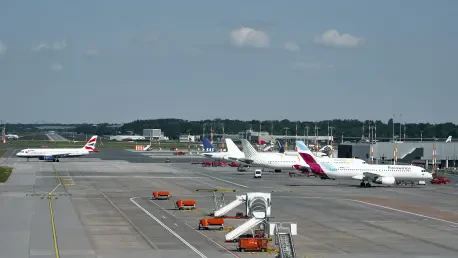

The global aviation industry operates on such a massive scale that if it were a sovereign nation, it would currently rank as the world’s fifth-largest carbon emitter. This startling reality creates a profound tension between the economic impulse to build larger runways and the environmental mandate to protect the planet. While transit hubs facilitate global trade and tourism, they also act as localized epicenters for a global climate crisis.
Contextualizing Global Aviation Emissions and Key Industry Stakeholders
The friction between corporate growth and climate safety is meticulously tracked by think tanks like ODI Global and Transport and Environment (T&E). Their analysis of 1,300 international hubs has exposed a widening gap between what major airlines promise and what the atmosphere actually receives. These organizations serve as the primary watchdogs for an industry that frequently cites the 2015 Paris Accord as its North Star while simultaneously approving projects that threaten to eclipse those very targets.
At the heart of this conflict are the world’s most active infrastructure projects, including Dubai International (DXB), London Heathrow (LHR), and Los Angeles International (LAX). These facilities are not just transportation centers; they are the primary case studies for high-volume carbon output. To mitigate this impact, the sector has heavily promoted Sustainable Aviation Fuels (SAF) as a technical savior. However, the effectiveness of SAF remains a point of intense debate among scientists and policy experts.
Analyzing the Conflict Between Infrastructure Growth and Sustainability
Carbon Output Disparities Among Global Transit Hubs
The environmental burden of flight is not evenly distributed but is instead concentrated within a handful of elite mega-hubs. Dubai International currently leads the global ranking with a staggering 23.2 million tonnes of CO2, followed by London Heathrow at 21 million tonnes and LAX at 18.8 million tonnes. When viewed collectively, these three airports alone produce three times the emissions generated by the entire city of Paris, illustrating a massive concentration of pollution.
This disparity reveals a geopolitical imbalance where infrastructure projects in Europe and North America exert a disproportionate influence on the climate. Surprisingly, the total emissions from European airports now exceed the combined carbon output of Africa, the Middle East, and Latin America. This concentration suggests that the fight for carbon neutrality is primarily a battle against the expansion of a few highly saturated corridors rather than a uniform global problem.
Corporate Net-Zero Roadmaps vs. Practical Mitigation Solutions
A significant divide exists between the “Net-Zero” pledges popularized by airport boards and the technical realities of their day-to-day operations. For instance, while London Heathrow representatives maintain a clear roadmap for noise and carbon reduction, critics frequently label these strategies as “half-baked.” The reliance on carbon offsetting and the slow adoption of SAF are often seen as insufficient maneuvers that fail to counteract the sheer volume of fuel burned by thousands of daily flights.
Current data indicates that many of these corporate sustainability goals are significantly off-track. The primary issue is that technology is not evolving as fast as the demand for travel. While airports market themselves as becoming greener, the actual CO2 output continues to rise because the efficiency gains per flight are being erased by the sheer increase in the total number of departures.
Economic Expansion vs. Environmental Demand Management
The ultimate comparison in modern aviation is between the traditional model of capacity expansion and the emerging necessity of demand management. Historically, airport growth has been justified by its contribution to regional GDP and international connectivity. However, the logic that more flights always equal a better society is weakening under the pressure of public health concerns and the urgent need for global energy independence.
Researchers now argue that managing the demand for flights—rather than building more gates—is the only viable way to align with international climate agreements. While expansion offers immediate economic rewards, it creates long-term environmental liabilities. Choosing demand management over infrastructure growth represents a shift toward a more sustainable, albeit less expansive, vision of global transit.
Obstacles and Considerations in Reaching Aviation Carbon Neutrality
Transitioning away from a high-growth model involves overcoming systemic hurdles that are both technical and commercial. The industry remains tethered to liquid fossil fuels because electric or hydrogen propulsion is not yet scalable for the long-haul flights that generate the bulk of emissions. This technical bottleneck makes the “decoupling” of business growth from carbon output nearly impossible under current conditions.
Furthermore, airport authorities must navigate the difficult balance of meeting government air quality mandates while satisfying the commercial pressures of airline partners. The “off-track” status of many global hubs highlights how difficult it is to implement radical change when the primary metric of success is still passenger throughput. Without a shift in international policy that prioritizes carbon limits over flight frequency, neutrality remains a distant goal.
Strategic Summary and Recommendations for the Aviation Sector
The comparative analysis demonstrated that physical airport expansion remained fundamentally incompatible with the emission limits required by the 2015 Paris Accord. Hubs like Dubai and Heathrow functioned as the primary drivers of the sector’s environmental footprint, proving that systemic change must start at the top of the hierarchy. Stakeholders recognized that the industry’s continued reliance on “half-baked” technical fixes provided a false sense of security while the total carbon volume continued to climb.
Moving forward, policymakers should prioritize aggressive demand management over the approval of new runways, as halting infrastructure growth is the most effective tool for immediate carbon control. Airports must also transition toward transparent reporting standards, replacing marketing-heavy sustainability brochures with the rigorous data metrics used by organizations like T&E. Finally, capital should be redirected from physical capacity increases toward building high-speed rail networks and achieving radical energy independence, ensuring that the future of transit does not come at the cost of a stable climate.