
Modern electricity consumers rarely consider the intricate choreography required to balance the continental power supply until a record-breaking heat wave threatens the silent reliability of their home air conditioning units. As the summer of 2026 arrives, this invisible dance has become a high-stakes performance for the nation’s infrastructure. With temperatures across the Mid-Atlantic, the Midwest, and the West Coast forecasted to exceed historical averages, the conversation is shifting from simple energy generation to the complex science of grid survival. Operators are now tasked with ensuring that a massive surge in cooling demand does not outpace the physical limits of the system.
The sheer scale of the current projected demand is forcing grid managers to prove that their systems will not buckle under pressure. This year serves as a critical stress test, not just for the equipment itself, but for the forecasting models used to predict human behavior during extreme weather events. Reliable power is no longer just a convenience; it is a life-sustaining necessity for over 85 million people who rely on these regional systems to navigate the increasingly volatile summer months.
Beyond the Thermostat: Can the American Power Grid Withstand 2026?
The challenges facing the current season go far beyond the settings on a residential thermostat. The infrastructure is currently navigating a period of unprecedented load growth driven by the expansion of data centers and the continued electrification of transport systems. While generation capacity remains the primary metric for success, the ability to transmit that power across state lines during peak hours has become the new bottleneck for reliability.
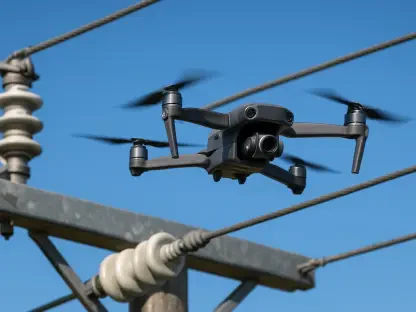
Engineers are closely monitoring the resilience of aging transmission lines that must now carry higher loads in higher ambient temperatures. When the air is hot, the physical wires can expand and sag, reducing their efficiency and increasing the risk of mechanical failure. Consequently, the focus for the current summer is not just on the volume of electrons produced, but on the physical integrity of the pathways they must travel to reach the end consumer.
The Intersection: Climate Volatility and Infrastructure Stability
Reliability in the modern era has evolved far beyond simply having enough power plants online to meet a static number. Today, the American power grid operates at the mercy of environmental disruptors—variables like prolonged droughts that starve hydroelectric plants of water and wildfires that threaten high-voltage corridors. Understanding the current projections is critical because it highlights a transition in utility management from an era of predictable demand to one defined by extreme climatic unpredictability.
These assessments serve as the primary defense against widespread outages that could impact the economic stability of several regions. Infrastructure stability is now tied directly to meteorological precision, where a five-degree deviation in the forecast can represent thousands of megawatts of unplanned load. To counter this, operators have transitioned toward probabilistic modeling that accounts for the “worst-case” environmental scenarios rather than relying on historical averages that no longer reflect the reality of the 2026 climate.
A Triple-Front Assessment: PJM, SPP, and CAISO Readiness
The PJM Interconnection, managing a massive footprint from the Mid-Atlantic to the Midwest, currently projects a comfortable buffer with 182 GW of installed capacity against a 156 GW peak demand. This surplus is bolstered by demand response programs that provide an additional 7.8 GW of flexibility. By utilizing these contracted usage reductions, PJM can effectively lower the peak without needing to fire up expensive and less efficient “peaker” plants, maintaining a stable and cost-effective flow of energy.
In the central United States, the Southwest Power Pool reports confidence in its ability to satisfy requirements, though it faces unique hurdles related to thermal plant cooling during potential drought conditions. Meanwhile, the California Independent System Operator is benchmarking its readiness against the “1-in-10” standard, preparing for extreme events that statistically occur only once per decade. This multi-region approach ensures that even if one area faces a crisis, neighbors might have the excess capacity to provide emergency assistance through interregional transfers.
Expert Perspectives: Environmental Risk Factors
Meteorologists and grid executives are increasingly vocal about the residual risks that standard capacity models might overlook. Experts like Jeff Baskin and C.J. Brown of the SPP emphasize that while the supply exists, the physical environment can degrade the efficiency of even the most robust power plants. For instance, as sea-surface temperatures rise, the cooling water used by coastal plants becomes less effective, forcing those facilities to operate at a reduced output exactly when they are needed most.
The consensus among these regional leaders is one of cautious optimism; the grid has the theoretical capacity to meet the current peaks, but success depends on its resilience against simultaneous events. If a heat wave in the East coincides with a wildfire season in the West, the ability to share resources across the continent becomes severely limited. This interdependency means that no region is an island, and the failure of a single transmission corridor can have a cascading effect on distant markets.
Strategic Frameworks: Maintaining Grid Integrity
To navigate the complexities of the current summer peak, operators are prioritizing three specific operational strategies. First is the expansion of demand response initiatives, where contracted usage reductions act as a virtual power plant during peak hours. Second is the integration of more sophisticated meteorological forecasting that accounts for coastal ocean warming and its influence on inland population centers. Finally, there is an increased focus on resource adequacy that accounts for the physical vulnerability of infrastructure in high-risk zones.
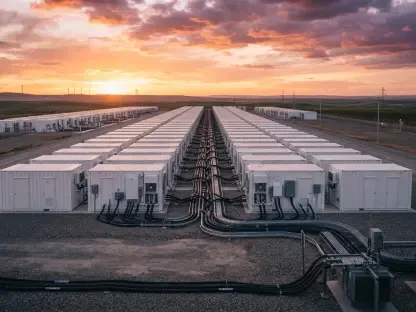
Operators moved toward a more decentralized model that favored agility over sheer size. They integrated real-time monitoring systems that allowed for the rapid rerouting of power away from stressed corridors. This shift ensured that the grid remained a dynamic entity capable of responding to environmental shifts in seconds rather than hours. Furthermore, the industry prioritized the hardening of physical assets, which allowed the system to maintain its integrity even as ambient temperatures reached record levels. These forward-looking measures provided the necessary foundation for a stable energy future, proving that preparation remained the most effective tool against the unpredictability of nature.