
Christopher Hailstone is a veteran in utility management and grid security, offering a unique perspective on the global transition toward resilient energy systems. His insights into Portugal’s Tâmega Complex reveal how “giga batteries” are redefining the relationship between wind and water to ensure a steady power supply. This project, a first for the Iberian Peninsula, represents a sophisticated synergy that addresses renewable variability while maximizing the potential of existing infrastructure. By exploring the integration of massive wind farms with pumped-storage hydro, Hailstone sheds light on the technical and logistical triumphs required to modernize our aging electrical grids.
How does combining wind farms and pumped-storage hydroelectric systems within a single grid connection optimize energy output and system flexibility?
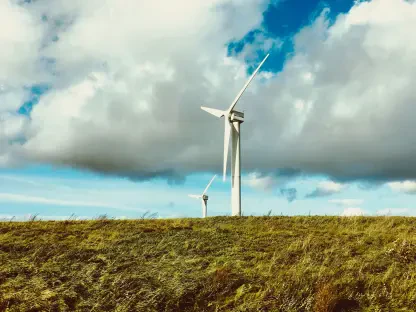
The magic of the Tâmega project lies in its ability to let two distinct energy sources share a single electrical heartbeat. By linking the 195 MW Tâmega Norte wind farm directly into the same infrastructure as the massive pumped-storage hydro system, we create a complementary flow that stabilizes the grid. When the Atlantic winds are whipping through those 27 massive Vestas turbines, we can funnel that power through the Red Eléctrica Nacional hub without needing separate, costly lines. Conversely, when conditions change and the wind dies down, the hydroelectric component provides the immediate flexibility needed to prevent dips in service. This shared connection at the Ribeira de Pena hub means we are maximizing the 414 GWh of annual output from the north and 185 GWh from the south using a single, efficient grid connection.
Beyond the electrical benefits, what were the most significant logistical and environmental hurdles encountered when installing such high-capacity turbines in this rugged terrain?
Building in the municipalities of Cabeceiras de Basto and Montalegre was a constant battle against the landscape. We had to navigate sharp bends and punishing gradients while transporting rotors with a 172-meter height, which is where the BladeLifter technology became a game-changer. This specialized equipment allowed us to tilt those massive blades between 25 and 30 degrees, threading them through narrow mountain roads without the need for widening tracks or major civil engineering works. We also had to respect the local ecosystem, which meant halting construction during the sensitive breeding seasons of local species in the spring and summer. It was a delicate dance between high-tech engineering and environmental stewardship, ensuring the €237 million investment in the North sector didn’t come at the cost of the local habitat.
The scale of investment for this “giga battery” is substantial; what does the involvement of international entities like the European Investment Bank and Norges Bank signify for the future of large-scale renewable infrastructure?
This level of capital—totaling roughly €346 million for both the North and South farms—demonstrates a massive vote of confidence from the highest levels of international finance. Having Norges Bank take a 49% stake once operational shows that long-term, stable returns are now synonymous with renewable energy “giga batteries.” The project also highlights a deep industrial network, bringing in specialists like Haizea Wind to manufacture the metal structures and components that support the 7.2 MW Vestas turbines. This isn’t just a local power plant; it’s an international collaborative effort that proves large-scale green energy is now the primary driver for major infrastructure investment. It shows that the market is ready to move beyond isolated projects into these massive, multi-modal energy hubs that offer long-term security.
What is your forecast for the expansion of these hybrid “giga battery” systems across the global energy market?
I anticipate a rapid acceleration of these hybrid models because they solve the two biggest headaches in the industry: land use and grid congestion. By utilizing existing substations, like Daivões for the north and Gouvães for the south, we can bypass the years of bureaucratic red tape usually required for new grid connections. We are going to see a shift where developers no longer look at wind or hydro in isolation, but rather as pieces of a larger puzzle designed to provide 24/7 reliability. As we prove the success of the Tâmega model and its 414 GWh annual output, the “giga battery” concept will become the blueprint for decarbonizing entire regions. The future belongs to these integrated systems that can store and release energy with the absolute precision required by a modern, hungry grid.