
The traditional dominance of lithium-ion technology in the stationary storage market is facing its first legitimate existential threat as sodium-ion systems move from the laboratory to the industrial front lines. This transition is not merely a search for a cheaper battery but a fundamental response to the mounting challenges of mineral scarcity, fire safety, and the geopolitical complexities of rare-earth supply chains. As global energy demand spikes due to the expansion of artificial intelligence and the electrification of heating, the industry is increasingly turning toward sodium as a sustainable and domestic alternative for grid-scale stabilization.
Sodium-ion energy storage functions on electrochemical principles similar to those of its lithium-ion cousins, utilizing the movement of ions between a cathode and an anode to store and release energy. However, the use of sodium—an element that is more than a thousand times more abundant than lithium—removes the reliance on volatile global commodity markets and ethically fraught mining practices. This availability ensures that the production of storage systems can scale in tandem with the renewable energy revolution without the threat of catastrophic resource shortages.
Evolution and Core Principles of Sodium-Ion Systems
The emergence of sodium-ion technology as a viable alternative has been driven by the need for a chemistry that prioritizes thermal stability and environmental sustainability over raw energy density. While lithium remains the undisputed leader for portable electronics and long-range electric vehicles, its tendency toward thermal runaway makes it a liability in high-density utility environments. Sodium-ion systems offer a safer profile, maintaining operational integrity across a wider temperature spectrum and eliminating the risk of internal fires that have plagued recent grid-scale installations.
Beyond safety, the technological landscape is shifting toward a domestic-first manufacturing strategy. Since sodium is widely available in North America, companies can establish vertically integrated supply chains that bypass the logistical bottlenecks of overseas shipping and the restrictive trade policies associated with foreign entities. This pivot toward local sourcing not only enhances national energy security but also provides a predictable cost structure for utilities that must plan infrastructure investments decades in advance.
Architectural Components and Performance Metrics
Modular Scalability and System Integration
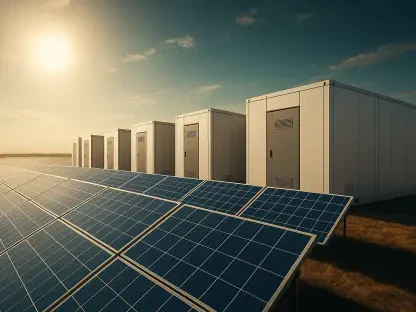
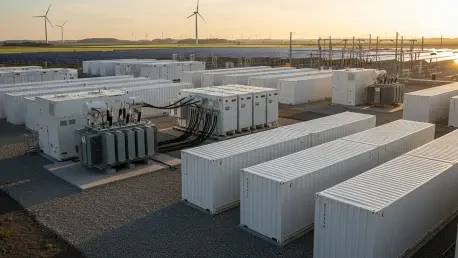
The modern approach to energy storage relies on a “building block” philosophy, where individual battery modules are clustered to create massive grid-responsive assets. A primary example is the development of 1.2-megawatt-hour modules that function as autonomous units with their own integrated management systems. These modules are designed to fit seamlessly into standard 20-foot shipping containers, allowing a single containerized unit to reach a capacity of roughly 4.8 megawatt-hours. This modularity ensures that utility providers can start small and expand their storage capacity as the local load grows.
Integrating these stackable configurations into the existing grid requires a high degree of technical synergy with power conversion systems. By matching the energy density of established industry benchmarks like the Tesla Megapack, sodium-ion manufacturers are proving that a safer, more abundant chemistry does not have to result in an oversized or inefficient footprint. The ability to deploy these systems in standard industrial formats simplifies logistics and reduces the specialized labor required for onsite assembly, effectively lowering the barrier to entry for large-scale energy projects.
Discharge Versatility and Operational Duration
The versatility of energy delivery is a critical metric for any system intended to support a modern grid that experiences varying levels of stress. Sodium-ion batteries are unique in their ability to transition between short-duration discharge cycles, typical of frequency regulation and peak shaving, and long-duration delivery exceeding sixteen hours. This technical flexibility allows a single installation to serve multiple functions, such as smoothing out the intermittent output of a solar farm during the day and providing steady baseload power throughout the night.
In real-world usage, this operational duration is vital for both behind-the-meter industrial applications and grid-tied stability. For a commercial enterprise, a 16-hour discharge capability ensures that operations can continue even during prolonged grid failures or extreme weather events. For grid operators, this reliability acts as a buffer against the inherent unpredictability of wind and solar power. The performance characteristics of sodium-ion systems thus provide a bridge between the rapid-response needs of the digital economy and the long-term reliability required by traditional heavy industry.
Current Industry Transitions and Market Innovations
The energy sector is currently witnessing a strategic “sodium rush” as manufacturers pivot away from alternative chemistries like iron flow toward more commercially adaptable sodium-ion designs. Iron flow batteries, while durable, often struggled with market penetration due to their mechanical complexity and lower energy density compared to traditional solid-state systems. The shift toward sodium represents a maturation of the market, focusing on a technology that can be manufactured using existing battery production lines with only minor modifications to the equipment.
Strategic partnerships and high-volume procurement deals are accelerating this trajectory, with major firms securing gigawatt-scale agreements to lock in supply for the coming years. These collaborations often involve specialized cell manufacturers providing the raw chemical components to system integrators who build the final grid-ready products. This division of labor is creating a more resilient ecosystem, where innovation in cell chemistry can be rapidly deployed through established hardware platforms. The resulting influence on the market has forced competitors to reconsider their reliance on lithium-exclusive strategies.
Sector-Specific Applications and Deployment
High-load data centers and artificial intelligence infrastructure have emerged as the primary drivers for sodium-ion adoption. These facilities require immense amounts of power and, more importantly, a storage solution that does not introduce fire risks to multimillion-dollar server environments. Sodium-ion systems, with their superior thermal stability and simplified air-cooling requirements, are ideally suited for these high-stakes environments. They provide the necessary backup power to prevent data loss while minimizing the energy consumed by the cooling systems that traditional batteries require.
Utility providers and large-scale commercial enterprises are also implementing sodium-based solutions to stabilize the electrical grid during peak demand. As more electric vehicles and heat pumps are added to the system, the resulting load spikes can overwhelm aging transformers and transmission lines. By deploying sodium-ion storage at strategic points within the distribution network, utilities can defer expensive infrastructure upgrades. These installations absorb excess energy when demand is low and release it during peaks, effectively balancing the grid and preventing localized blackouts.
Technical Obstacles and Market Adoption Barriers
Energy Density and Physical Footprint Constraints
Despite the clear benefits, sodium-ion technology faces a significant hurdle regarding its physical volume and weight. Sodium is more than three times heavier than lithium, which naturally results in a lower energy density for the total system. In space-constrained environments, such as urban substations or indoor data centers, the larger footprint required to store the same amount of energy can be a dealbreaker. This limitation necessitates more creative engineering solutions to maximize the use of vertical space and optimize the arrangement of internal components.
Ongoing efforts to optimize system footprints are focusing on the development of more efficient cathode materials and advanced cell packaging. If manufacturers can increase the energy density even by small margins, the competitive gap between sodium and lithium will continue to narrow. However, for the time being, deployment must be carefully planned to account for the additional weight, which may require reinforced foundations or more extensive site preparation. This trade-off between the safety of the chemistry and the size of the installation remains a central theme in the technical evaluation of the technology.
Manufacturing Scalability and Supply Chain Maturity
The current lack of high-volume “gigafactories” dedicated exclusively to sodium-ion production represents a significant barrier to market adoption. While lithium-ion manufacturing has benefited from decades of investment and optimization, the sodium-ion supply chain is still in its formative stages. This immaturity leads to higher initial costs and longer lead times for system delivery. Establishing a domestic supply chain requires not only the construction of new factories but also the development of a workforce skilled in the specific nuances of sodium-ion assembly.
Regulatory and economic hurdles also play a role in slowing the transition, as existing safety standards and financial incentives were largely written with lithium-ion technology in mind. Convincing investors to back sodium-based projects requires a clear demonstration of long-term bankability and performance reliability. To compete effectively with the established lithium-ion market, sodium-ion manufacturers must prove that they can achieve the same economies of scale that brought lithium costs down over the last decade. Until these production milestones are met, sodium will likely remain a premium choice for specific high-safety applications.
Future Outlook and Technological Trajectory
The trajectory of sodium-ion technology suggests that future breakthroughs will likely focus on enhancing thermal stability and further simplifying cooling efficiencies. As research into solid-state electrolytes for sodium progresses, the potential for even safer and more energy-dense batteries becomes a reality. These advancements could eventually eliminate the need for any active cooling whatsoever, allowing systems to operate in the harshest environments on earth without the risk of mechanical failure. Such a development would significantly reduce the total cost of ownership for grid operators.
In the long term, the shift toward sodium-based storage will have a profound impact on global energy independence. By utilizing a resource that is essentially inexhaustible and locally available, nations can decouple their energy security from the fluctuations of international mining politics. This transition will create a more resilient and decentralized grid, where local storage assets provide the flexibility needed to manage 100% renewable energy penetration. The evolution of sodium technology is thus a core component of the broader movement toward a transmission-constrained world where local resilience is the highest priority.
Summary and Final Assessment
The evaluation of sodium-ion technology revealed a chemistry that successfully balanced the trade-offs between safety, cost, and availability. While lithium remained superior in energy density, the inherent stability of sodium-based systems provided a compelling argument for stationary applications where physical footprint was less critical than operational security. The industry pivot toward this technology was driven by a need for domestic supply chain resilience and the desire to mitigate the thermal risks associated with existing grid-scale solutions. Early implementations in data centers and utility substations proved that the technology was ready for the rigors of real-world demand.
The review of the ESS Bridge and similar modular systems showed that the “building block” approach was effective in matching the scalability of traditional benchmarks. The transition from alternative chemistries like iron flow indicated a market consolidation around sodium as the primary non-lithium contender. Ultimately, the adoption of sodium-ion energy storage offered a path toward a more stable and independent energy future. As manufacturing capacity increased and the supply chain matured, the technology established itself as a cornerstone of the modern electrical grid. This shift represented a significant milestone in the ongoing quest to create a sustainable and reliable global power infrastructure.