
The American industrial landscape is currently witnessing a bizarre financial phenomenon where a surge of billions in fresh capital is somehow resulting in fewer people on the factory floor. While a $1.1 billion net increase in capital investment typically signals a hiring boom, the first quarter of this year has presented a startling contradiction: the American clean energy sector is growing richer while simultaneously shedding nearly 6,000 jobs. This job-investment paradox has left economists and industry leaders questioning the stability of the green transition as massive financial commitments fail to offset a wave of layoffs across the “Battery Belt.”
This disconnect suggests that the nature of American manufacturing is undergoing a fundamental transformation. Even as legacy automakers and startups pump funds into massive physical plants, the human element of the equation is being squeezed by high operational costs and a sudden shift in the regulatory environment. The result is a leaner, more automated approach to production that prioritizes balance sheet survival over the aggressive workforce expansion seen in previous years.
The 2026 Paradox: Why Billions in Capital Cannot Halt a Workforce Contraction
The financial data from the early months of the year paints a picture of an industry in deep conflict with itself. On one hand, 21 different initiatives across 12 states managed to move forward, led by substantial investments from giants like Toyota in Kentucky and Scout Motors in South Carolina. These commitments provided a necessary buffer, yet they were not enough to stop a net loss of 5,900 positions. This suggests that while companies are still betting on the long-term infrastructure of clean energy, they are no longer hiring at the breakneck speeds once anticipated.
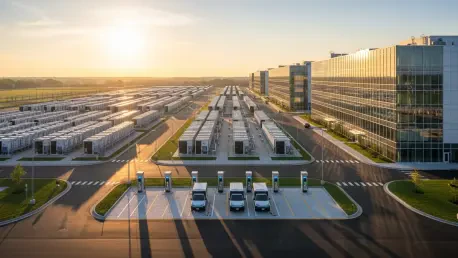
Corporate strategies have pivoted toward protecting existing assets rather than scaling up labor-intensive assembly lines. In states like Georgia and North Carolina, major battery projects have maintained their spending levels while slashing their projected headcounts, a move that indicates a shift toward capital-intensive automation. As firms navigate this tightening economic vice, the priority has shifted from job creation to operational efficiency, leaving thousands of skilled workers in a state of professional limbo.
A Shift in the Federal Tide: The Legislative Roots of Industrial Uncertainty
To understand the current volatility, one must look at the seismic policy shifts following the passage of the “One Big Beautiful Bill Act” late last year. The subsequent rollback of federal clean energy incentives and the rescinding of the EPA’s 2009 Greenhouse Gas Endangerment Finding have fundamentally altered the market’s floor. These actions have effectively removed the regulatory certainties that once encouraged long-term hiring, forcing manufacturers to recalibrate their operations in real-time.
This pivot toward aggressive deregulation has created a vacuum where federal support used to exist. Without the consistent tailwind of government subsidies, the margin of error for domestic manufacturers has narrowed significantly. Consequently, many companies have abandoned labor-heavy expansion plans in favor of lean manufacturing techniques. The goal is no longer just to grow, but to survive an environment where the rules of the game are being rewritten every few months.
Analyzing the Q1 Downturn: Tariffs, Rescissions, and Sectoral Divergence
The contraction of the clean energy workforce is not a uniform decline but a targeted hit driven by specific regulatory and geopolitical pressures. The electric vehicle and battery sectors bore the brunt of the downturn, with 15% of announced investments scrapped following the repeal of tailpipe emission standards. Simultaneously, a staggering 220% effective tariff rate on Chinese battery components has sent manufacturing costs skyrocketing, leading to the cancellation of 12% of planned battery projects.
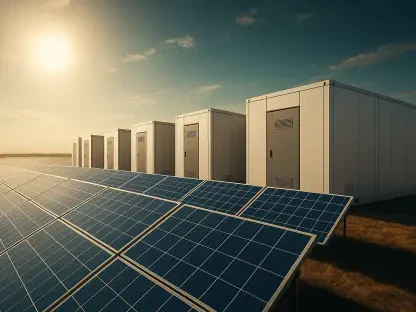
Conversely, the solar and grid modernization sectors have shown remarkable resilience, continuing to attract investment and providing a vital buffer against a total industry collapse. This divergence suggests that while the consumer-facing vehicle market is reeling from policy changes, the underlying infrastructure of the energy transition remains a safer bet for investors. The contrast between these sectors highlights how specific trade barriers can cripple one branch of the industry while leaving others relatively unscathed.
Insights from the Environmental Defense Fund: The High Cost of Protectionism
According to recent analysis, the decoupling of investment from job creation is most visible in traditional manufacturing hubs that were once touted as the future of the green economy. Expert analysis suggests that the requirement for 100% domestic materials in EV charging infrastructure has acted as a double-edged sword; while it aims to bolster local industry, it has effectively throttled the supply chain. This rigid adherence to domestic sourcing has made it nearly impossible for many projects to meet their original timelines or staffing goals.
Furthermore, the decision by the Canadian government to allow Chinese EV imports has introduced a new layer of cross-border competition, making the high-tariff environment in the United States even more challenging. Domestic manufacturers now find themselves trapped between expensive local supply chains and a neighbor that is opening its doors to cheaper foreign alternatives. This geopolitical squeeze has forced American firms to reconsider their labor costs as they struggle to maintain price parity with global competitors.
A Strategic Framework for Navigating a Low-Incentive Manufacturing Climate
To remain competitive in this high-tariff and low-incentive landscape, American firms had to pivot their operational strategies toward long-term sustainability rather than relying on federal subsidies. Manufacturers prioritized the diversification of their supply chains to bypass “prohibited foreign entities,” ensuring they remained eligible for the remaining restricted tax credits. Additionally, companies embraced advanced manufacturing technologies and automation to offset the rising costs of raw materials.
Focusing on resilient sub-sectors—such as transmission equipment and grid infrastructure—provided a more stable revenue stream as the volatile consumer vehicle market continued to adjust. Leaders looked toward modular production and flexible labor models to handle future regulatory shifts without the need for mass layoffs. By investing in specialized workforce training for high-tech maintenance rather than simple assembly, the industry began building a more durable, albeit smaller, foundation for the coming years.