
Christopher Hailstone brings a wealth of experience to the table when discussing the intersection of energy production and public health. As a seasoned specialist in utility reliability and renewable transitions, he offers a unique vantage point on the legal and logistical hurdles currently facing the nation’s air quality regulations. His expertise is particularly relevant as states and cities navigate the friction between maintaining a robust industrial base and ensuring the air remains breathable for the most vulnerable populations. Today, we explore the complexities of the Clean Air Act, the shifting landscape of federal oversight, and the high-stakes litigation surrounding the latest fine particulate matter standards.
The conversation covers the critical transition from the old 12-microgram soot standard to the more stringent 9-microgram limit and the ripple effects that delayed federal designations have on urban planning and infrastructure. We also delve into the regulatory friction between industrial output and environmental safety, the disparities in air quality that persist across different zip codes, and the unprecedented legal strategies local governments are employing to demand federal accountability.
The soot standard was recently lowered from 12 to 9 micrograms per cubic meter. How do these specific metrics translate to public health outcomes, and what logistical steps must local governments take to monitor these tighter levels effectively? Please provide examples of the health and financial costs involved.
Lowering the standard from 12 to 9 micrograms per cubic meter is not just a mathematical adjustment; it is a vital safeguard against the microscopic particles that infiltrate the deepest parts of the lungs. When these soot levels remain high, we see a documented rise in heart attacks, triggered asthma attacks, and lives being cut tragically short, which is a reality that the science no longer disputes. For a local government, moving toward the 2032 compliance deadline requires a massive mobilization of monitoring technology and the installation of high-precision sensors near industrial sites like coal-fired power plants. The financial burden is significant, as cities must balance the cost of this infrastructure against the staggering medical expenses and lost productivity associated with preventable respiratory illnesses. It is a race to ensure that the air surrounding every neighborhood is held to a standard that prioritizes human longevity over industrial convenience.
There is currently a delay in issuing federal air quality designations for vehicle exhaust and industrial emissions. What are the practical consequences for a city when these designations are stalled, and how does a sudden shift in federal support for stricter limits complicate long-term local planning?
When the federal government stalls on issuing these designations, it effectively strips local authorities of the primary tools provided by the Clean Air Act to regulate their own environments. Without these official designations, a city cannot legally enforce the necessary restrictions on vehicle exhaust or factory emissions, leaving them in a state of regulatory limbo that halts progress. This creates a chaotic environment for long-term planning, as urban developers and utility managers are left wondering which standards they will eventually be forced to meet. For instance, the 2024 rule was intended to provide a clear roadmap, but when federal agencies suddenly move to strike down their own stricter limits, it shatters the predictability required for multi-year infrastructure investments. This inconsistency forces local governments to choose between waiting for federal clarity or moving forward with costly lawsuits to protect their citizens’ health.
Balancing air quality with industrial output often creates tension between state regulators and factory operators. What specific regulatory tools are lost when federal standards are not enforced, and can you walk us through the trade-offs a municipality faces when trying to curb soot from power plants?
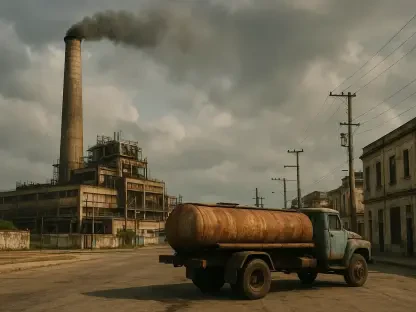
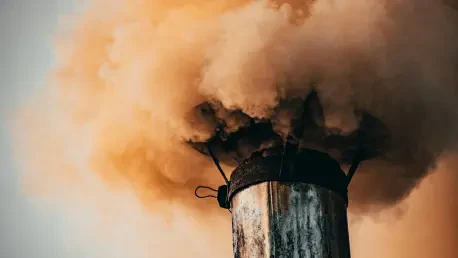
The loss of federal enforcement means that states lose the “teeth” of the National Ambient Air Quality Standards, which are essential for compelling heavy emitters to modernize their operations. Without these standards, a municipality trying to curb soot from a facility like the Mill Creek Generating Station faces an uphill battle against powerful industrial interests that may prefer the status quo. There is a painful trade-off involved, as tightening local rules in the absence of federal backing can lead to economic friction and legal challenges from industry coalitions. We are currently seeing this play out with a coalition of 24 states and various industry groups fighting to overturn the stricter 9-microgram limit. This creates a fragmented landscape where a city’s desire to reduce visible exhaust from flue-gas stacks is constantly pitted against the immediate economic output of the local industrial sector.
Air pollution levels can vary significantly depending on a resident’s zip code and proximity to flue-gas stacks. How do state coalitions coordinate to ensure uniform protection across different jurisdictions, and what specific metrics determine if an area is in violation of the Clean Air Act?
To combat the “zip code lottery” of air quality, a coalition of 10 states—including California, New York, and Oregon—along with major hubs like New York City and Harris County, have joined forces to demand uniform federal action. They coordinate through joint litigation and shared data, arguing that the right to breathe clean air should not depend on where a family happens to live. The determination of a violation is based on the National Ambient Air Quality Standards, specifically measuring if fine particulate matter exceeds the 9-microgram threshold over a set period. When these metrics show an area is in non-attainment, it triggers a mandatory response plan, but this process is currently paralyzed because the necessary designations have not been issued. This leaves residents living near industrial corridors in a state of heightened risk, as the formal recognition of their poor air quality is being withheld.
When federal agencies move to strike down their own stricter environmental limits, it creates a unique legal landscape. What step-by-step actions can local governments take to hold federal entities accountable, and how do these legal battles impact the timeline for actual air quality improvements?
The primary recourse for local governments is to file suit in federal court, as we saw with the recent filing in the U.S. District Court for the Northern District of California. This legal strategy aims to force the EPA to fulfill its “non-discretionary duties” under the Clean Air Act, essentially demanding that the agency follow the rules it already wrote. These battles involve filing motions to defend previous standards while simultaneously challenging the agency’s attempts to strike them down in the D.C. Court of Appeals. Unfortunately, these legal skirmishes significantly delay the timeline for actual improvements, often pushing back the implementation of life-saving technologies by years. While the lawyers argue over the validity of the 2024 rule, the air remains thick with the very pollutants that the 9-microgram standard was designed to eliminate, leaving the public to bear the physical cost of the delay.
What is your forecast for the future of soot standard enforcement in the United States?
My forecast is that we are entering a period of extreme regulatory volatility where the battle for air quality will be fought in the courts rather than in the halls of the EPA. While the 2032 deadline for the 9-microgram standard remains the target, the current litigation involving 10 supportive states and 24 opposing states suggests a deeply divided nation where environmental protection is tied to political cycles. We will likely see more localized “green bubbles” where cities like New York and counties like Harris County push for even stricter local controls to bypass federal stagnation. However, until the D.C. Court of Appeals and other federal courts provide a definitive ruling, the enforcement of these soot standards will remain inconsistent, and the health benefits of the cleaner 9-microgram limit will be delayed for millions of Americans. Ultimately, the pressure from state coalitions will be the deciding factor in whether the federal government resumes its role as a consistent guardian of the air we breathe.