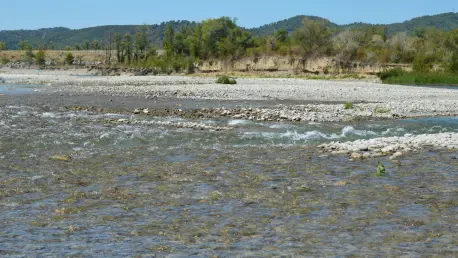

The ecological collapse of the Kifisos highlights a systemic failure where industrial runoff and wastewater have been allowed to overwhelm the river’s natural recovery capacity. As of 2026, the central corridor of the Attic basin faces a crisis that transcends simple pollution, evolving into a total biological breakdown. While the mountainous regions at the river’s source still maintain some semblance of a natural habitat, the stretches through Kokkino Milos and Metamorfosi have effectively become conduits for toxic waste. Scientists from the Aristotle University of Thessaloniki have classified the water quality as poor, noting that the biological communities that once defined the river have vanished. The loss of these ecosystems is not an isolated event but a warning sign for the entire metropolitan area. As temperatures rise, the river’s inability to provide cooling and natural drainage creates a significant vulnerability for the city’s environmental future and its residents’ well-being.
Environmental Degradation and Public Health Risks
The Collapse of Aquatic Ecosystems: A Biological Crisis
Recent assessments indicate that the Kifisos River has largely transitioned into a biologically dead zone within its most industrial segments. Between Kokkino Milos and the Kymi Avenue bridge, the macroinvertebrate populations and native fish species that once thrived have been entirely eradicated by chemical saturation. This state of ecological collapse is driven by low oxygen levels and high concentrations of nitrates, which prevent the survival of even the hardiest aquatic organisms. The riverbed in these areas has been altered by heavy sedimentation and concrete encasement, further reducing the possibility of natural self-purification. Monitoring data shows that the sheer volume of contaminants prevents the re-establishment of any stable food web, leaving the water stagnant and hazardous. This biological erasure is a direct result of decades of industrial bypasses, where the river was treated as a disposal site rather than a natural resource.
Invisible Pathogens: Groundwater and Atmospheric Hazards
Public health concerns have intensified as new data reveals the presence of antibiotic-resistant genes and pharmaceutical residues within the river’s flow. Residents living near the open channels are exposed to aerosols that may carry these microbial threats, yet comprehensive air-quality monitoring for these specific zones has only recently begun. The risk extends below the surface, as toxic heavy metals such as arsenic and lead threaten to leach into the region’s groundwater aquifer. If these substances penetrate the deep water table, the long-term safety of the local water supply could be permanently compromised. Researchers are particularly worried about the lack of historical data regarding aerosol exposure for the 104,000 people living near the riverbanks. To address this, current strategies involve drilling exploratory wells to track the vertical movement of pollutants and installing high-sensitivity sensors to detect chemical plumes in the air.
Strategic Interventions and Regulatory Overhaul
Economic Deterrents: The New Regulatory Framework
The Ministry of Environment and Energy has shifted its strategy to focus on a tiered fine system designed to make illegal dumping financially ruinous for corporations. Secretary-General Petros Varelidis pointed out that the previous flat-rate penalties were often viewed by industries as a minor operational cost rather than a deterrent. By linking fines to a company’s total turnover, the new enforcement framework ensures that the penalty for non-compliance far outweighs the cost of legal waste disposal. This economic shift is supported by a more robust inspection regime involving the Hellenic Police and specialized environmental task forces. These teams utilize real-time pH monitoring and satellite surveillance to identify discharge points as they occur, allowing for rapid response and immediate evidence gathering. The goal is to dismantle the economic incentives that have fueled the ‘shadow’ disposal industry for years, forcing industries to adopt sustainable waste practices.
Future Resilience: Restoring the River’s Integrity
The remediation of the Kifisos necessitated a multi-phase approach that combined immediate safety protocols with long-term ecological restoration. Authorities moved to install physical barriers near schools and residential areas to prevent direct contact with contaminated water, while municipal workers were equipped with specialized protective gear to mitigate aerosol risks. The installation of a continuous sensing network allowed for the transparent tracking of water quality, providing the public with real-time data on environmental health. Over the period from 2026 to 2028, these efforts were expanded to include the systematic cleaning of the riverbed and the reintroduction of native vegetation in less affected northern zones. Scientific teams focused on groundwater protection as the primary defense against long-term chemical leaching, ensuring that the subterranean reserves remained potable. This shift transformed the river into a central pillar for urban resilience.