
In industrial environments where software must operate within rigid safety parameters, the Autopilot system ensures that AI-driven decisions remain under constant human supervision. Helsinki-based technology firm Intergrid recently announced a major financial milestone, securing €23.5 million to accelerate the international expansion of its industrial energy-automation platform. This significant capital injection is specifically designed to scale operations across Europe, marking a pivotal moment for the “Applied AI” sector. Rather than focusing on the more common generative models, Intergrid specializes in precise, rule-based industrial control systems that manage physical machinery and electricity trading. This strategic move highlights a growing trend where sophisticated software operates within rigid safety parameters to optimize industrial environments while maintaining high levels of reliability. By focusing on real-world physical assets, the firm aims to bridge the gap between digital intelligence and heavy industry.
Financial Strategy and European Market Expansion
What Is the Funding Structure’s Composition?
The recently reported funding total represents a sophisticated blend of various financial instruments rather than a traditional single equity round. This nuanced structure includes equity investments co-led by Kvanted and Tesi, along with significant contributions from established backers like True Ventures, Lifeline Ventures, and First Fellow Partners. Such a diverse group of investors reflects broad confidence in Intergrid’s ability to navigate the complex landscape of industrial decarbonization and energy efficiency. These private venture capital firms are increasingly looking for “deep tech” solutions that offer more than just theoretical efficiency, seeking platforms with a proven track record of controlling actual physical hardware in demanding environments. The infusion of capital will provide the necessary runway for the firm to enhance its software capabilities and expand its sales reach into new European markets, ensuring that the technology can adapt to different regional grid requirements.
How Does Public Support Influence Growth?
Beyond private equity, the funding package incorporates €2.7 million in innovation grants from Business Finland and a strategic loan from Finnvera, which is backed by European Union guarantees. This multifaceted approach demonstrates a strategic collaboration between private venture capital and public institutional support, which is essential for fostering initiatives aimed at long-term industrial sustainability. Public innovation support plays a critical role in de-risking high-tech ventures that require extensive research and development before reaching a global scale. By combining these different financial streams, Intergrid has established a robust foundation that supports both immediate commercial growth and ongoing technical refinement. This hybrid financing model is becoming a standard for European scaleups operating at the intersection of energy policy and industrial technology, where the stability of public backing complements the agility of private investment to drive meaningful change across the continent’s energy infrastructure.
Technical Architecture and Industrial Implementation
What Is the Autopilot System’s Core Function?
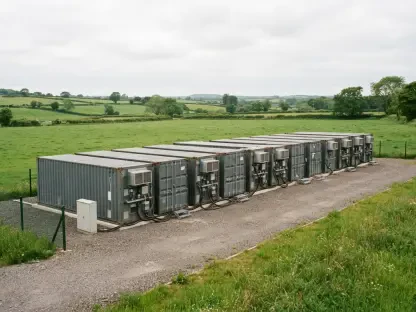
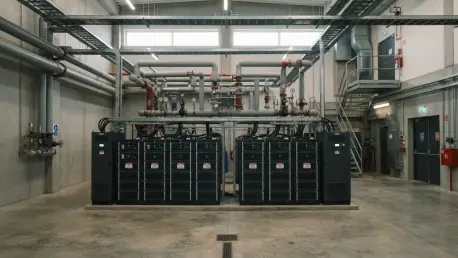
Intergrid’s flagship product, known as Autopilot, acts as an active control layer that synthesizes production schedules, weather forecasts, and real-time electricity market prices to optimize site performance. It interfaces directly with heavy hardware such as large-scale boilers, heat pumps, and battery arrays to generate dynamic operating plans that adapt to shifting external conditions. Despite its high level of autonomy, the system strictly follows a “production-first” philosophy, ensuring that energy optimization never jeopardizes industrial output or specific site requirements. This means the software prioritizes the core mission of the facility, such as maintaining precise temperatures in food production, before looking for ways to reduce costs or trade excess energy back to the grid. This hierarchy of needs is essential for building trust with industrial operators who cannot afford downtime or quality loss in pursuit of efficiency, making the system a practical tool for modern facility managers.
Why Use Rule-Based Logic Over Machine Learning?
The technical architecture of the platform relies primarily on rule-based logic to ensure that operations remain within predictable and safe boundaries, avoiding the “black box” problems of some AI models. Machine learning is utilized as a secondary, additive layer specifically for predictive tasks, such as forecasting demand fluctuations or electricity price volatility. This hybrid approach provides the stability required for physical infrastructure while still leveraging data-driven insights to improve overall efficiency. Human oversight remains a cornerstone of the platform through the “Flow” interface, which allows operators to inspect decisions and set maintenance windows. To ensure reliability, the firm also employs a dedicated operations team that monitors live sites for fault detection and emergency response. This design ensures that the AI manages routine adjustments while humans provide high-level oversight and manual overrides if necessary, creating a safe environment for high-stakes industrial applications.
Which Industries Benefit Most From This Technology?
The technology has been successfully deployed at over 100 industrial sites, with a strong focus on energy-intensive sectors such as food production, district heating, and greenhouse horticulture. As electricity markets have become more volatile due to the rapid integration of renewable energy sources, these facilities have utilized the Autopilot system to achieve significant energy cost reductions. Potential clients often employ simulation tools to model their expected return on investment based on historical data before committing to a full installation. This evidence-based approach allows industrial leaders to visualize the impact of automated energy management on their specific operational costs and carbon footprints. By focusing on sectors where cooling and heating are most sensitive, Intergrid has demonstrated that AI can handle complex physical constraints without compromising safety. Ultimately, the successful deployment of these systems highlights a clear shift toward smarter, more responsive industrial grids that balance economic performance with environmental responsibility.