
The shift toward a circular energy economy has reached a pivotal juncture where the ability to transform industrial organic waste into high-value renewable energy assets is no longer just a conceptual goal but a commercial necessity. Delorean Corporation, listed on the ASX under the ticker DEL, currently finds itself at the center of this transition as it navigates the complex landscape of early-stage bioenergy infrastructure development. Despite the broader utilities sector experiencing a period of significant growth, Delorean recently saw its share price decline by 6.06 percent, closing at a modest $0.093. This divergence suggests that the market is focusing intensely on company-specific execution rather than general industry trends. For a development-stage entity, the current valuation reflects the inherent risks associated with construction timelines and financial liquidity. Investors appear to be adopting a cautious approach, prioritizing tangible operational results as the company prepares for its revenue-generating phase.
Strategic Value: Biomethane Production
Biological Conversion: Anaerobic Digestion
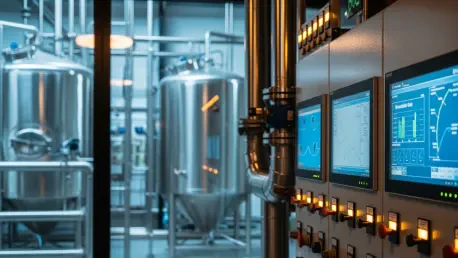
Delorean’s technical foundation is built upon the biological process of anaerobic digestion, a sophisticated method of breaking down organic matter in a strictly controlled, oxygen-free environment. This process utilizes specialized microorganisms to consume agricultural residues and food waste, effectively converting what was once a liability into a versatile energy source known as biomethane. By capturing these gases before they can escape into the atmosphere from landfills, the company addresses two environmental challenges simultaneously: waste management and carbon emissions reduction. This circular economy model is increasingly attractive to municipalities and food producers who face tightening regulations regarding organic waste disposal. The ability to provide a predictable, local source of energy while reducing the methane footprint of industrial waste provides a compelling value proposition. These biological conversion systems are now central to achieving sustainable and long-term energy goals.
Secondary Streams: Organic Digestate
Beyond energy production, the byproduct of the digestion process is a nutrient-rich organic digestate that can be repurposed as a high-quality fertilizer. This dual output reinforces the circularity of the business model, creating additional value streams while returning essential nutrients to the soil. As the agricultural sector seeks to reduce its reliance on synthetic, carbon-intensive fertilizers, this organic alternative presents a significant market opportunity. Delorean’s approach therefore integrates energy production with waste recovery and sustainable agriculture, positioning the company as a multifaceted player in the broader green economy. This holistic strategy is designed to maximize resource efficiency while minimizing the environmental impact of modern industrial activity. By transforming waste into both fuel and fertilizer, the company offers a comprehensive solution for carbon-conscious partners. This integration ensures that the entire life cycle of organic waste is managed within a sustainable framework.
Technical Infrastructure: Natural Gas Replacement
The strategic logic behind biomethane production lies in its high degree of compatibility with existing energy infrastructure. Unlike wind or solar projects that often require massive investments in new transmission lines or battery storage systems, biomethane can be injected directly into the current natural gas distribution network. This “lower-capital pathway” allows Delorean to utilize billions of dollars in established pipelines and storage assets that are already serving residential and industrial customers. This seamless integration is particularly valuable for decarbonizing hard-to-abate sectors, such as heavy manufacturing and high-heat industrial processes, where electrification remains technically or economically unfeasible. By providing a “drop-in” green fuel, the company circumvents many of the logistical hurdles that slow down other renewable energy sources. This infrastructure-led approach ensures that the renewable gas can be delivered to end-users efficiently without requiring massive capital overhauls.
Grid Stability: Reliable Baseload Energy
The ability to leverage the gas grid also provides a level of energy security and reliability that is often difficult to achieve with intermittent renewable sources. Since the production of biomethane can be maintained at a constant rate regardless of weather conditions, it serves as a reliable baseload power source for the grid. This stability is highly prized by grid operators who are struggling to manage the volatility introduced by high levels of solar and wind penetration. Furthermore, by injecting gas locally, the company helps to reduce transmission losses and improves the overall efficiency of the energy delivery system. This decentralized approach to gas production also aligns with broader government objectives to diversify energy supplies and reduce dependence on centralized fossil fuel extraction. As more regions implement renewable gas mandates, the value of direct grid access will increase, providing Delorean with a stable platform for long-term growth and technical leadership in the energy sector.
Operational Progress: SA1 Salisbury Facility
Facility Activation: Waste Acceptance Timeline
The SA1 Salisbury facility in South Australia represents the most significant operational milestone in Delorean’s current roadmap, serving as a vital proof-of-concept for its broader commercial strategy. This flagship project is designed to demonstrate that large-scale anaerobic digestion can be executed profitably while meeting rigorous environmental standards. The facility is currently entering its most important phase, with the formal acceptance of organic waste scheduled to begin in mid-August 2026. This step is far more than a logistical detail; it marks the transition from a construction site to an active processing plant. Successful waste intake will validate the facility’s intake systems and microbial health, which are the biological engines of the entire operation. Stakeholders are watching this timeline closely, as any delays could impact the company’s burn rate and its ability to secure future project financing. The ability to handle diverse waste streams effectively is the ultimate test of engineering.
Revenue Generation: Grid Injection Milestones
Following the successful commencement of waste processing in August, the facility will focus on the complex task of gas purification and injection into the national grid during the latter half of 2026. This upcoming period is viewed as a binary catalyst for the company’s market performance because it represents the first instance of direct revenue generation from gas sales. Achieving “first gas” will effectively de-risk the investment by proving that the technical hurdles of grid interconnection have been overcome. The market has historically been sensitive to these technical milestones, as they provide the only real evidence that a project developer can evolve into a functioning utility provider. For Delorean, this validation is necessary to regain investor confidence and to support a potential re-rating of its share price. As the energy market shifts toward decentralized production, the success of the Salisbury facility will serve as a repeatable template for future developments across other regions.
Financial Support: Non-dilutive Capital Grants
Navigating the financial requirements of capital-intensive energy projects requires a multifaceted funding strategy, and Delorean has successfully leveraged government support to bolster its balance sheet. A recent grant payment of A$1.66 million from the Australian Renewable Energy Agency, also known as ARENA, provided a critical influx of non-dilutive capital. This funding is significant because it allows the company to progress toward its operational goals without further diluting the interests of existing shareholders through equity raises. In addition to direct financial support, the company has secured GreenPower renewable-gas accreditation, which is a key differentiator in the competitive energy market. This certification allows Delorean to issue certificates that verify the sustainable origin of its gas, creating a secondary revenue stream through the sale of these environmental credits. Large corporate clients seeking to meet strict environmental targets are the primary buyers of these credits.
Strategic Evolution: Future Sector Growth
The long-term success of the bioenergy sector in Australia was heavily dependent on the establishment of clear policy frameworks and the successful execution of early flagship projects like SA1 Salisbury. As the industry moved through 2026, the demand for renewable gas in sectors that could not easily switch to electricity provided a stable foundation for Delorean’s expansion. The transition from a developer to an operational entity required a disciplined focus on maintenance, supply chain management, and the securing of long-term waste supply contracts. Strategic priorities involved optimizing the throughput of current facilities while aggressively pursuing new sites that could benefit from this refined operational model. Stakeholders monitored the consistency of gas injection volumes as a primary indicator of organizational health. Furthermore, the exploration of carbon capture technologies at these sites offered a path toward even greater decarbonization value. By maintaining this focus, the company solidified its role in the nation’s energy landscape.