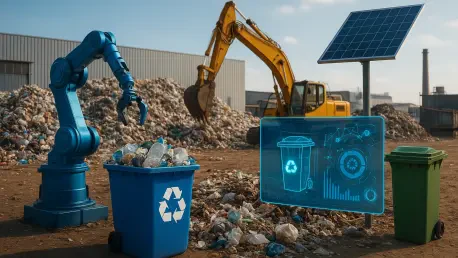

The Lagos State Waste Management Authority is integrating high-tech surveillance cameras with the state’s command center to identify individuals who illegally dump refuse in public spaces. This strategic move marks a departure from traditional, manual monitoring techniques that often failed to capture infractions in real time. By leveraging the existing security infrastructure of the Lagos State Command Centre, officials are now able to monitor road medians, drainage channels, and unauthorized dump sites across the metropolis. The initiative is part of a broader environmental governance framework that emphasizes accountability and deterrence. Rather than simply cleaning up after illegal acts, the state is prioritizing a proactive enforcement model that utilizes digital evidence to hold residents and businesses accountable. This technological layer is intended to create a psychological shift among the populace, reinforcing the idea that public spaces are under constant watch and that environmental violations will lead to direct legal consequences.
Strengthening Operational Infrastructure
Enhancing Logistics and Service Reliability
To ensure that the digital enforcement measures are supported by functional alternatives, the state government has recently finalized the acquisition and deployment of 150 modern waste collection trucks. These vehicles are specifically designed to navigate the complex road networks of the city, addressing the critical gaps created by the phasing out of inefficient private sector operators. This logistical boost is not merely about increasing the number of trucks on the road; it is about establishing a predictable and frequent collection schedule for households and commercial enterprises. State authorities recognize that the failure of service delivery often drives the very illegal behaviors that the surveillance system is designed to catch. By stabilizing the collection cycles from 2026 to 2028, the government aims to provide a reliable service that removes any perceived necessity for residents to discard waste in public gutters or on the streets. This consistency is vital for maintaining the integrity of the urban environment and the trust of the local citizens.
Addressing Public Health and Enforcement Needs
The impact of this modernized waste system extends beyond cleanliness, serving as a critical defense mechanism for the city’s infrastructure and the health of its residents. For years, the indiscriminate dumping of refuse into drainage systems has been a primary contributor to severe urban flooding, which destroys property and disrupts the regional economy. Recent enforcement actions, including the temporary sealing of business premises along major thoroughfares and the prosecution of numerous individuals, demonstrate a renewed commitment to environmental law. These measures highlight the state’s position that public sanitation is a shared responsibility, where every resident must adhere to standardized packaging and disposal protocols. The integration of technology and physical logistics creates a dual-pronged approach that targets the root causes of urban blight. By ensuring that drainage channels remain clear of debris, the state is effectively mitigating flood risks and reducing the prevalence of waterborne diseases that frequently plague densely populated neighborhoods.
The Future of Waste as a Resource
Promoting a Circular Economy and Energy Recovery
Lagos is currently transitioning toward a circular economy model that seeks to extract maximum value from the thousands of tons of waste generated daily. At the heart of this vision is the development of Material Recovery Facilities and Transfer Loading Stations, which act as hubs for sorting and processing recyclables before they reach the landfill. This strategy is guided by a state steering committee focused on identifying and implementing waste-to-energy technologies, including the establishment of biogas plants. These facilities are designed to convert organic matter into usable electricity and gas, potentially providing a sustainable energy source for local industries and residential areas. By shifting the perspective of waste from a liability to a commodity, the government is addressing the twin challenges of environmental degradation and energy scarcity. This approach reduces the volume of refuse destined for traditional landfills, which are nearing their capacity, and creates a more resilient urban ecosystem capable of sustaining growth through 2028.
Driving Collaboration and Long-Term Sustainability
Achieving long-term environmental sustainability requires a seamless synergy between high-tech enforcement tools, industrial-scale logistics, and widespread public cooperation. While the surveillance cameras provide the necessary deterrent and the new fleet provides the physical capacity for removal, the success of the system relies on the active participation of the community. Educational outreach programs are being synchronized with technological updates to ensure that residents understand how to sort their waste at the source. This collaborative model is essential for the viability of waste-to-energy projects, as the quality of the raw material determines the efficiency of energy conversion. As the state government continues to refine these systems from 2026 to 2028, the focus will remain on building a self-sustaining infrastructure that survives political transitions. If these initiatives are executed with precision, the city could serve as a global case study for how large urban centers can harness innovation to solve chronic environmental issues while generating economic value.
Establishing a Resilient Environmental Legacy
The comprehensive modernization of the waste management framework in Lagos was characterized by a fundamental shift from reactive cleanup to data-driven governance. By integrating the command center’s visual capabilities with a reinforced logistics chain, the state established a clear standard for urban accountability. This evolution was not limited to enforcement; it involved a deep commitment to the circular economy, where organic materials were viewed as potential energy sources rather than discarded refuse. The implementation of specialized recovery facilities ensured that the city’s vast output of waste was funneled into productive economic streams. Moving forward, the priority must remain on maintaining the physical infrastructure and updating the surveillance software to keep pace with urban expansion. City planners and environmental stakeholders should focus on scaling these modular biogas projects to decentralize energy production. The transition demonstrated that technology, when paired with political will and logistical support, could effectively reorganize the environmental health of a megacity.