
Christopher Hailstone brings a unique perspective to the construction landscape, blending years of experience in energy management and utility grid security with a keen eye for market economics. As a seasoned expert in electricity delivery and renewable infrastructure, he has spent decades navigating the complex intersections of geopolitical stability and domestic development. His insights are particularly vital now, as the industry grapples with a sudden spike in project stress driven by international conflict and fluctuating energy costs. In this conversation, we explore how global tensions are reshaping the American job site and what developers must do to survive a climate of extreme volatility.
Through our discussion, we delve into the alarming 22.8% surge in project abandonments and the specific logistical hurdles caused by disruptions in the Strait of Hormuz. We analyze the divergence between paused and abandoned projects, the cooling effect of 12.6% inflation on private sector planning, and the relative stability found in public works. Finally, we look at the return of private projects to historic averages and the strategic adjustments necessary for contractors to thrive in an era of unpredictable input costs.
Project abandonments jumped nearly 23% in March as regional conflicts disrupted shipping through the Strait of Hormuz. How are these logistical bottlenecks specifically hitting job sites, and what steps should developers take to mitigate the resulting surge in input costs?
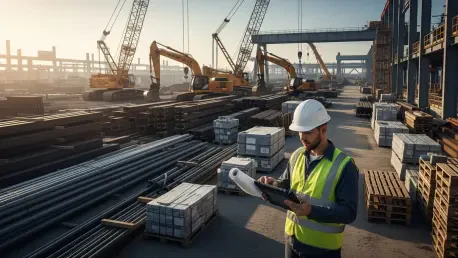
The 22.8% surge in project abandonments we witnessed in March is a visceral reaction to the fragility of our global supply chains. When the Strait of Hormuz is compromised, it sends a shockwave through the energy markets, which immediately translates to higher fuel surcharges for every truckload of lumber or steel arriving at a site. On the ground, this looks like empty staging areas and idling crews because the specialized components needed for electrical grids or HVAC systems are sitting on a freighter diverted thousands of miles off course. To mitigate this, developers must move beyond the “just-in-time” delivery model and embrace “just-in-case” inventory management, even if the carrying costs feel burdensome in the short term. My strategy involves a three-tier audit: identifying every critical path material, securing secondary domestic suppliers, and utilizing price-lock contracts for fuel to insulate the project from the daily volatility of oil prices.
While the Project Stress Index rose recently, bid delays and on-hold projects actually saw a slight decline. What does this divergence tell us about the current appetite for new starts, and how do you differentiate between a project that is merely paused versus one that is fully abandoned?
The 4.2% increase in the Project Stress Index is a bit of a paradox because it was driven almost entirely by abandonments, while bid delays fell by 1.2% and on-hold projects dropped by 9.9%. This tells us that the middle ground is evaporating; developers are no longer interested in “waiting it out” and are instead making the hard choice to kill projects that no longer pencil out. A project is typically “on hold” when there is a specific, solvable hurdle, like a pending permit or a temporary financing gap, which is why we saw those numbers dip as older projects finally moved. However, a project is “abandoned” when the fundamental math is broken—when the 12.6% annualized inflation rate eats the entire projected margin, leaving the owner with no choice but to walk away. It is a shift from cautious optimism to a cold, hard realization that the economic landscape has shifted permanently for certain builds.
Excluding the data center boom, commercial construction planning has dropped over 12% in the last year. How is the private sector reallocating capital amidst 12.6% annualized input cost inflation, and which specific sub-sectors are proving most resilient?
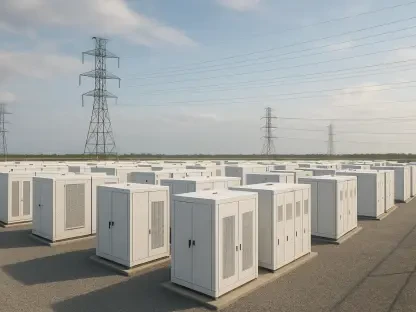
If you strip away the massive demand for data centers, the commercial sector looks quite lean, with planning down 12.7% since last March. Capital is being aggressively reallocated toward “recession-proof” infrastructure and high-efficiency energy projects that promise long-term operational savings to offset the high cost of entry. We are seeing a lot of interest in the “industrial-tech” sub-sector—facilities that combine manufacturing with advanced power storage—because these projects can often justify the 12.6% inflation hit through tax credits and energy independence. I’ve spoken with developers who are literally walking away from traditional office space and putting that money into localized microgrids, as the reliability of the utility connection has become a more valuable asset than the square footage itself. It is a flight to quality and utility, where every dollar spent must contribute to the project’s ability to withstand future energy shocks.
Public project abandonments have decreased significantly compared to last year, while private work shows more volatility. Why is the public sector showing greater stability right now, and what contractual protections are public agencies using that private developers should consider adopting to manage risk?
The public sector is currently a relative haven of stability, with abandonments dropping 17.2% year-over-year, which stands in stark contrast to the 4.6% decline in the private sector. Public projects often have the benefit of long-term bond funding and legislative mandates that keep them moving even when the economy gets choppy. One of the most effective tools public agencies use is the “price escalation clause,” which allows for budget adjustments based on pre-defined commodity indices like steel or diesel. Private developers often shy away from these because they want a fixed price, but in a world where costs are rising at a 12.6% rate, a fixed price is often an invitation for a contractor to go under or walk away. By adopting these transparent, index-based adjustments, private developers can build more collaborative relationships with their contractors and keep the project moving despite global shipping bottlenecks.
Private on-hold projects have recently returned to historic averages after a period of extreme highs. What specific economic triggers are moving these projects back into the active phase, and what should contractors do to prepare for this sudden influx of work?
The massive 79.7% plunge in private projects on hold is a clear signal that the “logjam” of 2025 is finally breaking, as projects either get cancelled or finally get the green light. The primary triggers for this movement are the realization that interest rates aren’t going back to zero and the urgent need to bring capacity online before the next cycle of inflation hits. For contractors, this sudden influx of work is a double-edged sword that requires an immediate and disciplined focus on labor retention and equipment maintenance. You cannot afford to have a crane down for a week when you are trying to catch up on a backlog that has been sitting for eighteen months. I recommend that firms perform an immediate “stress test” on their own internal logistics, ensuring they have the specialized manpower ready to handle the technical requirements of modern, energy-intensive builds.
What is your forecast for the construction industry’s recovery as global energy markets continue to react to the ongoing conflict?
My forecast for the industry is one of “strained resilience,” where we will see a slow recovery that is heavily dependent on how quickly we can decouple construction logistics from volatile energy corridors. We are likely to see the Project Stress Index fluctuate as long as the conflict in the Middle East impacts oil trade flows, but the 3.5% ease in stress compared to last year’s tariff-driven highs shows we are learning to adapt. The winners in this new economy will be those who can integrate renewable energy and microgrid technology directly into their construction plans, reducing their long-term exposure to the Strait of Hormuz and other geopolitical flashpoints. Expect to see a continued bifurcation of the market: a thriving sector for data centers and energy infrastructure, and a much more difficult road for traditional commercial projects that fail to innovate in the face of 12.6% inflation. If we can stabilize our domestic supply chains and move toward energy independence, the industry will find its footing, but the era of cheap, predictable inputs is likely behind us for the foreseeable future.