
Traditional monoculture models are proving increasingly difficult to maintain for independent producers who do not have the financial cushion of large-scale corporate farming operations. This fiscal instability has pushed American agriculture into a transformative era where the boundaries between energy production and food cultivation are blurring. Known as agrivoltaics, the practice of co-locating solar arrays with active farming has emerged as a controversial yet potentially revolutionary solution to rural economic decline. While critics argue that covering fertile soil with glass panels threatens national food security, many landowners view these installations as the only viable path forward for their families. The tension is palpable in rural communities where the legacy of the family farm is now being weighed against the urgent demands of the modern energy transition. As the nation attempts to balance its decarbonization goals with agricultural preservation, the debate has moved beyond simple land use into the realm of cultural identity and long-term financial survival for the heartland’s producers who face unprecedented global competition.
Economic Survival: Navigating Financial and Policy Shifts
Revenue Diversification: The Stabilization of Family Farms
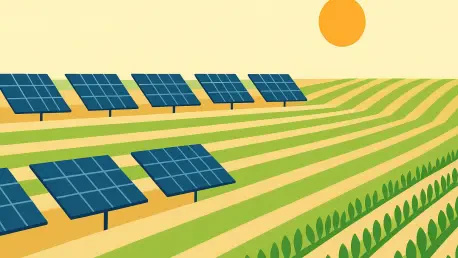
The transition from traditional farming to energy-integrated operations often marks the difference between losing a multi-generational legacy and achieving long-term stability in an era of extreme climate volatility. In regions like West Texas, the introduction of solar technology has provided a crucial buffer for producers like Chad Raines, who experienced nearly a decade of consecutive financial losses while farming cotton. By pivoting to a model where energy companies pay for vegetation management, Raines successfully integrated thousands of sheep into solar sites, effectively turning his land into a dual-purpose asset. This approach allows the land to remain productive in two ways at once, ensuring that the agricultural identity of the property is preserved even as its primary output shifts toward the power grid. The stability offered by solar leases provides a guaranteed income stream that is entirely independent of commodity price fluctuations or the increasingly unpredictable rainfall patterns that have devastated local cotton harvests for years.
The economic mechanics of these dual-use partnerships create a rare scenario where the farmer is compensated for activities that were previously considered overhead costs. In a traditional ranching setup, managing forage and maintaining land requires significant capital investment with no guarantee of a return. Under an agrivoltaic agreement, however, solar developers often provide the funding for vegetation control, which essentially subsidizes the feeding of the farmer’s livestock. This synergy allows small-to-midsize producers to maintain their herds without the crushing pressure of high input costs, creating a hedge against the boom-and-bust cycles that have historically defined rural economies. As more producers observe the success of these integrated models, the narrative is shifting from a choice between “solar or farming” to a strategy of “solar and farming.” This evolution is critical for rural revitalization, as it keeps land in the hands of local families rather than forcing them to sell to developers who might otherwise remove the soil from agricultural use entirely.
Regulatory Hurdles: The Impact of Shifting USDA Priorities
Despite the clear financial benefits felt by individual landowners, the federal government has recently adopted a more cautious and sometimes adversarial stance toward rural solar development. Recent policy shifts have seen the USDA restrict funding for solar projects on land classified as prime farmland, citing concerns that energy production might displace essential food crops. This regulatory pivot has created a bottleneck for small-scale rural energy programs, framing the rise of solar as a zero-sum competition for soil rather than a complementary strategy. Agriculture officials have articulated a vision where subsidized energy projects are viewed as a potential threat to land affordability, arguing that solar demand could drive up prices and price out the next generation of farmers. These restrictions reflect a growing tension between national energy goals and the traditional mandate of protecting the American food supply, leading to a complex landscape for those seeking to diversify.
This federal pivot has also impacted the Rural Energy for America Program, a cornerstone for funding small-scale energy projects that many independent producers rely on for modernization. By framing solar installations as a permanent industrial displacement of soil, the current administration has shifted the burden of proof onto farmers to demonstrate that their energy projects will not degrade the land’s long-term agricultural capacity. Industry experts argue that this perspective ignores the reality of land-use cycles, where solar panels act more like a temporary lease than a permanent conversion. The central conflict remains one of definition: while government agencies treat solar as an industrial intrusion, many land-use experts and farmers view it as a reversible strategy that protects the soil from more invasive forms of development. This policy divide continues to influence how rural communities plan for their future, often pitting federal conservation goals against the immediate economic needs of the people living on the land.
Land Stewardship: Preservation and Cultural Conflict
Spatial Conflict: Solar as a Shield Against Urban Sprawl
One of the most compelling arguments in favor of rural solar development is its role as a temporary “land bank” that prevents permanent loss to suburban development and commercial paving. Unlike housing tracts or shopping malls, which pave over soil forever and destroy the local ecosystem, solar installations are generally held on long-term leases and can be decommissioned after several decades. Because the mounting equipment is minimally invasive and the soil remains permeable beneath the panels, the agricultural capacity of the land is preserved for future generations. This stands in stark contrast to the relentless march of urban sprawl, which claims thousands of acres of American farmland every year with no possibility of restoration. Advocates like Jeff Risley suggest that the focus on solar as the “destroyer” of farmland is misplaced, noting that once a parking lot is built, that soil is gone forever, whereas a solar field remains a living landscape that can return to crops.
The distinction lies in the concept of “permanence” and how it affects the long-term viability of rural areas facing population pressure from nearby cities. Solar projects typically operate on thirty-to-forty-year lease cycles, at which point the equipment can be removed and the land returned to traditional production methods. During the life of the project, the soil often has an opportunity to rest and recover from the intensive chemical applications associated with industrial monoculture, potentially improving its health for future agricultural use. In this sense, solar acts as a protective shield, holding large tracts of land together and preventing them from being broken up into smaller residential parcels. By providing farmers with enough income to keep their property whole, solar energy actually serves as a conservation tool that maintains the rural footprint. This long-term perspective is gaining traction among conservationists who recognize that keeping a farm profitable is the most effective way to ensure it is not sold for development.
Local Perspectives: Managing Aesthetics and Community Benefit
While the economic and environmental arguments are strong, solar expansion frequently encounters cultural pushback from residents who view large-scale arrays as an industrial blight on the horizon. In more densely populated areas like Upstate New York, the visual impact of shimmering glass panels can lead to significant friction between neighbors. For many who move to rural areas seeking unobstructed vistas and traditional landscapes, the “industrialization” of the horizon feels like a violation of the rural aesthetic. This resistance is often a matter of geography and proximity; in vast regions like the Southwest, solar farms can be miles from any dwelling, but in the Northeast, they may sit directly adjacent to residential properties. To address these concerns, developers and local leaders are increasingly turning to community benefit agreements to ensure that the broader town feels the advantages of hosting renewable energy.
These legally binding contracts ensure that solar developers provide tangible local improvements, such as funding for new grocery stores, community centers, or direct tax revenue for local school districts. By moving past a model where only the individual landowner benefits, these agreements help to bridge the cultural gap and build local support for the energy transition. When a town can see a direct correlation between a solar array and a lower tax bill or a new public park, the aesthetic concerns often become less of a barrier to project approval. Furthermore, the use of natural buffers like hedgerows and pollinator-friendly plantings can help integrate the panels into the existing landscape more harmoniously. Navigating this cultural resistance requires a shift in how energy projects are presented to the public, moving away from purely technical data and toward a conversation about shared community prosperity and the preservation of the local way of life through modern economic means.
Environmental Innovation: The Path Toward Revitalization
Rural Decarbonization: Integrating Renewables into the Landscape
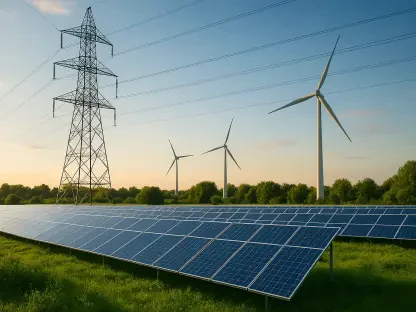
Rural America plays a disproportionate role in the national carbon footprint, making the integration of renewable energy into the agricultural sector a necessity for meeting climate goals. Despite housing less than twenty percent of the population, rural areas account for nearly thirty-eight percent of total domestic carbon emissions, with the agricultural sector itself contributing significantly to these figures. This data underscores the vital importance of transitioning toward cleaner energy sources within the very heart of the country’s food production zones. Beyond the obvious environmental benefits, the move toward wind and solar represents a potent tool for rural revitalization, creating high-tech jobs and local tax revenue that do not rely on traditional labor markets. As states like Texas continue to lead the nation in production, solar energy is becoming a primary hedge against the boom-and-bust cycles that have historically defined and often hindered the growth of rural economies.
The transition to solar and wind in rural areas represents more than just a shift in energy sources; it is a fundamental reimagining of how rural land can serve the needs of a modern society. By generating clean power on-site, farmers can reduce their own energy costs while simultaneously contributing to the stability of the regional grid. This decentralized approach to power generation makes rural communities more resilient to extreme weather events that can cause widespread blackouts in centralized systems. Furthermore, the infusion of energy revenue allows local governments to invest in critical infrastructure like high-speed internet and improved healthcare facilities, which are essential for attracting and retaining the next generation of rural residents. The synergy between agricultural production and renewable energy creation provides a roadmap for a more sustainable and prosperous future for the American heartland. This evolution ensures that rural areas remain at the center of the nation’s economic and environmental strategy.
Strategic Adaptation: Reimagining the American Agricultural Model
The debate over the role of solar energy in the agricultural sector demonstrated that the survival of the American family farm required a fundamental shift in how producers viewed land use and revenue. Stakeholders identified that the perceived conflict between food and fuel was often a symptom of the economic instability inherent in traditional monoculture models. By embracing agrivoltaics and integrated energy production, producers found a way to shield their land from permanent loss to urban development while securing their financial futures. Policymakers and local leaders recognized that the American landscape has always been in a state of flux, and the move toward energy-integrated farms represented the latest chapter in a long history of agricultural adaptation. This realization helped move the national conversation past zero-sum rhetoric and toward a collaborative model where the sun simultaneously powered the grid and sustained the soil for future generations.
Moving forward, the agricultural sector should prioritize the adoption of standardized community benefit agreements to ensure that renewable energy expansion remains a tool for broad rural prosperity. Farmers and energy developers must work together to refine dual-use techniques, such as optimizing panel heights for diverse livestock and identifying crop varieties that thrive in partial shade. State and federal agencies should streamline the classification of agrivoltaic projects to reflect their temporary nature, allowing land to be treated as a “banked” asset rather than an industrial loss. Local zoning boards are encouraged to implement visual buffer requirements and pollinator habitats to address aesthetic concerns and support local biodiversity. By treating the energy transition as a partnership rather than an intrusion, rural communities can leverage their natural resources to build a resilient and diversified economy. These practical steps will ensure that the American farm remains a productive and vital cornerstone of the national economy throughout the coming decades.