
The transition of energy subsidies in 2027 is creating a powerful economic incentive for power producers to find lower-cost alternatives to expensive imported wood pellets. As the United Kingdom navigates the complexities of a post-coal era, the sheer volume of waste cardboard generated by an increasingly digital retail economy has emerged as a potential lifeline for the nation’s biomass facilities. Every year, millions of tons of corrugated fiberboard and paperboard move through the British economy, supporting a logistics industry valued at over £6 billion. While a significant portion of this material is captured for recycling, the structural integrity of wood fibers is not infinite. After five to seven cycles of pulping and drying, these fibers become too short to form a cohesive product, leaving a vast stream of “end-of-life” material that currently heads toward landfills or composting sites. In these anaerobic environments, the material breaks down and releases methane, a greenhouse gas with a warming potential nearly thirty times that of carbon dioxide. Converting this problematic waste into a high-density energy source represents a dual victory: it mitigates a major source of landfill emissions while providing a stable, domestic feedstock for a grid that is currently overly dependent on international wood markets.
The Strategic Shift in Domestic Energy
Transitioning from Coal to Biomass: Historical Context
The architectural landscape of British power generation has changed more in the last three decades than in the preceding century. The massive cooling towers that once symbolized the dominance of coal have largely been repurposed or demolished to make way for a more diversified energy portfolio. A central component of this strategy has been the conversion of existing coal-fired units to run on biomass pellets, a move that currently accounts for approximately 14% of the total electricity generated across the country in 2026. This transition was initially hailed as a swift method for decarbonization, leveraging existing grid connections and steam turbine technology to provide baseload power that wind and solar cannot yet guarantee. However, as the infrastructure has matured, the ecological and logistical costs of the current supply chain have become more apparent to policymakers and environmental auditors alike.
The primary limitation of the current biomass model is its overwhelming reliance on wood pellets imported from North American forests. Shipping millions of tons of processed wood across the Atlantic Ocean introduces a significant carbon debt before the fuel even reaches a British furnace. Critics argue that the carbon sequestration lost through forest harvesting, combined with the energy required for pelletization and international shipping, undermines the long-term sustainability goals of the sector. Furthermore, as global demand for wood products increases, the price of these pellets has become increasingly volatile, leaving British energy producers exposed to market fluctuations that they cannot control. This economic pressure is driving a search for “indigenous” fuels that can be sourced, processed, and consumed within national borders, effectively closing the loop on the UK’s waste-to-energy strategy.
Strengthening National Energy Security: Domestic Resource Potential
Recent geopolitical instability has served as a stark reminder that energy security is synonymous with national security. The disruption of global supply chains and the subsequent bans on certain international timber products have left the United Kingdom’s biomass sector in a precarious position. By identifying and developing domestic fuel sources, the UK can shield its energy grid from the whims of international politics and the logistical bottlenecks of global shipping routes. Waste cardboard stands out as the most promising candidate for this role, with nearly 4 million tons of material potentially available for energy recovery every year. This massive volume of domestic biomass could theoretically displace a substantial portion of imported wood pellets, keeping energy expenditures within the local economy and supporting thousands of jobs in the waste management and processing sectors.
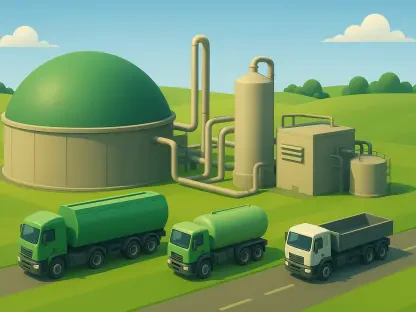
Utilizing cardboard as a primary energy feedstock would also alleviate the mounting pressure on the nation’s waste infrastructure. As landfill space becomes increasingly scarce and expensive, the ability to divert non-recyclable fiber streams into the energy sector provides a release valve for municipal and industrial waste managers. Unlike raw timber, which requires years of growth before it can be harvested, cardboard is a byproduct of daily commerce that is replenished at a constant rate regardless of weather patterns or growing seasons. This reliability makes it an ideal candidate for a circular energy economy, where the “trash” of the retail sector is transformed into the “treasure” of the power grid. By localizing the supply chain, the UK reduces its exposure to currency devaluations and shipping insurance spikes, creating a more resilient and self-sufficient energy ecosystem that can withstand future global shocks.
Analyzing Cardboard as a Viable Feedstock
Understanding Chemical Composition: Cellulose and Pulp Properties
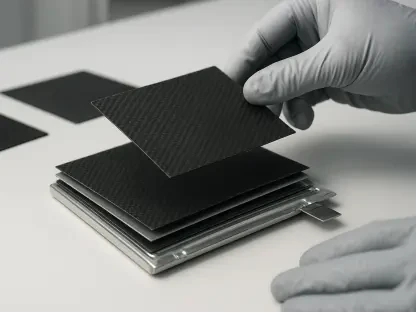
To determine the viability of cardboard as a fuel, researchers must look beyond its physical appearance and analyze its molecular structure. Cardboard is primarily composed of cellulose fibers that have been chemically or mechanically separated from raw wood. During the manufacturing process, most of the hemicellulose and lignin—the “glue” that holds a tree together—is removed, leaving a material that is much richer in pure cellulose than standard wood chips. This high cellulose concentration significantly alters the combustion behavior of the material. Cellulose burns with high intensity and rapid energy release, which can be advantageous for maintaining high temperatures within a boiler, but it also means the fuel behaves differently than the forest residues that most industrial systems were originally designed to handle.
Academic studies, particularly those conducted by teams of engineering researchers in 2026, have utilized advanced techniques like Thermogravimetric Analysis to map the thermal fingerprint of different cardboard types. They have discovered that while unprinted corrugated boxes are chemically similar to refined wood pulp, consumer packaging often contains various additives that change its performance. For example, many shipping boxes include starch-based adhesives to hold the fluting together, which adds to the caloric value of the fuel. However, retail-facing paperboard often contains high concentrations of mineral fillers used to create a smooth surface for high-quality printing. These nuances in chemical composition mean that cardboard cannot be treated as a monolithic fuel source; instead, it requires careful sorting and blending to ensure a consistent energy output that does not damage the sensitive components of a power plant.
Performance in Industrial Furnaces: Combustion and Ignition
When cardboard is introduced into a high-temperature environment, such as a drop tube furnace or a pulverized fuel boiler, its performance is remarkably efficient. Research indicates that the material ignites faster than traditional wood pellets, owing to its higher surface-area-to-volume ratio once it has been processed. This rapid ignition ensures that the energy is released quickly, allowing for high steam-generation rates in industrial power plants. Because cardboard has already been “pre-processed” through the pulping and drying stages of manufacturing, it lacks the high moisture content often found in raw wood chips, which typically hover around 40-50%. Most waste cardboard arrives with a moisture content of less than 10%, meaning less energy is wasted evaporating water and more energy is available for heat generation.
However, the thermal profile of cardboard reveals a unique characteristic at approximately 600°C that is not present in raw wood. This peak in the combustion curve is attributed to the thermal decomposition of calcium carbonate, a common mineral filler. While the presence of this mineral does not prevent the material from being used as a fuel, it does slightly lower the overall energy density compared to pure wood. High-grade coal typically yields 25 to 30 megajoules per kilogram, whereas processed cardboard provides roughly 16 megajoules. While this energy density is lower, the abundance and low cost of the material make it economically competitive. The challenge for energy producers in 2026 is to calibrate their furnaces to handle this specific combustion curve, ensuring that the flame remains stable and that the thermal energy is captured efficiently without causing excessive wear on the boiler walls.
Technical and Chemical Obstacles
Overcoming Material Handling Issues: Milling and Density
The primary technical hurdle preventing the widespread adoption of cardboard fuel is its physical recalcitrance during processing. Industrial power stations that utilize pulverized fuel require biomass to be ground into a fine powder, often with a particle size of less than one millimeter. Traditional wood pellets are brittle and shatter easily in a hammer mill, but cardboard is incredibly resilient. When subjected to standard industrial milling equipment, cardboard fibers tend to tear rather than break, resulting in “fluffy” agglomerates. These large, tangled mats of fiber have an extremely low bulk density, making them nearly impossible to move through the pneumatic transport tubes that feed the furnaces. If these mats are not properly managed, they can lead to severe operational delays, clogging feeders and creating uneven fuel distribution across the burners.
To solve this problem, energy producers are investigating specialized milling technologies that utilize shear fracture mechanics rather than simple impact. By cutting the fibers into precise lengths before grinding, facilities can produce a more uniform dust that behaves like traditional wood powder. Another approach involves advanced pelletization, where the cardboard is compressed under high pressure and heat to increase its density from a few dozen kilograms per cubic meter to over 600. This densification not only makes the material easier to transport and store but also reduces the risk of dust explosions—a significant safety concern in any facility that handles fine organic particles. Investing in these specialized processing units is a prerequisite for any large-scale transition to cardboard-based power generation, requiring a capital commitment that many firms are currently evaluating against the backdrop of rising import costs.
Managing Ash and Boiler Maintenance: Slagging and Mineral Content
While cardboard burns cleanly in terms of sulfur and nitrogen emissions, its mineral content poses a significant risk to the longevity of industrial boilers. The calcium carbonate and other fillers added during the manufacturing of paperboard contribute to a much higher ash content than is found in forest-grown wood. While a typical wood pellet might produce less than 1% ash, cardboard can yield between 5% and 12% depending on the grade. This high volume of non-combustible material must be constantly removed from the furnace to prevent it from choking the system. More importantly, the chemistry of this ash can lead to “slagging,” a process where the minerals melt and then solidify as a glassy, rock-like crust on the interior walls and heat-exchange tubes of the boiler.
Slagging is the bane of power plant operators because it acts as an insulator, preventing the heat from the furnace from reaching the water in the pipes, thereby crashing the efficiency of the entire system. Furthermore, as the slag grows, it can become heavy enough to break off and cause physical damage to the equipment below, or it can completely block the flow of exhaust gases. Research conducted throughout 2026 has shown that industrial shipping waste—the brown corrugated boxes used by global logistics firms—is a much safer fuel than the high-gloss packaging used in retail. The retail packaging contains significantly more mineral fillers and coatings, which lower the “ash fusion temperature” and accelerate the formation of slag. Consequently, any successful bioenergy program will likely need to focus on industrial waste streams to minimize maintenance costs and maximize the uptime of the generation facilities.
Regulatory Drivers and Economic Potential
The Influence of New Waste Laws: Standardization and EPR
The economic viability of cardboard as a fuel is being heavily influenced by a series of new environmental regulations in the United Kingdom, most notably the Extended Producer Responsibility (EPR) framework. Under these rules, manufacturers are now financially responsible for the entire lifecycle of the packaging they put onto the market. This creates a strong incentive for companies to standardize their materials and move away from complex, multi-layered packaging that is difficult to process. As EPR takes full effect, the stream of waste cardboard entering the recovery system is becoming cleaner and more uniform, which directly benefits energy producers who require a consistent feedstock. By penalizing the use of non-recyclable coatings and adhesives, these laws are inadvertently creating a higher-quality “fuel-grade” cardboard waste stream.
Furthermore, the “Simpler Recycling” initiative has streamlined how businesses and households separate their waste, ensuring that cardboard is not contaminated by food waste or other organic matter that would decrease its caloric value. When waste is contaminated, it often ends up being rejected by recycling centers and sent to landfills, where it incurs heavy taxes. By redirecting this “rejected” material toward bioenergy facilities, the UK can fulfill its regulatory mandates to reduce landfill volumes while simultaneously generating low-carbon power. These laws act as a bridge between the waste management sector and the energy sector, fostering a collaborative environment where the disposal of a shipping box is no longer seen as a cost to be managed, but as a resource to be harvested for the benefit of the national grid.
Economic Viability Beyond Subsidies: The Circular Value Proposition
As the Renewable Obligation Certificates and other older subsidy programs begin to wind down or transition in 2027, the bioenergy industry must find ways to stand on its own financial feet. The current model of importing expensive wood pellets is only sustainable because of these government payments; without them, the high cost of the fuel would make biomass power uncompetitive with solar, wind, or natural gas. Cardboard, however, offers a completely different economic profile. Because it is a waste product, power plants can often charge a “gate fee” to accept the material, effectively being paid to take their own fuel. This shifts the financial model from one of high operational expenditure to one where the fuel source actually generates revenue before it is even burned, providing a massive buffer against fluctuating electricity prices.
This “circular” value proposition is particularly attractive to industrial clusters that produce large amounts of their own packaging waste. Large distribution centers or manufacturing hubs can install on-site small-scale biomass plants to burn their own discarded cardboard, generating heat and electricity that can be used to power their facilities. This reduces their reliance on the national grid, eliminates their waste disposal costs, and lowers their corporate carbon footprint all at once. Even at a utility scale, the “avoided cost” of landfill taxes—which have continued to rise through 2026—makes cardboard a highly lucrative alternative to virgin wood. As the energy market continues to prioritize cost-efficiency in a post-subsidy world, the transition from expensive imported pellets to “free” domestic waste appears not just environmentally sound, but economically inevitable.
Future-Proofing the UK Energy Grid
The strategic integration of waste cardboard into the United Kingdom’s bioenergy portfolio represented a major shift in how the nation approached resource management. By moving away from a total reliance on imported wood pellets, the energy sector successfully lowered its carbon footprint and stabilized fuel costs against international volatility. The research conducted throughout 2026 demonstrated that while technical challenges like slagging and milling were significant, they were not insurmountable with the right investment in densification and shear-fracture technology. This transition allowed the UK to hit its 2026-2028 interim emissions targets with greater precision, as the localization of the supply chain removed the heavy environmental burden of trans-oceanic logistics. The success of these initiatives provided a clear roadmap for other nations to follow, proving that the end of a material’s physical life does not have to be the end of its economic value.
Looking ahead, the most critical next step involved the widespread deployment of Carbon Capture and Storage (CCS) at these biomass facilities. By capturing the CO2 emitted from burning cardboard—which was originally sequestered by trees—the UK began to move into the realm of carbon-negative energy production. This capability was essential for neutralizing the “hard-to-abate” emissions from other industrial sectors. Policymakers have now turned their attention toward refining the sorting infrastructure to ensure that only the lowest-grade, non-recyclable fibers are diverted to the furnaces, maintaining the integrity of the recycling circular economy while feeding the energy grid. The legacy of the 2027 subsidy cliff was not a decline in bioenergy, but a renaissance of domestic resourcefulness that turned every discarded shipping box into a functional unit of energy, securing the grid for generations to come.