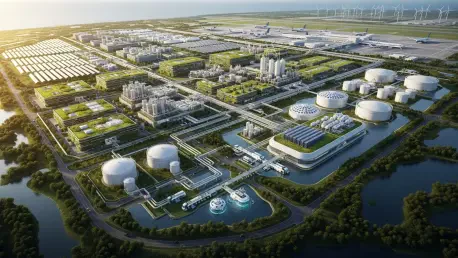

The industrial landscape of Rosemount, Minnesota, is currently undergoing a radical metamorphosis as the Pine Bend Refinery transitions from being the state’s most significant source of greenhouse gas emissions to becoming the bedrock of a burgeoning global sustainable aviation fuel market. This transformation is not merely a corporate rebranding but a structural realignment of the state’s energy priorities, reflecting a broader commitment to decarbonizing the most difficult-to-abate sectors of the global economy. By establishing a world-class blending facility, Minnesota is effectively positioning itself as a central node in the aviation industry’s pivot away from traditional petroleum toward cleaner, renewable energy sources. This initiative represents a sophisticated collaboration between public policy and private enterprise, aimed at leveraging the region’s deep agricultural roots and established industrial infrastructure. The state is no longer just looking for localized solutions but is actively building a comprehensive economic ecosystem designed to secure a dominant role in the international green energy trade for decades to come. This shift toward a sustainable aviation fuel hub is particularly significant given the sheer scale of the aviation industry’s carbon footprint, which has long been viewed as an insurmountable challenge for climate policy. By focusing on a location like Pine Bend, the project demonstrates that even the most carbon-intensive sites can be repurposed for a net-zero future if the right combination of technology, investment, and political will is applied.
Technical Pathways: Innovations in Aviation Fuel Production
The success of the sustainable aviation fuel (SAF) sector in the region relies heavily on the advancement of “drop-in” fuel technology, which provides a seamless transition for the aviation industry by allowing existing aircraft engines and fueling infrastructure to operate on renewable alternatives without any mechanical modifications. Engineers and researchers are currently focusing on three primary production pathways to ensure a diversified and resilient supply chain. The first involves hydroprocessed esters and fatty acids, commonly referred to as HEFA, which utilizes fats, oils, and greases to create a high-quality fuel. The second pathway involves alcohol-to-jet technology, which converts ethanol—a staple of the Midwestern economy—into aviation-grade kerosene. Finally, the industry is investing in synthetic e-fuels, which are created by combining captured carbon dioxide with hydrogen produced from renewable electricity. This multi-faceted technical strategy ensures that the state is not overly dependent on a single feedstock, allowing the local industry to scale rapidly while adapting to the latest scientific breakthroughs in energy density and carbon intensity reduction.
Beyond the technical mechanics of fuel production, the regional hub is characterized by an unprecedented level of corporate synergy, involving some of the most influential players in the global economy. Organizations such as Delta Air Lines, Ecolab, and Bank of America have aligned through the Greater MSP partnership to address the formidable logistical and financial hurdles associated with flight decarbonization. These entities recognize that the transition to sustainable fuels is too capital-intensive for any single company to undertake alone. By pooling resources and committing to long-term purchase agreements, these corporate giants are providing the market certainty needed to attract multi-billion dollar investments into Minnesota’s infrastructure. This collaborative framework serves as a model for how the private sector can lead environmental initiatives by turning climate goals into competitive business advantages. The focus remains on establishing a localized supply chain that reduces transport costs and minimizes the overall carbon footprint of the fuel, ensuring that the environmental benefits of SAF are not negated by the logistics of its distribution.
Policy and Economy: The Legislative Engine of Decarbonization
Minnesota’s political environment has established a remarkably stable foundation for this industrial shift through the implementation of robust, bipartisan tax incentives that make the state one of the most attractive destinations for green energy investment. A cornerstone of this policy is a generous tax credit system that offers up to $2.00 per gallon for high-performing sustainable fuels, specifically targeting those that achieve significant reductions in lifecycle greenhouse gas emissions. This local policy acts as a critical buffer against the inherent volatility of federal tax structures and international energy markets, providing investors with the long-term predictability required for large-scale industrial projects. By creating a clear financial incentive for cleaner production, the state has effectively accelerated the construction of blending and processing facilities that would have otherwise taken decades to materialize. This legislative proactive approach ensures that Minnesota remains at the forefront of the national energy transition, capturing high-paying industrial jobs and securing a leadership role in the emerging low-carbon economy.
In addition to direct financial incentives, the state’s strategy emphasizes the integration of regenerative agriculture and the development of continuous living cover crops as essential components of the SAF supply chain. Agricultural researchers are prioritizing the cultivation of winter-hardy oilseeds, such as camelina, which can be grown during the off-season without displacing traditional food crops like corn and soybeans. This dual-purpose farming model allows producers to generate a secondary revenue stream while simultaneously improving soil health and preventing erosion. Because these cover crops remain in the ground during the winter months, they are exceptionally effective at absorbing excess nitrogen that would otherwise leach into local watersheds, thereby addressing long-standing water quality concerns. This holistic approach harmonizes the needs of the energy sector with the state’s environmental conservation goals, proving that industrial growth and ecological stewardship are not mutually exclusive. By linking the prosperity of rural farming communities directly to the success of the aviation hub, the state is building a broad-based economic coalition that supports long-term sustainability.
Strategic Logistics: Navigating Global Markets and Industry Hurdles
The geographic positioning of Minnesota provides a distinct logistical advantage that allows the state to project its influence far beyond the borders of the Midwest, particularly through the strategic use of the Port of Duluth-Superior. As the furthest inland port on the Great Lakes-St. Lawrence Seaway system, Duluth offers a direct maritime corridor to European markets, where stringent environmental mandates are creating a massive and immediate demand for sustainable fuels. This access to international trade routes transforms a regional production effort into a global commercial opportunity, allowing Minnesota-produced synthetic fuels to compete on the world stage. By leveraging existing waterborne transport infrastructure, the state can move large volumes of fuel with a much lower carbon footprint than rail or truck transport, further enhancing the overall sustainability of the product. This logistical connectivity is a key pillar of the hub’s strategy, ensuring that the state is not just a producer of fuel, but a central player in the global maritime and aviation logistics network.
Despite these significant advantages, the path to a fully operational global hub is fraught with substantial infrastructure gaps and complex regulatory challenges that require careful management. Stakeholders are currently navigating the intricacies of environmental permitting for carbon capture systems and the massive electrical upgrades needed for high-capacity hydrogen production. Building the necessary pipelines and storage facilities requires significant capital and years of coordinated planning between state agencies and private developers. Furthermore, the industry must bridge the current price gap between sustainable alternatives and traditional petroleum-based jet fuel to ensure market maturity and widespread adoption. To manage these complexities, the state adopted a “Three-Horizon” strategy that guides development through 2035. The initial phase focused on building immediate blending capabilities to seed the local market, while the subsequent phases prioritize large-scale biomass production and the eventual transition to high-efficiency synthetic e-fuels. This phased approach allows the state to build momentum and prove technical viability before committing to the most capital-intensive aspects of the project.
Strategic Implementation: Future Perspectives and Scalable Solutions
The transformation at the Pine Bend facility served as a vital industrial proof of concept, demonstrating that heavy industry successfully pivoted toward sustainable manufacturing without compromising economic stability. This shift was grounded in the realization that the aviation sector required a concentrated, high-energy fuel source that electricity and hydrogen batteries could not yet provide at scale. By focusing on liquid fuels that mirrored the properties of traditional kerosene, the initiative bypassed the need for a complete overhaul of global aerospace technology. Researchers confirmed that the integration of camelina and other oilseeds into the agricultural rotation significantly reduced the carbon intensity of the final product while simultaneously bolstering the resilience of local ecosystems. The project moved from a theoretical framework to a functional industrial reality by aligning the financial interests of major airlines with the environmental goals of the state government. This alignment was reinforced by the establishment of a dedicated supply chain that connected rural farmers directly to the fuel blending facilities at Rosemount, creating a closed-loop economic system.
To maintain this momentum, the state prioritized the expansion of carbon capture and storage infrastructure, which was identified as a necessary step for achieving net-zero fuel production. Experts recommended that future investments should focus on the development of dedicated green hydrogen pipelines to lower the costs of synthetic fuel synthesis. The initiative also highlighted the importance of standardized certification processes to verify the sustainability of feedstocks, ensuring that the fuel met the rigorous requirements of international aviation regulators. By establishing these frameworks early, Minnesota set a benchmark for other regions looking to transition their industrial bases. The focus shifted toward long-term workforce development, as the new energy economy required specialized skills in chemical engineering, regenerative agronomy, and carbon management. Ultimately, the success of the hub was attributed to a consistent policy environment that favored innovation and recognized the necessity of a gradual, phased transition. The foundation laid during this period provided a clear pathway for the next decade of energy independence and environmental leadership.