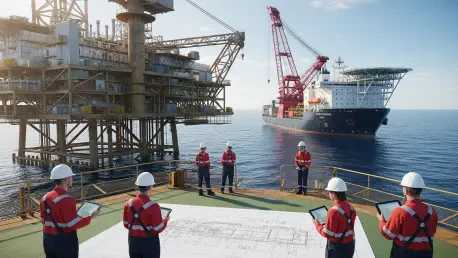

The global offshore energy industry is currently facing a transformative period where the removal of aging oil and gas infrastructure is transitioning from a peripheral engineering concern to a central operational mandate. This shift is driven by the realization that thousands of production platforms, subsea manifolds, and thousands of miles of pipelines are reaching the end of their operational lives simultaneously, creating a logistical tidal wave. For decades, the primary objective of offshore operations remained the maximization of hydrocarbon recovery, but the focus has now pivoted toward the systematic dismantling of structures that have become liabilities rather than revenue generators. This transition is not merely a technical challenge of cutting steel; it is a massive logistical and waste management undertaking that demands early strategic planning. Many operators have historically viewed decommissioning as a final, isolated project, yet the reality is that successful asset retirement starts years before the final barrel of oil is pumped. Failure to recognize this often results in astronomical costs, as platforms that remain in a “warm” state without producing income drain resources through maintenance, insurance, and safety compliance. By treating the entire process as a waste management strategy, companies can better navigate the complexities of material disposal and resource allocation while protecting their long-term financial health.
The Financial Reality of Asset Retirement
Maximizing Efficiency: The Strategic Role of Front-End Loading
To avoid the financial pitfalls of the “dead zone”—the expensive period between the cessation of production and the physical removal of an asset—operators must prioritize a process known as front-end loading. This strategy involves conducting exhaustive surveys of wells, subsea structures, and material inventories while the facility is still operational and fully staffed. By performing these assessments early, companies can reduce the inherent uncertainty that typically drives up the costs of offshore projects. When an operator possesses a precise understanding of the structural integrity and chemical contamination of their infrastructure, they can sequence dismantling activities with surgical precision. This proactive approach ensures that the transition from production to removal is seamless, minimizing the time an asset sits idle while still requiring expensive safety systems and maintenance. Without this level of preparation, projects often encounter unexpected complications, such as discovering undocumented structural modifications or hazardous material pockets, which can lead to months of delays and millions in unbudgeted expenditures.
Building a comprehensive data repository for a mature asset serves as the foundation for any successful waste management strategy. In many cases, platforms that have been in operation for thirty or forty years have seen numerous ownership changes and technical upgrades, leading to fragmented or missing documentation. Initiating a digital inventory and conducting 3D laser scanning while the platform is still powered and accessible allows decommissioning teams to plan lift points and transport logistics with high confidence. This level of detail is particularly critical in regions like the North Sea or the Gulf of Mexico, where weather windows are narrow and daily rates for specialized equipment are high. Furthermore, by identifying which components can be refurbished or recycled early in the process, operators can engage with scrap metal markets and circular economy partners to lock in favorable rates. The financial imperative of early data collection cannot be overstated; it is the difference between a controlled, cost-effective removal and a reactive, crisis-driven project that eats into corporate margins for years.
Minimizing the Dead Zone: Financial Management of Idle Assets
The period immediately following the end of production is often the most dangerous time for an operator’s balance sheet because the asset stops generating revenue but continues to incur massive overhead. During this phase, the facility must still be manned by specialized crews, and safety-critical systems like fire suppression and emergency power must be maintained to satisfy regulatory requirements. If the decommissioning plan is not already in motion, this “warm” layup phase can drag on for several years, consuming the funds originally set aside for the actual dismantling. The key to financial survival in this stage is the rapid isolation of the facility from its hydrocarbon source through aggressive well plugging and abandonment programs. By prioritizing the permanent sealing of wells as the first step in the waste management chain, operators can significantly reduce the risk profile of the asset, eventually allowing for “cold” status where manning levels and maintenance costs are drastically slashed.
Strategic sequencing of these activities requires a shift in how capital is allocated throughout the life of the field. Rather than waiting for a complete shutdown, forward-thinking companies are now integrating decommissioning tasks into the late-life production phase, utilizing existing crews and equipment to perform preparatory work. This integration allows for a more gradual transition of the workforce and helps maintain institutional knowledge about the asset’s specific quirks and vulnerabilities. Additionally, securing waste routing pathways long before the first jacket is lifted ensures that there is a guaranteed destination for the thousands of tons of material that will soon be brought ashore. As global disposal capacity becomes increasingly strained, those who have not secured contracts with licensed dismantling yards may find themselves paying a premium or, worse, being forced to maintain their idle structures indefinitely while waiting for a slot to open up at a certified facility.
Material Complexity and Resource Competition
Managing Hazards: Addressing Specialized Waste Streams
While the majority of an offshore platform consists of recyclable steel, the decommissioning process is complicated by several hazardous waste streams that require highly specialized handling and disposal protocols. Materials such as Naturally Occurring Radioactive Material, known as NORM, frequently accumulate within piping and processing equipment over decades of production. If these radioactive scales and sludges are not identified and treated correctly, they pose a severe health risk to workers and can lead to the contamination of dismantling yards, resulting in massive legal liabilities and cleanup costs. Similarly, older assets often contain significant amounts of asbestos, lead-based paints, and mercury, all of which require specific environmental permits for transport and processing. A failure to map these materials during the pre-decommissioning phase can cause a project to grind to a halt the moment a hazardous substance is unexpectedly encountered during a cutting operation, leading to costly work stoppages.
Beyond the immediate chemical hazards, the sheer volume of material that must be processed creates a logistical bottleneck that many operators are not prepared to manage. The global capacity for specialized hazardous waste treatment facilities is limited, and as more assets reach their end-of-life simultaneously, the demand for these services is expected to far outstrip supply. This scarcity of disposal options means that waste management is no longer a localized concern but a global procurement challenge. Companies must now compete for space at a handful of certified yards that have the technical capability to safely neutralize complex contaminants. This reality underscores the necessity of viewing decommissioning as a waste management problem from the outset; by securing disposal routes years in advance, operators can avoid the price spikes and project delays that will inevitably hit those who wait until the removal phase to find a home for their hazardous materials.
Navigating Resource Competition: The Battle for Heavy-Lift Capacity
The physical removal of massive offshore structures requires a specialized fleet of heavy-lift vessels and semi-submersible cranes, but these critical assets are currently the subject of an intense global tug-of-war. The explosive growth of the offshore wind sector has created a massive new demand for the same vessels used in oil and gas decommissioning, as these ships are essential for installing the giant turbines and substations required for renewable energy projects. Because renewable projects often come with government-backed incentives and strict installation deadlines, vessel owners are frequently prioritizing wind contracts over decommissioning work. This competition has led to a dramatic reduction in vessel availability and a corresponding surge in day rates, making it increasingly difficult for oil and gas operators to secure the equipment they need at a reasonable cost. This resource scarcity adds a layer of complexity to the waste management strategy, as the timing of the removal is now dictated more by vessel availability than by the operator’s ideal schedule.
To mitigate the risks associated with vessel shortages, some operators are turning to innovative removal techniques and collaborative industry models. Rather than relying solely on the world’s largest crane ships, companies are exploring “piece-small” dismantling methods where structures are broken down into smaller components that can be handled by more common and less expensive vessels. Additionally, the industry is seeing a rise in multi-operator campaigns, where several companies in a specific geographic basin coordinate their decommissioning schedules to share the mobilization and demobilization costs of a heavy-lift vessel. This collaborative approach not only reduces individual project costs but also provides vessel owners with a longer, more predictable backlog of work, making them more likely to commit to decommissioning projects. However, such coordination requires a high degree of transparency and long-term planning, further proving that the successful removal of offshore assets is as much about managing the supply chain and logistics as it is about the engineering work itself.
Regulatory Standards and Long-Term Accountability
Regional Compliance: Differing Rules in Global Markets
The regulatory environment for offshore decommissioning varies significantly across the globe, creating a patchwork of requirements that operators must navigate with extreme care to avoid legal and reputational damage. In the United States, particularly in the Gulf of Mexico, the Bureau of Safety and Environmental Enforcement maintains strict timelines under the “Idle Iron” policy, which mandates that platforms must be removed within a specific timeframe after they are no longer useful for operations. This proactive stance is designed to minimize the risk of abandoned structures becoming hazards during hurricane seasons. Conversely, the North Sea operates under the OSPAR Convention, which generally prohibits leaving structures in place but allows for certain derogations for massive concrete gravity bases that are technically impossible or environmentally riskier to move. Regardless of the specific region, the global trend is moving toward more stringent enforcement and a “cradle-to-grave” responsibility model for energy companies.
Navigating these regulations requires a deep understanding of the local environmental standards and the political climate surrounding industrial waste. Governments are increasingly looking at the carbon footprint of the decommissioning process itself, requiring operators to account for the emissions generated during the removal and transport of structures. This shift toward total lifecycle accountability means that a waste management strategy must now include a detailed plan for carbon offsetting or the use of low-emission vessels and recycling processes. Furthermore, as public scrutiny of corporate environmental practices intensifies, any failure to manage decommissioning waste properly can lead to a significant loss of “social license to operate.” Companies that fail to stay ahead of these evolving regulatory and societal expectations find themselves facing not just fines, but also potential exclusion from future exploration and production opportunities in key markets, making compliance a core pillar of long-term business viability.
Future Liability: Managing the Long-Term Financial Tail
One of the most complex aspects of asset retirement is the “long tail” of legal and financial liability that follows an owner even after an asset has been sold or the physical structure has been removed. In many jurisdictions, the original owner or “parent” company remains legally responsible for the decommissioning of a field if a subsequent, smaller operator becomes insolvent and is unable to fulfill its obligations. This “chain of title” liability ensures that the financial burden of cleaning up the environment does not fall on the taxpayer, but it creates a persistent risk on the balance sheets of major oil companies. Consequently, decommissioning must be viewed as a permanent part of the commercial strategy, requiring the establishment of dedicated trust funds or letters of credit to ensure that the necessary capital is always available. This financial foresight is essential for protecting the company’s valuation and ensuring that legacy assets do not become a sudden, catastrophic drain on corporate resources decades after they stopped being productive.
The industry realized that the only way to truly mitigate these long-term risks was to adopt a circular economy mindset that prioritized material recovery and transparency throughout the entire decommissioning lifecycle. Companies that successfully transitioned their operations focused on creating detailed digital twins of their assets, ensuring that every ton of steel and every liter of hazardous waste was tracked from the offshore site to its final destination. This level of traceability became the standard for demonstrating environmental stewardship and protecting against future litigation. By the time the massive wave of removals reached its peak, the most successful organizations had already integrated waste management into their core business models, treating the dismantling of an asset with the same rigor and strategic depth as its initial installation. Ultimately, the lessons learned during this period proved that the cost of inaction and poor planning far outweighed the investment required to build a robust, forward-looking strategy for the systematic retirement of energy infrastructure.