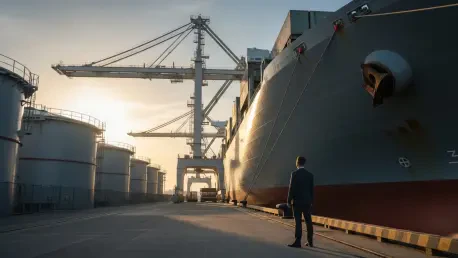

The global maritime industry stands at a critical crossroads where the immediate pressure to slash greenhouse gas emissions has sparked a frantic search for drop-in fuels that require minimal structural changes to existing vessel infrastructure. While food-based biofuels like soy and palm oil appear to offer a convenient and cost-effective bridge to a greener future, this strategy carries the risk of becoming an expensive mistake with profound humanitarian consequences. Currently, the shipping sector consumes approximately 300 million tonnes of fossil fuels annually, a figure that highlights the sheer scale of the energy transition required. Transitioning even a small percentage of this demand to vegetable oils could trigger a massive market shock that destabilizes global commodity prices. This pursuit of a low-cost solution ignores the complex realities of agricultural supply chains and the precarious nature of global food security in an era of increasing climate instability.
Market Volatility: The Threat to Global Food Supplies
The fundamental challenge lies in the sheer volume of fuel required to power modern merchant fleets across the world’s oceans. Replacing just a fraction of conventional maritime fuel with food-based biodiesels would likely triple the global demand for vegetable oils, creating an unprecedented competition between the energy and food sectors. When shipping companies enter the market for agricultural feedstocks, they exert a massive upward pressure on prices that affects everything from cooking oil to animal feed. This surge in demand does not exist in a vacuum; it directly impacts the ability of food-insecure regions to maintain affordable access to dietary staples. Market analysts suggest that such a rapid shift in feedstock allocation could lead to a permanent restructuring of agricultural economics, where the energy value of a crop dictates its price regardless of its nutritional necessity. Consequently, the maritime industry might inadvertently fuel a humanitarian crisis while attempting to solve an environmental one.
Beyond the immediate price hikes, the long-term economic repercussions for low-income, food-importing nations remain particularly severe. These countries often lack the fiscal buffers necessary to absorb sudden spikes in global commodity prices, leaving hundreds of millions of people vulnerable to acute food shortages. As shipping giants secure long-term contracts for soybean or palm oil, smaller distributors and regional governments find themselves priced out of the market. This creates a scenario where the decarbonization efforts of wealthy nations are effectively subsidized by the dietary security of the global poor. The social cost of this energy transition is rarely accounted for in the corporate balance sheets of shipping firms, yet it represents a significant reputational and ethical risk. Instead of fostering a sustainable global economy, the reliance on food-based feedstocks risks deepening the divide between developed and developing nations, turning a technological shift into a geopolitical flashpoint that undermines global stability.
Carbon Paradox: The Hidden Emissions of Land-Use Change
A critical oversight in the adoption of food-based biofuels is the phenomenon of indirect land-use change, which can negate the intended environmental benefits of the transition. When agricultural land previously used for food production is diverted to create fuel for cargo ships, the global demand for food does not simply vanish. Instead, the resulting scarcity provides a powerful economic incentive for farmers to clear virgin forests and carbon-rich peatlands to establish new agricultural frontiers. This process releases vast quantities of stored carbon into the atmosphere, often far exceeding the carbon savings achieved by burning biofuels instead of heavy fuel oil. Scientific assessments have repeatedly shown that when these lifecycle emissions are properly calculated, certain food-based biofuels can actually have a higher total carbon footprint than the fossil fuels they are designed to replace. This environmental backsliding makes the use of such feedstocks a counterproductive strategy in the fight against global warming.
Furthermore, the destruction of biodiversity-rich habitats to make room for fuel crops represents an irreparable loss to the planet’s ecological health. Tropical forests in Southeast Asia and South America are particularly at risk, as the expansion of palm and soy plantations continues to threaten endangered species and vital ecosystem services. The reliance on intensive monoculture for fuel production also leads to increased fertilizer runoff and water scarcity, further stressing local environments that are already struggling under the weight of industrialization. By incentivizing the conversion of natural landscapes into fuel factories, the shipping industry risks becoming a primary driver of the sixth mass extinction event. This holistic perspective reveals that the carbon-neutral claims of many biofuel providers are based on narrow accounting methods that fail to capture the broader ecological destruction. Truly sustainable shipping requires a move away from any energy source that pits the health of the ocean against the preservation of terrestrial life and biodiversity.
Regulatory Risks: The Threat of Stranded Assets
Shipping companies that invest heavily in food-based biofuel infrastructure today are increasingly vulnerable to what experts describe as legislative risk. International regulatory bodies and regional authorities have already begun to implement strict criteria that exclude high-risk feedstocks from their definition of sustainable energy. For instance, the European Union and the state of California have introduced rigorous standards that penalize or outright ban fuels derived from palm and soy due to their high indirect land-use change impacts. Similarly, the international aviation sector has established frameworks that prioritize non-food feedstocks, setting a precedent that the maritime industry is likely to follow. As the International Maritime Organization refines its decarbonization guidelines, there is a high probability that food-based fuels will be disqualified from receiving carbon credits. This shifting legal landscape means that investments in biofuel supply chains could quickly become stranded assets, leaving shipowners with non-compliant vessels.
The financial implications of this regulatory shift extend to the broader maritime ecosystem, including port infrastructure and bunkering facilities. If the global consensus moves toward hydrogen, green ammonia, or methanol, the specialized storage and handling equipment designed for vegetable-oil-based fuels will lose its value. Professional investors are already starting to demand greater transparency regarding the lifecycle emissions of maritime fuels, fearing that a lack of foresight will lead to significant write-downs in the coming years. By prioritizing short-term convenience over long-term regulatory alignment, the industry risks wasting billions of dollars on a bridge technology that leads to a dead end. The smarter strategic move involves bypassing these controversial feedstocks in favor of energy sources that are future-proofed against evolving climate laws. Navigating this transition requires a sophisticated understanding of both environmental science and international policy to ensure that today’s capital expenditures do not become tomorrow’s liabilities.
Future Pathways: Transitioning to Genuine Sustainability
The industry eventually recognized that the transition to net-zero required a fundamental shift toward second-generation biofuels and synthetic e-fuels. Leaders within the maritime sector began to prioritize feedstocks derived from waste streams, such as used cooking oil and agricultural residues, which did not compete with food production or drive deforestation. These alternatives offered a more credible path to decarbonization, though they required more sophisticated processing and refined supply chain management. At the same time, significant capital was redirected toward the development of e-fuels produced via renewable electricity, such as green hydrogen and its derivatives like green methanol. This pivot ensured that the energy used for global trade remained decoupled from the pressures of global food markets and land-use changes. By focusing on these truly sustainable options, the industry managed to align its operational goals with the broader objectives of planetary health and social equity.
Actionable progress was finally achieved when the International Maritime Organization established clear, science-based guidelines that excluded food-based crops from its list of approved renewable fuels. This regulatory clarity encouraged shipowners to invest in multi-fuel engines and advanced propulsion technologies that were compatible with the zero-emission fuels of the future. Stakeholders across the value chain, including cargo owners and financial institutions, collaborated to create incentives for the adoption of green ammonia and other synthetic alternatives. These steps effectively de-risked the transition and provided a stable framework for long-term planning and infrastructure development. The industry also adopted more rigorous lifecycle assessment tools to ensure that any new energy source was evaluated for its total environmental impact before being deployed at scale. In doing so, the maritime world avoided the costly mistake of pursuing a flawed solution and instead laid the groundwork for a resilient and genuinely sustainable global shipping network.