
Power demand raced ahead of precedent as data centers and new factories asked to connect in months, not years, straining planning playbooks built for gentler times. The shift was not a blip but a structural break: interconnection requests in some regions, notably ERCOT, pointed to a trajectory that could nearly triple peak demand by 2030, while nationwide data center consumption was widely expected to triple on a similar timeline. Even if only a fraction reached the finish line, the speed and breadth of the surge forced the market to move past static resource adequacy toward integrated system planning that priced delivery, risk, and interdependencies from the start.
This analysis examined how the U.S. power market revalued portfolios when transmission and distribution constraints, gas–electric linkages, and execution risk were treated as core inputs rather than footnotes. It also clarified why regulators and investors placed a premium on transparent, scenario‑driven plans as $1.1–$1.4 trillion in grid investment approached by 2030. The goal was simple: map where value would likely accrue, where it might erode, and which investments held up across many plausible futures.
Market Context and Purpose
For decades, planners assumed slow, steady load growth, long lead times, and manageable fuel uncertainty. Organized markets sharpened dispatch but did not erase the structural divide between generation expansion and the networks that deliver power. As queues swelled and siting stalled, that division became costly: resources that looked cheap on paper became expensive to deliver or impossible to run at peak.
Today’s landscape inverted those assumptions. Large loads clustered near fiber and water, often at grid edges where substation capacity was thin. Transmission expansion, slowed by permitting, collided with rising variable renewables and fast‑forming industrial campuses. The purpose here was to translate those pressures into market signals: where congestion would likely intensify, which corridors would command a premium, and how portfolios could hedge curtailment, fuel scarcity, and policy volatility.
Current Dynamics and Signals
The demand shock broke legacy forecasting methods. Traditional plans asked, “How much generation is needed?” Integrated analysis reframed the question as, “What combination of generation, transmission, distribution, and flexibility serves evolving load at the lowest delivered cost and risk?” That framing changed rankings. Remote renewables without new lines ceded ground to storage, non‑wires options, and strategically sited generation that reduced upgrade costs and interconnection delays.
Developers felt the same reordering. Interconnection approval ceased to be a green light; it became a first filter. Bankable projects incorporated lifetime congestion and curtailment exposure, water and fuel constraints, and the probability of neighboring builds that could alter flows. In practice, that pushed value toward sites with strong deliverability, modular expansion paths, and access to firm fuel or diversified flexibility.
Load Growth That Redefined Portfolios
Data centers and electrified industry concentrated demand in pockets, amplifying local constraints and reshaping nodal prices. Substation expansions and feeder reinforcements turned into critical path items, sometimes eclipsing generation lead times. Markets began pricing siting intelligence—hosting capacity, backfeed limits, and topology—as a competitive advantage equal to tax credits or technology costs. Portfolios that included flexible load agreements and on‑site backup cut the need for oversized bulk upgrades, improving both timelines and returns.
Interregional Flows and Gas–Electric Coupling
As new resources and loads came online, historical congestion patterns lost predictive power. Interregional transmission unlocked cheaper imports, reduced curtailment, and stabilized price spreads, but only if modeled alongside shifting queue attrition and policy signals. Meanwhile, if gas‑fired capacity scaled to firm variable renewables and peaky loads, firm transportation, storage, and deliverability became decisive. Plants without reliable fuel under stress conditions represented reliability liabilities and revenue risk; adding storage, transmission relief, or firm contracts mitigated that exposure.
Planning Under Deep Uncertainty
Uncertainty was not noise; it was the market. Robust plans started with a national, interdependent baseline that reflected power flows across RTO and non‑RTO regions, then stress‑tested portfolios across wide ranges of load, fuel prices, technology costs, and rules. Timing risk demanded off‑ramps and decision triggers tied to observable milestones—permits issued, substation upgrades approved, or anchor offtakes executed. Portfolios that kept optionality—phased builds, modular storage, convertible offtakes—earned a premium because they could pivot as conditions evolved.
Technology and Policy Catalysts
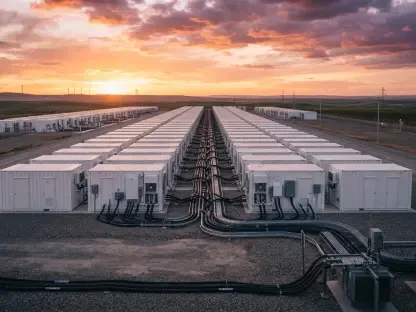
High‑capacity conductors, grid‑enhancing technologies, advanced inverters, and long‑duration storage shifted the feasibility frontier, turning congested corridors into recoverable assets and transforming curtailment into time‑shifting opportunities. Policy changes around interregional transmission, performance‑based ratemaking, and integrated distribution planning favored solutions that delivered measurable system value, not just nameplate megawatts. As capital costs and tax incentives moved, winners were those that hedged both fuel and location—balancing proximate resources with strategic wires and storage.
Financial and Regulatory Implications
With over a trillion dollars slated for grid investment by 2030, regulators scrutinized assumptions, alternatives, and execution risk. Approval frameworks increasingly rewarded transparent portfolios that co‑optimized wires and watts, quantified delivery costs, and demonstrated resilience across scenarios. For investors, that meant underwriting against curtailment and congestion pathways, not average prices; for utilities, that meant aligning procurement timing with grid readiness to avoid stranded assets and rate shocks.
Outlook and Projections
Looking ahead to 2030, several themes dominated projections. Interregional transmission and storage sited to relieve chronic bottlenecks surfaced as no‑regrets in many regions. Flexible data center operations—load shifting, backup integration, and dynamic interconnection—reduced upgrade needs and improved reliability metrics. Markets that coupled gas deliverability with renewable buildouts outperformed peers on volatility and reserve margins. Above all, analytics became a continuous function, compressing planning cycles and turning scenario work into an operational discipline.
Strategic Implications and Next Moves
This market analysis underscored that value creation hinged on integrated planning rather than technology bets. Recommended actions included building a national baseline with gas–electric coupling, ranking portfolios by delivered cost and timeline, and embedding decision triggers that staged capital as milestones cleared. Prudent strategies also favored non‑wires options, targeted hosting capacity increases, and storage in congestion relief roles, while contracting structures—like floors, collars, and congestion hedges—were used to tame revenue risk.
Regulatory engagement worked best when filings showed clear alternatives analysis, quantified execution risk, and customer impacts under stress cases. Developer playbooks that prioritized deliverability, modularity, and optionality had outperformed, especially where flexible load agreements trimmed peak upgrades. In short, the path forward involved treating planning as a continuous, systemwide process that safeguarded reliability and rates while guiding capital toward assets that stayed valuable even when the future refused to sit still.