
The Looming Bottleneck in the Age of Artificial Intelligence
The rapid acceleration of generative artificial intelligence has fundamentally altered the trajectory of global energy consumption, forcing a confrontation between digital ambition and physical infrastructure limitations. As of 2026, the United States finds itself at a pivotal juncture where the capacity of the electric grid has become the primary determinant of technological leadership. For the first time in nearly half a century, electricity demand is rising at an exponential rate, fueled by the proliferation of hyperscale data centers, the continued electrification of the automotive sector, and a massive resurgence in domestic high-tech manufacturing. This surge represents a departure from decades of predictability, transforming energy policy from a background concern into a frontline strategic priority for national security and economic stability.
The disparity between the speed of software development and the pace of hardware expansion is creating a profound reliability gap. While an AI model can be trained and deployed in months, the physical transmission lines and power plants required to sustain those models often take a decade or more to permit and construct. This mismatch creates a risk that the digital revolution will be throttled not by a lack of capital or ingenuity, but by the simple inability to deliver a kilowatt-hour to the necessary location. Addressing this challenge requires a comprehensive analysis of the existing system and a bold reimagining of how energy is generated, transmitted, and consumed in a society that is becoming increasingly dependent on uninterrupted power.
The Legacy of Stagnation and the End of the “Efficiency Era”
To grasp the magnitude of the current crisis, it is essential to recognize the three-decade period of “flat demand” that defined the American energy landscape from the 1990s through the early 2020s. During this time, gains in appliance efficiency and the transition toward a service-based economy allowed the grid to remain largely static. Investment focused on maintenance and cost-reduction rather than expansion, leading to a gradual erosion of the nation’s “muscle memory” for large-scale infrastructure projects. Regulatory frameworks became increasingly focused on preventing “gold-plating”—the overbuilding of assets—which resulted in a bureaucratic environment designed to slow things down rather than facilitate growth.
This historical context explains why the sudden demand spike from artificial intelligence feels so disruptive. The industry is effectively trying to shift from a standstill to a sprint without the necessary regulatory or physical preparation. Current infrastructure reflects a 20th-century mindset where demand was a passive variable that operators simply reacted to, rather than an active component of a complex ecosystem. As the “efficiency era” ends, the focus must move toward rapid capacity building to prevent a scenario where the retirement of aging thermal plants outpaces the integration of new, reliable energy sources, a situation often referred to as a disorderly transformation.
Overcoming the Regulatory and Physical Constraints of Energy Development
Shifting from Bureaucratic Restriction to Rapid Responsible Growth
The most significant hurdle to expanding grid capacity is an outdated regulatory philosophy that prioritizes procedural perfection over strategic speed. For years, the permitting process for high-voltage transmission lines and new generation facilities was characterized by long litigation cycles and redundant environmental reviews. In the current competitive environment, this “perfectionist” approach has become a liability. To support the AI sector, a pivot toward “responsible development” is required, where the urgency of national digital leadership is given equal weight to traditional regulatory concerns. Streamlining these processes is essential to ensure that the infrastructure can be deployed fast enough to match the three-to-five-year development cycles of modern data centers.
Integrating Large Computational Loads as Active Grid Citizens
As data centers evolve into massive consumers of power, they can no longer be treated as traditional, passive loads. Emerging market trends suggest that these facilities must become “active citizens” of the grid, capable of modulating their electricity intake based on real-time system conditions. This integration involves the adoption of frameworks like “Flex MOSAIC,” which allow for the seamless communication between grid operators and large consumers. By participating in demand-response programs and providing flexibility during peak periods, data centers can actually enhance grid reliability rather than just straining it. This shift moves the responsibility of system stability beyond just the power generators and onto the very entities driving the demand growth.
Balancing Technology Diversity Against the Trap of Minimal Cost
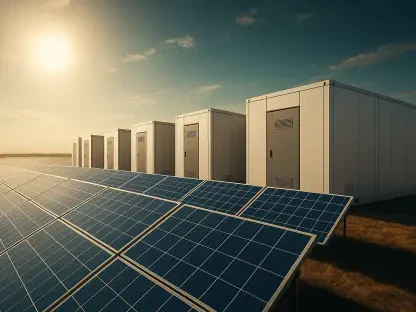
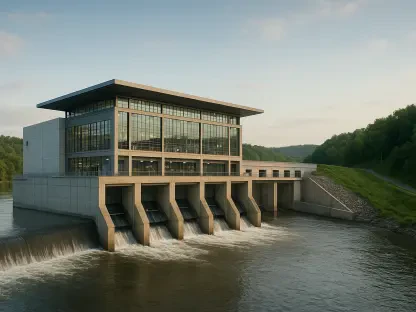
The pursuit of a resilient grid is often complicated by a narrow focus on the “Levelized Cost of Energy,” which frequently favors intermittent sources like wind and solar due to their low price points. However, a digital economy requires 24/7 reliability, which weather-dependent sources cannot provide in isolation. A robust energy mix must include dispatchable baseload power, such as natural gas, nuclear, and hydroelectricity, to maintain the necessary voltage and frequency control. Relying solely on the cheapest available energy creates a fragile system that is vulnerable to weather extremes. Policymakers and investors must recognize that the “value” of a reliable, dispatchable megawatt often outweighs the “cost” of a cheap but intermittent one.
The Future Landscape of American Energy Innovation
Looking toward the immediate future, the American power sector is entering a phase of unprecedented capital intensity. Projections indicate that maintaining a reliable grid will require over $1 trillion in investment from 2026 to 2031. This expenditure will likely drive the adoption of next-generation technologies, including small modular nuclear reactors and long-duration battery storage systems. Furthermore, the expansion of the high-voltage transmission network will be critical for moving power from resource-rich rural areas to the urban and suburban clusters where AI processing occurs. The market will likely see a move toward an “all-of-the-above” strategy that prioritizes energy density and reliability to meet the requirements of a high-load future.
Actionable Strategies for a Resilient Power Future
For businesses and developers, the path forward involves a strategic shift toward co-locating data centers with dedicated power sources. This “behind-the-meter” approach reduces the burden on the public transmission system and provides companies with greater control over their energy security. Policymakers should focus on regional planning that coordinates energy production with the specific needs of the tech sector, ensuring that infrastructure is built where it is most needed. Additionally, a renewed focus on workforce development is necessary to rebuild the specialized labor pool required for massive infrastructure expansion. Viewing these investments as a “generational opportunity” rather than a mere expense will ensure that the foundation for decades of digital prosperity is successfully laid.
Securing the Foundation of the Digital Age
The modernization of the American power grid functioned as the essential prerequisite for the sustained growth of artificial intelligence. It was determined that the historical reliance on stagnant demand patterns failed to account for the energy-intensive nature of neural networks and hyperscale computing. Successful strategies prioritized the reform of permitting processes and the integration of flexible load management, which allowed the infrastructure to scale alongside innovation. By valuing a diverse energy mix, the system maintained its stability even during periods of extreme demand. These advancements ensured that the electrical foundation was as sophisticated as the software it supported, securing a long-term competitive advantage. The transition toward a more proactive energy policy ultimately proved that physical infrastructure was just as vital to the digital age as the code itself.