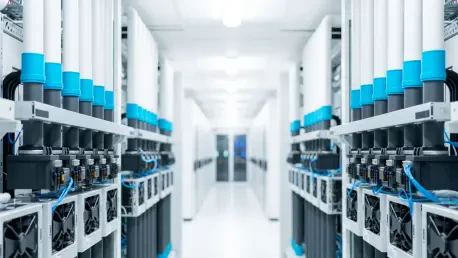

The sudden and explosive expansion of artificial intelligence workloads is placing an unprecedented strain on an aging American electrical infrastructure that was never designed for this level of sustained density. While previous industrial shifts occurred over decades, the AI revolution has arrived with a velocity that outstrips the physical capacity of utility providers to modernize their transmission lines or commission new substations. Market analysts and engineers now estimate a massive shortfall in the available power capacity required to meet the projected needs of hyper-scale data centers through 2028. Recent calculations suggest a gap approaching 100 gigawatts, a figure that represents nearly ten percent of the total current capacity of the entire United States power grid. This supply-demand imbalance is now being felt across the entire economic spectrum, as energy-intensive industries compete for the same limited pool of available megawatt-hours, forcing tech giants to rethink their entire relationship with energy markets and procurement strategies.
Independent Generation: Strategies for Energy Autonomy
Behind-the-Meter Solutions: Data Center Microgrids
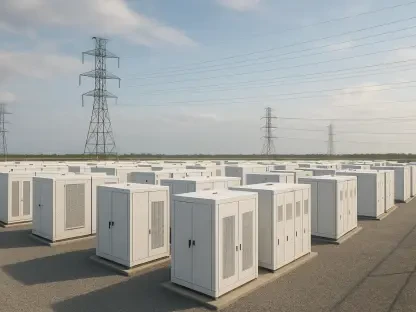
Because the traditional utility model cannot keep pace with the frantic timeline of AI development, major data center operators are increasingly taking matters into their own hands by becoming their own power producers. This shift toward “behind-the-meter” generation allows companies like Microsoft and Google to bypass the bureaucratic hurdles of the public grid and secure their own dedicated energy streams. Many of these developers are now acquiring land specifically based on its proximity to natural gas pipelines or decommissioned industrial sites where they can install private microgrids. By integrating modular nuclear reactors or large-scale battery storage directly into their facility designs, these firms are insulating themselves from the volatility of the broader energy market. However, this trend also raises significant questions about the long-term stability of the public grid, as the wealthiest consumers exit the collective system, potentially leaving residential and smaller commercial users to shoulder the rising costs of infrastructure maintenance.
This movement toward self-sufficiency is not merely a preference for independence but a survival strategy in an era where power availability determines a company’s market valuation and its ability to scale. Technology firms are forming unconventional partnerships with energy providers to develop dedicated co-located power plants that serve no other purpose but to feed thousands of high-performance GPUs. This approach requires a massive upfront capital investment, but it offers a predictable cost structure and a guaranteed supply that the centralized grid simply cannot offer in the current regulatory environment. Furthermore, these private energy islands are becoming testing grounds for innovative technologies like hydrogen fuel cells and geothermal energy, which might otherwise struggle to find commercial footing in the highly regulated utility sector. As these companies transform into energy conglomerates, the distinction between a tech provider and a power utility is beginning to blur, creating a new industrial paradigm for the modern era.
Resource Scarcity: The Hardware Bottleneck
Even as companies attempt to build their own generation facilities, they are encountering a severe global shortage of critical hardware, specifically high-efficiency natural gas turbines and specialized transformers. The lead times for these massive machines have extended into years, as manufacturers struggle to scale production to meet the sudden worldwide demand for on-site power solutions. In response, many developers are turning to reciprocating internal combustion engines, which can be deployed more quickly and offer greater operational flexibility for the intermittent loads associated with AI training. These engines are often modular, allowing for a phased energy strategy that aligns more closely with the deployment of server racks. However, while reciprocating engines provide a faster path to online status, they often come with higher maintenance requirements and different emissions profiles compared to large-scale turbines. This hardware bottleneck has created a secondary market for refurbished equipment to fill the immediate gap.
This scramble for hardware has also catalyzed a shift in how energy reliability is calculated within the tech sector, moving away from a reliance on the grid to a focus on redundant, on-site mechanical systems. The supply chain constraints for transformers and switchgear further complicate this landscape, as every new private power plant requires the same specialized electrical components that utilities need for grid repairs. This competition for parts has driven prices to historic highs, forcing engineers to find creative ways to optimize existing power footprints. Some facilities are implementing liquid cooling and high-density power delivery systems just to squeeze more performance out of every available watt, as the cost of adding new megawatts continues to climb. The scarcity of these critical components is effectively acting as a cooling mechanism for the AI boom, dictating the physical speed of expansion regardless of how much capital is available for investment in the digital sphere.
Future Considerations: Balancing Growth and Reliability
To address these mounting challenges, policymakers and industry leaders began to prioritize the development of regional energy hubs that integrated generation, storage, and consumption into a single unit. These “energy-conscious” zoning laws allowed for faster permitting of facilities that included their own low-carbon baseload power, such as small modular reactors or carbon-capture-equipped gas plants. Investment also shifted toward enhancing the existing grid with advanced superconductors and digital twin modeling to maximize the efficiency of every existing transmission line. Collaborative frameworks were established to ensure that data center operators contributed fairly to the modernization of the public infrastructure they utilized, creating a more sustainable financial model for utilities. Furthermore, the industry moved toward a more decentralized architecture for AI training, distributing workloads across geographically diverse sites. By shifting the focus toward smarter management, the sector established a path toward balancing demand.