
Securing the future of domestic transportation requires more than just manufacturing electric vehicles; it demands an ironclad grip on the raw materials that power them within national borders. The United States Department of Energy has taken a decisive step in this direction by authorizing the restoration of a substantial fifty-seven million dollar grant originally intended to bolster a major lithium refining project located in the heart of Nevada. This move signals a significant acceleration in the federal government’s commitment to establishing a fully integrated battery supply chain that reduces reliance on overseas processing, particularly from dominant markets like China. By providing this capital, the administration is effectively de-risking the critical transition from mineral extraction to battery-grade chemical production. The facility at the center of this funding is designed to utilize innovative technologies to produce lithium hydroxide, an essential component for the high-energy-density batteries found in modern long-range electric cars.
Strengthening Domestic Mineral Security: The Role of Nevada Infrastructure
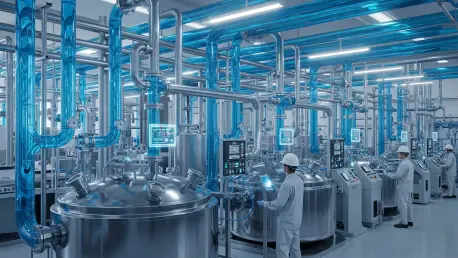
The restoration of these funds allows for the rapid development of a commercial-scale facility in Tonopah, Nevada, capable of converting spodumene and other lithium-bearing minerals into refined chemicals ready for battery manufacturers. This specific project stands as a cornerstone of the regional energy landscape, utilizing local geological advantages to minimize the carbon footprint associated with long-distance material transport. Beyond the raw output, the facility employs advanced hydrometallurgical processes that are engineered to consume less water and energy compared to traditional evaporative or thermal techniques. By localizing these complex chemical processes, the project ensures that the value-added stages of the mineral lifecycle remain within the domestic economy, thereby creating a buffer against global price volatility and supply chain disruptions. This strategic investment is not merely about volume but about establishing a technological benchmark for cleaner, more efficient mineral processing.
Integrating such a large-scale industrial operation into the Nevada economy necessitates a robust partnership between federal agencies, private developers, and the local workforce that will sustain daily operations. The infusion of capital is expected to generate hundreds of high-skilled jobs ranging from chemical engineering to specialized mechanical maintenance, providing a long-term boost to regional employment figures. Furthermore, the project emphasizes a closed-loop approach where secondary materials can eventually be funneled back into the production cycle, aligning with broader sustainability goals. This focus on domestic labor and sustainable practice serves to strengthen community support for industrial projects that are often met with environmental skepticism. As the refinery moves toward full operational status, it will serve as an anchor for a growing ecosystem of satellite industries, including cathode manufacturing and battery recycling firms, all of which benefit from proximity to a reliable source of high-purity lithium chemicals.
Navigating Regulatory Landscapes: The Path to Reinstatement
Looking toward the next phases of development, the industry must prioritize the integration of modular scaling techniques to ensure that production can expand rapidly in response to shifting market demands. Companies involved in mineral processing should focus on establishing deep partnerships with junior mining firms to secure a steady stream of raw feedstock that matches the refinery’s specific technical requirements. Investing in automated monitoring systems and real-time chemical analysis will be essential for maintaining the high purity levels required by next-generation solid-state and high-nickel battery chemistries. Furthermore, developers are encouraged to explore synergistic energy solutions, such as co-locating solar or geothermal power plants with refining facilities, to further decrease the carbon intensity of the final product. These steps will ensure that domestic refineries remain competitive on a global scale even as international players attempt to drive down prices through aggressive market tactics.
The restoration of the fifty-seven million dollar grant represented a pivotal moment for the domestic energy sector, as it solidified the framework for a self-sufficient battery ecosystem. Authorities recognized that without significant federal intervention, the gap between raw mineral extraction and final battery assembly would have remained a critical vulnerability. Industry leaders moved quickly to implement the funded upgrades, which resulted in a marked increase in the speed of facility construction and equipment procurement. The strategic foresight demonstrated by this funding allocation helped mitigate the risks associated with early-stage industrial scaling and paved the way for similar investments in other regions. By addressing the technical and financial barriers to large-scale lithium refining, the government successfully catalyzed a new era of industrial growth centered on clean technology. This project ultimately proved that coordinated efforts were necessary to build a new supply chain from the ground up, ensuring that domestic manufacturing remained at the forefront.