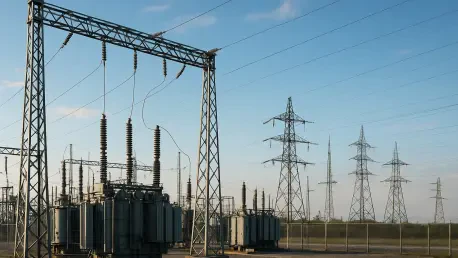

The silent hum of high-voltage transmission lines stretching across thousands of miles of American landscape represents much more than a feat of engineering; it is the fundamental backbone of national economic stability and consumer affordability. While the flickering of a simple light bulb rarely triggers thoughts of continental high-voltage wires, the efficiency of this vast network directly dictates the price of every kilowatt-hour consumed. New economic assessments indicate that strategic investment in the Eastern Interconnection alone could unlock over $15 billion in net value from 2026 to 2050.
Rather than viewing the grid as a static piece of aging infrastructure, analysts now identify it as a dynamic economic instrument. By modernizing this network, the nation can slash retail rates while simultaneously fortifying itself against an increasingly volatile climate. The focus has shifted toward creating a system that does not just transport power, but actively optimizes the market to favor the most cost-effective and reliable energy sources available.
The Invisible Engine: Economic Stability and Infrastructure
The American economy relies on the seamless movement of energy, yet much of the current infrastructure remains underutilized or outdated. Recent data suggests that localized upgrades are no longer sufficient to meet the growing demands of modern industry and residential life. By expanding interregional transmission, the power grid functions as an invisible engine that drives down costs by ensuring that electricity generated in surplus regions can reach those facing a deficit.
This economic tool provides a buffer against price spikes and allows for a more competitive energy market. When the grid is expanded, it creates a more liquid marketplace where energy providers must compete across larger geographic areas. This competition naturally drives innovation and efficiency, resulting in a more robust financial landscape for utilities and lower monthly bills for households across the country.
The High Cost: Understanding Interregional Isolation
For decades, the national power grid has operated as a fragmented patchwork of localized systems, leading to significant economic inefficiencies known as “congestion.” This occurs when inexpensive energy produced in one area is trapped due to insufficient line capacity, forcing neighboring regions to pay a premium for more expensive, locally generated power. This isolation prevents the natural flow of supply and demand, effectively taxing consumers for the lack of adequate connectivity.
As the United States brings 67 GW of new power generation online during 2026, the disconnect between where energy is produced and where it is needed has become a primary driver of rising utility costs. This fragmentation also creates a vulnerability in national security, as isolated regions cannot easily draw support from neighbors during peak demand. The reliance on redundant, expensive local power plants further drains utility budgets without contributing to the long-term flexibility of the national system.
Quantifying Value: The Economics of High-Capacity Transmission
The shift toward high-value interregional projects represents a fundamental change in energy economics, moving away from small-scale fixes toward high-capacity solutions. By focusing on thirteen critical transmission corridors, the national grid can achieve a benefit-to-cost ratio of 1.77. This metric ensures that every dollar invested in these projects yields nearly double that amount in direct economic savings, making the expansion a sound financial priority for the public and private sectors.
Specific regions are slated to see substantial windfalls from these connectivity improvements. For instance, the PJM Interconnection is projected to capture roughly $6.7 billion in system value, while the Southwest Power Pool and MISO South are expected to see significant gains through increased access to diverse energy markets. Robust transmission acts as a high-speed highway, transporting inexpensive electricity from remote sites directly to high-demand urban centers where it is most needed.
Fortifying Reliability: Expert-Led Infrastructure Planning
Beyond the clear financial advantages, grid expansion is an essential component of national security and operational resilience. Industry experts emphasize that a highly connected grid is inherently more resilient; when one region faces a localized emergency or extreme weather event, a high-capacity network allows for the immediate rerouting of power. This infrastructure-based “mutual aid” prevents the type of cascading blackouts that have historically crippled major metropolitan areas during seasonal storms.
The current consensus among energy analysts is that the planning process must evolve from a localized patchwork to a unified, high-capacity national strategy. By integrating expert-led forecasting into the expansion process, the grid can better anticipate shifts in demand and potential environmental threats. This proactive approach ensures that reliability is built into the system’s architecture, providing a stable foundation for critical services, hospitals, and emergency response networks during times of crisis.
A Roadmap: Strategies for Modernizing the National Grid
To capitalize on these projected savings and security benefits, stakeholders must embrace a multi-faceted approach to expansion that goes beyond traditional utility models. Streamlining federal permitting processes is essential to reduce the decade-long timelines that currently stall critical interregional projects. Furthermore, the deployment of advanced grid technologies, such as dynamic line ratings and high-performance conductors, can optimize the capacity of existing lines without always requiring entirely new construction.
Stakeholders finally realized that a unified power network was the only viable defense against a fragmenting energy market. They prioritized the construction of high-capacity corridors and simplified the regulatory hurdles that previously stalled essential projects. This transition successfully coupled inexpensive generation with high-demand urban centers, ensuring that the infrastructure effectively served the national interest for decades. Policymakers and engineers worked in tandem to establish a synchronized resource plan that treated transmission as a public priority, ultimately stabilizing retail rates and securing the nation’s energy future.