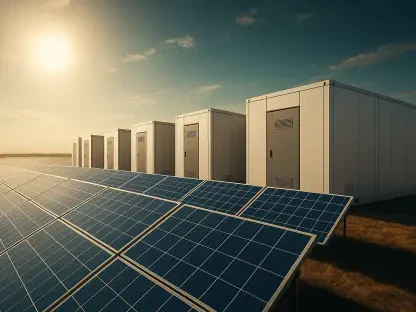

The electrification of the Garden State has reached a pivotal juncture where the traditional centralized grid is no longer sufficient to maintain reliability under the weight of surging demand and aggressive climate targets. New Jersey is currently undergoing a fundamental transformation in how it manages and distributes electricity, positioning itself at the forefront of the clean energy transition. With the recent introduction of a comprehensive straw proposal by the New Jersey Board of Public Utilities (BPU), the state is making a bold play to integrate 150 megawatts (MW) of “behind-the-meter” energy storage into its infrastructure. This initiative is not just about adding hardware; it represents a strategic shift toward the creation of Virtual Power Plants (VPPs) that turn everyday residential and small-business batteries into a collective powerhouse for the grid. By focusing on decentralized resources, New Jersey aims to enhance grid reliability, lower costs for consumers, and meet its ambitious goal of 2 gigawatts (GW) of energy storage by 2030.
Leading the Charge Toward a Decentralized and Resilient Energy Grid
New Jersey’s market analysis reveals a state intentionally pivoting away from the vulnerabilities of a top-down energy architecture. By leveraging the second phase of the Garden State Energy Storage Program (GSESP), regulators are prioritizing local resilience over distant generation. This transition is essential as weather patterns become more unpredictable and the demand for electric vehicle charging infrastructure accelerates. The state’s focus on 150 MW of distributed capacity serves as a critical test case for how high-density regions can balance renewable intermittency with consistent power delivery.
Furthermore, the emphasis on Virtual Power Plants indicates a sophisticated understanding of modern grid economics. Instead of investing solely in massive, singular infrastructure projects that take years to permit and build, the state is tapping into existing and new private investments. This strategy effectively crowdsources grid stability, allowing the state to move faster than traditional utility cycles usually permit. As the program unfolds, it provides a roadmap for turning passive energy consumers into active “prosumers” who contribute to the health of the entire electrical ecosystem.
The Foundation of New Jersey’s Energy Storage Evolution
The current push for Virtual Power Plants is rooted in a clear policy trajectory designed to modernize the Garden State’s aging electrical infrastructure. This journey began in earnest with the GSESP, a statutory framework built to ensure the state’s energy independence and resilience. Earlier in 2026, the state successfully completed the first phase of this program, procuring 1 GW of large-scale, transmission-connected bulk storage. However, regulators recognized that large-scale installations were only half of the equation.
To build a truly flexible grid, the state needed to tap into the “edge” of the system—the distributed resources located directly at homes and businesses. This historical pivot from centralized to distributed energy is essential for managing the localized stress and peak demand that traditional power plants struggle to address efficiently. By establishing this foundation, New Jersey has created a tiered approach that addresses both macro-level stability and micro-level distribution needs, ensuring that no part of the grid is left behind during the transition.
Pioneering the Distributed Storage Model
The transition toward a distributed model requires more than just technological deployment; it necessitates a complete rethink of how energy is valued and traded at the residential level. New Jersey’s model stands out because it treats small-scale batteries as professional grid assets rather than just backup appliances. This section explores the specific mechanisms the BPU is using to ensure this transition is both economically viable and technically sound.
Strategic Incentives and the Private Resilience Value
A key pillar of New Jersey’s strategy is a sophisticated financial structure designed to encourage participation without overstretching public funds. Under the new “Distributed Storage Capacity Block 1,” eligible customers served by the state’s major utilities can receive annual incentives of up to $200 per kilowatt (kW) over a 10-year period. What makes this approach insightful is the BPU’s recognition of “private resilience value.” Regulators have noted that because battery owners already benefit from backup power during blackouts, the state does not need to subsidize the entire cost of the equipment.
Instead, the incentive acts as a “top-off” payment, rewarding owners for allowing the grid to tap into their stored energy during times of high demand. This balanced economic model ensures that the public benefits from increased grid stability while private owners retain the primary advantages of their investment. By acknowledging the intrinsic value of backup power, the state can stretch its budget further, incentivizing a larger number of installations with the same amount of public funding.
Transitional Pilots and the Path to Market-Based Tariffs
The state is taking a measured, data-driven approach to scaling its VPP capabilities. Rather than launching a permanent system immediately, the 150 MW capacity block will serve as the foundation for a two-year transitional pilot program starting later this year. This technology-neutral phase allows utilities and regulators to test operational frameworks, discharge protocols, and communication systems in real-world conditions. This iterative process is crucial for identifying potential bottlenecks in data transmission or hardware response times before a wider rollout.
The insights gained during this period are slated to culminate in 2029 with the implementation of a permanent, market-based, open-access VPP tariff. This transition is critical because it moves the state away from fixed subsidies toward a dynamic market where energy storage is valued as a flexible grid resource. In this future state, stored energy can compete directly with traditional gas-fired “peaker” plants, providing a cleaner and often more cost-effective alternative for managing the most expensive hours of energy consumption.
Overcoming Grid Congestion Through Coordinated Dispatch
One of the most complex challenges New Jersey faces is localized grid congestion, where thermal constraints or high demand threaten the stability of specific neighborhoods. The VPP framework addresses this by empowering the four major electric distribution companies to act as central administrators for “dispatch events.” By coordinating the simultaneous discharge of thousands of small-scale batteries, the utility can mimic the output of a large power plant. This aggregated response provides a surgical solution to grid stress that large power plants cannot replicate.
Moreover, this coordinated effort reduces the need for expensive transmission upgrades and avoids the capital-intensive construction of new generation facilities. By smoothing out these peak demand spikes, the VPP model helps lower utility costs for all residents, not just those who own batteries, effectively democratizing the benefits of clean energy technology. This reduction in system-wide costs is a powerful argument for the public utility commissions to continue supporting distributed resource integration.
Emerging Trends and the Future of Distributed Energy
As New Jersey refines its VPP model, several emerging trends are likely to shape the next decade of energy management. There is a visible move toward technology-neutral platforms, where various types of distributed resources—ranging from electric vehicles with bidirectional charging to smart water heaters—could eventually be integrated into the same VPP framework. This expansion would exponentially increase the available “flexibility” of the grid, making it even more resilient to fluctuations in renewable generation from wind and solar.
Furthermore, the shift toward a permanent tariff suggests a future where third-party energy suppliers play a larger role in managing these assets. This fosters a competitive environment that drives innovation in software and automation. Experts predict that as battery costs continue to fall and software for grid orchestration improves, New Jersey’s model will serve as a blueprint for other states. The ability to aggregate and dispatch diverse assets seamlessly will likely become the standard for modern utility operations across the country.
Strategic Recommendations for Stakeholders and Consumers
For New Jersey to successfully navigate this transition, stakeholders must adopt a proactive and collaborative mindset. For homeowners and small businesses, the primary recommendation is to view battery storage as both a personal insurance policy against outages and a long-term financial asset. Engaging with the GSESP early allows owners to lock in 10-year incentives while the program is in its initial “Block 1” phase. This early entry provides a guaranteed revenue stream that can significantly offset the initial capital outlay for high-quality storage systems.
For industry professionals and technology providers, the focus should remain on interoperability and data transparency. Ensuring that hardware can communicate seamlessly with utility dispatch systems is the only way to guarantee the long-term viability of the VPP network. Finally, all interested parties should participate in the BPU’s public comment processes to ensure that future blocks of capacity remain accessible. Continuous feedback from the field is necessary to refine compensation structures and technical requirements as the market matures and new challenges arise.
Conclusion: Setting a New Standard for Grid Modernization
The strategic deployment of Virtual Power Plants in New Jersey marked a significant milestone in the evolution of the American energy landscape. By moving beyond traditional, centralized power generation and embracing a distributed, participatory model, the state built a grid that became more resilient and affordable. The combination of targeted financial incentives, transitional pilot programs, and long-term market integration demonstrated a sophisticated understanding of how to bridge the gap between legacy infrastructure and modern needs. As the state moved toward its 2030 storage goals, its success proved that the key to a stable energy future lay not just in large-scale utilities, but in the collective power of individual homes. This approach ultimately offered a scalable solution for other regions seeking to decarbonize while maintaining the highest standards of grid reliability and economic efficiency.