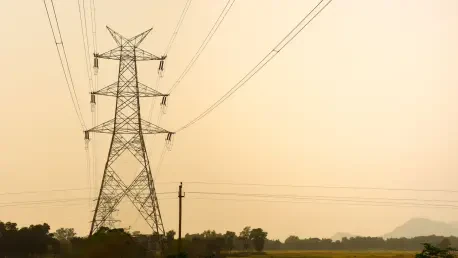

The proposed Bell County East to Sand Lake transmission project faces a major setback after judicial findings questioned the actual necessity of the multi-billion dollar infrastructure. This massive 200-mile venture, spearheaded by Oncor and the Lower Colorado River Authority, was designed to be the backbone of the Strategic Transmission Expansion Plan, aiming to modernize the state’s aging power grid. By attempting to connect the industrial hubs of Central Texas to the burgeoning energy demands of the Permian Basin, the project represented a fundamental shift in how the state manages its electrical architecture. However, the recent formal recommendation for its rejection highlights a growing friction between utility conglomerates and those advocating for fiscal restraint. With the Texas Public Policy Foundation estimating the total lifetime cost of such expansions at over $90 billion, the financial burden placed on everyday ratepayers has become a central theme in a debate that transcends simple infrastructure and enters the realm of fundamental economic policy.
Judicial Scrutiny of Grid Necessity
Flaws in Demand Forecasting and Methodology: Why Data Matters
The core of the judicial recommendation for denial rested on the finding that the utilities failed to prove a legitimate, immediate need for the 765-kilovolt lines. Judges Linda Brite, Linda Burgess, and Dee Marlo Chico expressed deep skepticism regarding the data sets used to justify the project’s scale. Specifically, the panel pointed out that the utilities relied heavily on demand projections from 2022, which many critics now view as obsolete or overly optimistic. These projections were characterized as “wish list” scenarios, built upon non-binding corporate pledges and speculative industrial growth rather than confirmed energy loads that would necessitate such an invasive and expensive solution. By prioritizing these hypothetical demands over tangible data, the utilities created a narrative of necessity that the court found lacked the rigorous empirical backing required for a project of this magnitude. This disconnect between speculative growth and actual current requirements formed the primary basis for the rejection.
Adding to the scrutiny of the methodology, the judges identified a significant logical gap in the project’s technical feasibility. There was no concrete evidence presented during the hearings to suggest that the power grid at the project’s eastern starting point actually possessed the surplus capacity to justify such a massive westward transmission expansion. Without a guaranteed source of electricity to fill these high-voltage lines, the judges argued that the construction of the Bell County East to Sand Lake project would effectively be building a “bridge to nowhere.” This technical oversight suggested that the planning process was more focused on the physical installation of infrastructure than on the balanced movement of energy resources. The court’s findings implied that the utilities were more interested in securing large-scale construction permits than in addressing the specific, localized bottlenecks that truly impact grid stability. This revelation further weakened the proponents’ argument that the expansion was the only viable path forward for the state’s power network.
Prioritizing Local Generation: A Viable Alternative
A recurring theme throughout the judicial proceedings was the availability of more efficient alternatives that would mitigate the need for 1,200 miles of new, high-voltage wiring. Witnesses and experts highlighted the rapid development of localized power sources within the Permian Basin and broader West Texas regions. Currently, there are 37 natural gas generation projects either planned or officially announced that are positioned directly within the areas of highest demand. These facilities are expected to provide approximately 40 gigawatts of new power, situated much closer to the industrial operations they are intended to serve. By generating electricity on-site or nearby, the state could theoretically bypass the massive energy losses and astronomical costs associated with long-distance transmission. The judges found this evidence compelling, noting that the push for massive lines seemed to ignore the changing landscape of Texas energy production, where localized generation is becoming a faster and more cost-effective way to meet immediate regional energy requirements.
Furthermore, the judicial panel emphasized that prioritizing local power generation serves as a less intrusive solution for the state’s communities and landowners. Unlike the proposed 765-kilovolt lines, which require sweeping easements and the disruption of hundreds of private properties, local generation projects tend to have a smaller, more concentrated footprint. The judges argued that the utilities had not sufficiently explored how these 40 gigawatts of potential gas-fired power could integrate with existing infrastructure to solve reliability issues without the need for unprecedented new corridors. This focus on local solutions aligns with a growing movement in the energy sector to decentralize the grid, making it more resilient to single points of failure. By failing to account for the impact of these emerging gas plants, the utilities presented an incomplete picture of the state’s energy future. The court’s preference for localized generation reflects a broader judicial trend toward demanding that utility companies prove they have exhausted all less-disruptive options before resorting to eminent domain.
Procedural Failures and Landowner Rights
Violations of Public Notice Requirements: Failure in Communication
The procedural aspects of the case were just as damaging to the utilities’ position as the technical flaws. The judicial panel discovered significant violations regarding the way Oncor and the Lower Colorado River Authority handled public notification and engagement with the people most affected by the project. According to state regulations, utilities are mandated to provide direct, timely notice and hold interactive public meetings before any formal application is filed. However, the investigation revealed that approximately 1,400 landowners who stood to lose property or see their land values plummet were completely bypassed during the initial phases of the process. This exclusion meant that a large segment of the community was denied the opportunity to voice concerns or offer feedback on the proposed routes. Such a massive oversight in the notification process suggested a lack of transparency and a disregard for the legal rights of Texas citizens, which the judges found to be a fatal flaw in the utilities’ administrative approach.
As the project evolved, the scope of the affected parties grew from an initial 2,800 to over 4,200 individuals and entities, yet the utilities failed to adjust their engagement strategy accordingly. Despite this significant increase in the number of people whose lives and livelihoods would be impacted by the high-voltage lines, no additional public meetings were scheduled to accommodate the newcomers. This failure to provide a forum for the late-added landowners effectively stripped them of their right to participate in the community input process during the most critical planning stages. The judges noted that the lack of open dialogue prevented the development of a more collaborative route that might have minimized local opposition. Instead, the process was described as being opaque and one-sided, leaving many residents feeling that the project was being forced upon them without a fair hearing. This procedural negligence was viewed by the court as a direct violation of the due process that is foundational to state utility law.
Inadequate Records: The Remedy for Due Process
The technical failures in communication were exacerbated by the utilities’ reliance on outdated administrative resources. The judicial findings indicated that Oncor and its partners used obsolete county tax rolls to identify property owners, which led to a cascade of errors in the notification process. Dozens of owners received their notices far too late to prepare a proper response, while some received no notification at all until the project was already moving toward formal approval. The judges were particularly critical of the utilities’ defense, which claimed that earlier public meetings held for preliminary routes should have been considered sufficient notice. The court rejected this notion, asserting that a project of this scale and complexity demands a renewed and continuous commitment to public participation at every stage of its development. Using incorrect data to contact the public was not just a clerical error; it was a fundamental failure to fulfill the professional and legal obligations required when seeking to exercise state-granted powers.
To move forward, the state began evaluating new legislative frameworks that prioritize rigorous cost-benefit analyses and mandatory independent audits of all future transmission proposals. This shift in strategy was designed to prevent the recurrence of speculative “wish list” forecasting and to ensure that the actual energy needs of Texas families were placed ahead of corporate expansion goals. State agencies were tasked with drafting more stringent public notice requirements that utilized modern digital mapping and real-time property data to prevent the exclusion of landowners from the planning process. Additionally, the focus transitioned toward incentivizing local gas-fired generation and battery storage solutions that could be deployed more rapidly and with less geographical disruption. By establishing these new benchmarks, the legislature sought to restore public trust in the grid management process and ensure that the state’s energy infrastructure evolved in a way that was both sustainable and fiscally responsible. These proactive measures represented a commitment to a balanced energy future.