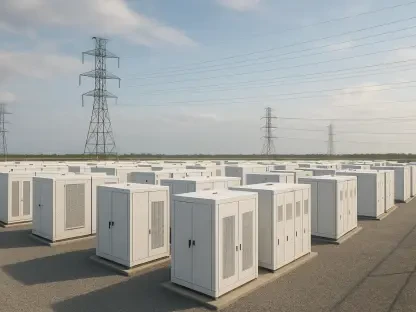

The silent hum of a neighborhood transformer might go unnoticed by most residents, but for energy planners, that sound represents the delicate balance between a functional city and a catastrophic failure of the regional power grid. This delicate equilibrium is currently at the heart of a significant debate in New York, as National Grid defends its forecasting methodologies against claims of inconsistency. The challenge of modernizing an aging energy infrastructure is often reduced by critics to a simple question of why the numbers do not seem to align across different sectors. National Grid New York recently addressed allegations that its internal projections for heat pump adoption were intentionally manipulated to justify higher infrastructure spending, arguing instead that the discrepancy between gas and electric planning is a reflection of the multi-billion-dollar reality of maintaining reliability during a volatile transition period.
The importance of this discourse extends far beyond the technicalities of a utility boardroom; it is the fundamental blueprint that determines how much New Yorkers pay for energy and how safely that energy reaches their homes. As the state moves through the period from 2026 to 2030 with aggressive decarbonization goals, the margin for error in grid planning has narrowed to a razor-thin edge. For the average consumer, these forecasts dictate whether the heat will function during a record-breaking winter storm or if the transition to electricity will lead to localized blackouts. Understanding these tactics is essential for anyone concerned about the balance between environmental progress and economic pragmatism, as the transition requires navigating the physical limits of existing infrastructure while building for an electrified future.
The High-Stakes Math of a Greener Grid
Maintaining the integrity of an energy system that serves millions requires more than just optimistic goal-setting; it demands a rigorous adherence to physical and economic realities. National Grid has clarified that the perceived inconsistencies in its planning are not errors, but rather the result of distinct mandates for different energy types. Electric systems must be prepared for a surge in demand that is often unpredictable, while gas systems must be managed to ensure that those who still rely on them for heating are not left in the cold. This high-stakes mathematical exercise is complicated by the fact that the transition is not happening at a uniform pace across the state, requiring a flexible approach that can adapt to changing consumer habits.
The friction between different sets of data often arises when observers attempt to apply a one-size-fits-all model to a complex landscape. National Grid’s defense emphasizes that planning for a greener grid involves managing two separate but interconnected systems that operate under different regulatory requirements and physical constraints. While the drive toward electrification is a clear priority, the utility must simultaneously ensure that the current gas network remains safe and operational for the millions of people who have not yet transitioned. This dual responsibility necessitates a sophisticated forecasting approach that can account for growth in one sector without prematurely dismantling the reliability of another.
Why Forecasting Accuracy Dictates the Future of Utility Bills
The precision of utility forecasting is the primary factor in determining the long-term affordability of energy for New York residents. If a utility underestimates the future electric demand, the consequences are both dangerous and expensive, often leading to emergency grid repairs and the sudden need for costly, unbudgeted infrastructure upgrades. On the other hand, if a utility overestimates the speed at which customers will abandon the gas network, it risks a failure of service during a “design day”—the statistically coldest day of the year. This specific day is the benchmark for utility safety, and failing to meet the peak demand on such a day could result in widespread heating failures that threaten public safety.
The financial implications of these forecasts are equally significant, as they form the basis for rate cases and long-term capital investment plans. Accurate forecasting ensures that infrastructure spending is tied to verified customer needs rather than speculative growth, protecting ratepayers from unnecessary costs. However, the complexity of the 2026 energy market means that “accuracy” is a moving target influenced by global supply chains, state policy, and individual consumer choices. By grounding their projections in empirical data and regional specifics, utilities aim to create a stable economic environment where the costs of the energy transition are distributed fairly and logically over time.
Deconstructing the “Apples-to-Apples” Comparison Fallacy
Critics of National Grid’s forecasting often point to a numerical gap between gas and electric projections, labeling it as a contradiction, but this view fails to account for the massive scale disparity between the two business units. National Grid’s electric subsidiary, Niagara Mohawk Power Corp. (NMPC), provides service to 1.7 million customers across a vast geographic area. In contrast, its gas business serves a much smaller and more concentrated base of 600,000 customers. Because the electric customer base is nearly three times larger, any direct comparison of adoption rates or load changes must be adjusted for this scale to avoid creating a misleading picture of utility planning.
A significant portion of the debate centers on a “30,000-unit gap” in heat pump projections, yet this figure ignores the reality of fuel displacement. Electric planning must account for every new heat pump installation because each unit adds a new load to the grid, regardless of the customer’s previous fuel source. Data indicates that approximately 60% of heat pump conversions in NMPC territory involve customers moving from delivered fuels like oil or propane. These installations increase the electric load significantly but have zero impact on the natural gas system’s load reductions. Furthermore, the lead times for building substations and transmission lines are measured in years, requiring electric forecasting to be proactive and expansive to prevent future failures, while gas forecasting must stay grounded in current reliability mandates.
Expert Perspectives on Risk Management and Customer Behavior
The reality of how people use energy often differs from theoretical models, and National Grid’s empirical data provides a clear-eyed view of this challenge. Despite the rapid push for electrification, only about 5% of customers who install heat pumps choose to fully disconnect from the gas network. The remaining 95% of customers retain their gas connections for various reasons, including cooking, water heating, or as a secondary heat source for the extreme cold. This high retention rate means the utility is legally required to maintain the entire gas infrastructure to serve these customers, even if their overall gas consumption decreases slightly.
Philip DeCicco, General Counsel for National Grid New York, has frequently emphasized that “smart regional planning” is the only way to navigate this transition safely. This perspective is supported by the New York Public Service Commission (PSC), which recently conducted a management audit of National Grid’s forecasting methodologies. The audit did not find evidence of inflated costs; instead, it lauded the utility’s governance and quality assurance controls. By focusing on regional geography—such as the unique heating needs of Upstate New York compared to the urban density of Downstate—utilities can ensure that their investments are prudent and directly linked to the actual behavior of the people they serve.
Strategies for a Balanced Energy Transition
Achieving a balanced transition requires a shift toward dual-fuel awareness among planners and policymakers alike. It is increasingly clear that the addition of new electric load does not result in an equal and opposite subtraction of gas load in the short term, primarily because of the 95% retention rate mentioned previously. Future strategies must prioritize the physical reality of the “design day” to ensure that the grid remains resilient during the most extreme weather events. By focusing on empirical data rather than theoretical projections, stakeholders can build a more realistic roadmap for decarbonization that does not sacrifice reliability for the sake of speed.
Transparency and continuous oversight remain the best tools for ensuring that infrastructure investments are necessary and cost-effective. Independent audits by bodies like the PSC are vital for maintaining public trust and ensuring that utility tactics align with the broader goals of the energy transition. As New York continues to evolve its energy landscape, the focus should remain on regional specifics, acknowledging that the energy patterns of a rural Upstate community are vastly different from those of a metropolitan center. Grounding the debate in these realities will allow for a transition that is both environmentally ambitious and fundamentally secure for all customers.
The evaluation of National Grid’s forecasting tactics provided a roadmap for a more pragmatic energy transition. Stakeholders realized that successful decarbonization required a departure from generalized statewide models in favor of granular, regional data. Experts emphasized the continued importance of independent audits to maintain public trust while the infrastructure underwent significant physical upgrades. Ultimately, the industry moved toward a dual-fuel awareness that balanced the immediate need for heating reliability with the long-term goal of total electrification. Researchers and planners identified that the integration of diverse fuel sources during the bridge period was essential for maintaining economic stability. The dialogue shifted from simple accusations of inconsistency to a more sophisticated understanding of how diverse customer bases interacted with an evolving grid. These findings established that the path forward demanded a synthesis of aggressive climate policy and the stubborn realities of engineering. In the end, the focus on empirical evidence ensured that the transition remained safe, reliable, and affordable for the millions of residents across New York.