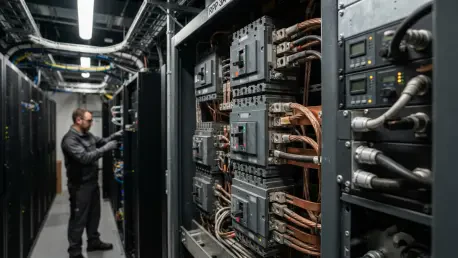

The specialized nature of 800V DC equipment means early adopters face higher initial component costs that must be balanced against long-term gains in space utilization. This fundamental shift in electrical distribution has become the defining characteristic of the modern AI-driven data center, where traditional alternating current systems are struggling to keep pace with the power-hungry silicon of today. As chip manufacturers push the envelope of thermal design power, the industry has reached a crossroads where the density of a single rack can exceed the total power consumption of an entire legacy server room. The adoption of 800-volt direct current is no longer viewed as an experimental curiosity but as a mission-critical upgrade for operators seeking to maximize their compute-per-square-foot metrics. By moving to higher voltages, facilities can significantly reduce the “current bottleneck” that previously necessitated massive, expensive copper cabling and resulted in substantial energy loss through heat.
Innovative Power Sourcing and Industry Standards
Onsite Generation: Solid Oxide Fuel Cells and Efficiency
A significant portion of the current discourse regarding the implementation of high-voltage systems centers on the starting point of the electrical chain. While many existing designs still rely on utility-provided alternating current that is converted to direct current within the facility, innovative models now propose a more radical upstream approach. By utilizing solid oxide fuel cells to generate direct current power onsite, operators can bypass several stages of traditional conversion that are inherent in utility-reliant systems. This method is particularly effective because every time power is converted between alternating and direct formats or stepped through various voltage levels, energy is lost to the environment as heat. Reducing these conversion steps not only improves the overall efficiency of the facility but also reduces the amount of cooling required to manage the thermal output of the power equipment itself, creating a cascading benefit for the entire site.
Collaborative Ecosystems: The Role of the Open Compute Project
The move toward 800V DC is not an isolated trend driven by a single hardware manufacturer; rather, it reflects a broad industry consensus involving the largest technology firms in the world. Major players like NVIDIA, Google, and Microsoft have been actively collaborating through the Open Compute Project to establish standardized interfaces and safety protocols. This collective effort is essential for creating a “plug-and-play” ecosystem where equipment from different vendors can operate seamlessly within a high-voltage environment. Without these standards, the risk of vendor lock-in would be high, potentially stifling the innovation required to support the next generation of AI workloads. Standardization also provides a clear roadmap for component manufacturers, encouraging them to invest in the research and development of specialized fuses, connectors, and power distribution units that are rated for these higher voltage levels across the entire industry.
Economic Realities and Operational Barriers
Financial Nuances: Balancing CAPEX and Long-Term Savings
While the potential savings associated with 800V DC are substantial, the economic reality remains complex and depends heavily on specific project variables. Industry analyses from major consultancy firms often suggest more conservative figures than those provided by technology vendors, with some estimates placing non-IT capital savings closer to 15 or 18 percent. These discrepancies highlight how sensitive the financial benefits are to the “project boundary” and the specific financing structures used for energy infrastructure. For instance, the inclusion of local energy pricing and the availability of Power Purchase Agreements can shift the financial viability of a high-voltage project in either direction. Additionally, the role of local taxes and depreciation schedules for specialized electrical equipment can significantly impact the long-term return on investment, requiring a deep financial analysis in the 2026 fiscal environment.
Safety and Infrastructure: Addressing the Challenges of DC Arcing
Transitioning to a high-voltage direct current architecture introduces unique operational hurdles that require a fundamental rethink of facility safety. Direct current electricity behaves very differently than alternating current during an electrical fault; specifically, DC arcs are much more difficult to extinguish because the current never crosses a “zero point.” In alternating current systems, the natural oscillation of the current provides frequent opportunities for an arc to self-extinguish, but a high-voltage DC arc can remain sustained, posing a significant risk to both equipment and personnel. This physical reality necessitates the development and implementation of specialized circuit breakers and ultra-fast fuses designed to interrupt a high-energy DC circuit safely. Facilities must also invest in comprehensive training programs for technicians, who must learn new isolation procedures and safety protocols to operate effectively.
The Strategic Future: Power as a Competitive Asset
Forward-Looking Infrastructure: Building the AI Power Grid
The shift toward 800V DC signifies that power is no longer merely a utility provided to the data center; it has become a strategic element of the facility’s design itself. As AI continues to push rack densities toward the megawatt level, the traditional silos that once separated power generation, distribution, and computation are rapidly collapsing. Hyperscale operators who successfully integrate these systems can manage the physical constraints of electricity while simultaneously optimizing their total cost of ownership. The goal is to create an electrical architecture that is as fast and efficient as the high-performance processors it supports, ensuring that the power delivery system never becomes a bottleneck for technological progress. This integrated approach allows for greater flexibility in how compute resources are deployed and scaled, providing a significant competitive advantage for those who master the high-voltage distribution challenge.
Tactical Evolution: Bridging the Gap in the AI Era
Successful navigation of this transition required data center developers to look beyond traditional electrical blueprints and embrace a more holistic view of energy management. By prioritizing the integration of high-voltage DC systems, organizations positioned themselves to handle the massive scaling requirements of the AI era without being hindered by legacy infrastructure limitations. The most effective strategies involved early collaboration with equipment vendors to secure supply chains for specialized components and the implementation of rigorous safety training for onsite personnel. Moving forward, the industry likely focused on the transition to green hydrogen for fuel cells to further align power density goals with corporate sustainability mandates. Ultimately, the move to 800V DC provided the necessary framework to sustain the next generation of digital intelligence, ensuring that power delivery became a catalyst for innovation rather than a constraint.