
A multi-billion-dollar stake in Alphabet reflects Greg Abel’s belief that platform leaders will thrive despite the significant logistical headwinds facing the power sector. This significant financial commitment highlights a fundamental shift in the technology landscape where the availability of electricity has become as critical as the availability of high-end silicon. As the industry navigates the current landscape, the massive expansion of generative models has placed an unprecedented strain on regional utilities that were designed for a much lower growth trajectory. The demand for constant, high-density power to fuel massive compute clusters is no longer a peripheral concern but a central pillar of corporate strategy. While software continues to evolve at a breakneck pace, the physical reality of energy generation and transmission is struggling to keep up. This friction between digital ambition and physical limitation is defining the current era of industrial development, forcing a rethink of how technology giants interact with the traditional utility providers to ensure long-term operational viability.
Addressing the Infrastructure Gap: Physical and Regulatory Barriers
The Legacy Challenge: Aging Grids and Modern Loads
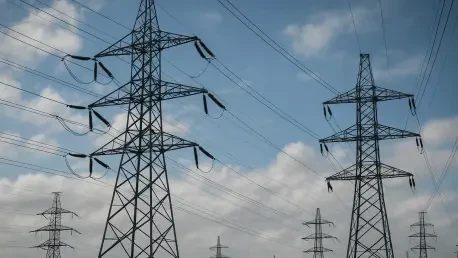
The primary challenge facing the current expansion of data centers lies in the aging nature of the national power grid, which was largely constructed in the mid-twentieth century. Most existing high-voltage transmission lines and transformers were never intended to support the localized, intense energy draws required by modern artificial intelligence clusters. These facilities often require hundreds of megawatts at a single site, a load comparable to a small city, yet the infrastructure connecting them to generation sources remains fragile and prone to congestion. From 2026 to 2028, the industry is seeing a significant uptick in regional grid instability as more hyperscale facilities go online simultaneously. This has led to a situation where the digital economy is outpacing the physical capacity of the wires meant to carry its lifeblood. Without a massive overhaul of the domestic substation network and long-distance transmission pathways, the geographical distribution of compute power will be dictated more by where the lights can stay on than by where the talent or the customers are located.
The Regulatory Hurdle: Permitting and Connection Backlogs
Even when the physical components are available, the regulatory environment presents a formidable barrier to synchronizing energy supply with technological demand. The permitting process for new transmission projects remains a convoluted maze of federal, state, and local approvals that can often take nearly a decade to navigate. Currently, thousands of potential energy projects are trapped in interconnection queues, waiting for the necessary studies and approvals to join the grid. This administrative backlog means that even if a data center is completed in eighteen months, it may wait years for a permanent power connection. The mismatch in development timelines between the agile tech sector and the bureaucratic utility industry has created a systemic bottleneck that threatens to stifle innovation. Consequently, project developers are increasingly forced to seek out jurisdictions with streamlined regulatory frameworks, leading to a concentration of infrastructure in a handful of regions that are now facing their own capacity limits. This regulatory gridlock is forcing a shift toward more autonomous energy solutions.
Strategic Adaptations: Navigating a Resource-Constrained Environment
Energy Sovereignty: The Rise of Private Power Generation
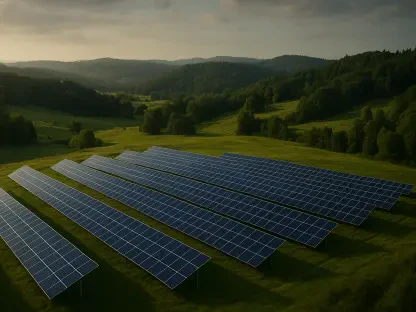
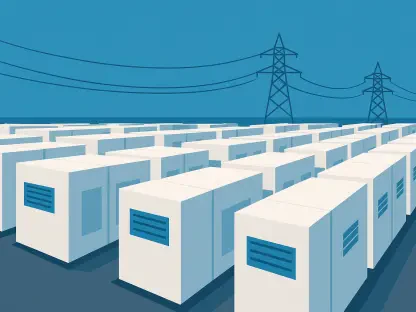
In response to the limitations of the traditional grid, technology companies are taking matters into their own hands by investing directly in on-site power generation and advanced energy storage solutions. There is a clear move toward energy sovereignty, where data centers function as microgrids capable of operating independently from the main electrical network during peak demand periods. The adoption of Small Modular Reactors and advanced natural gas turbines with carbon capture technology has become a cornerstone of this new strategy. By co-locating generation with computation, these firms eliminate the need for long-distance transmission and reduce the risk of grid-induced downtime. Furthermore, the integration of massive lithium-ion and flow battery systems allows these facilities to buffer their energy usage, drawing power during low-demand hours and relying on stored reserves when the grid is stressed. This trend represents a vertical integration of the supply chain, where the tech giants are becoming power producers to ensure reliability and cost predictability.
Operational Resilience: Efficiency and Future Standards
The transition toward a more resilient and efficient energy model was ultimately driven by the necessity of sustaining rapid digital expansion. Organizations that successfully navigated these hurdles adopted a dual-track approach that prioritized both hardware efficiency and decentralized power sourcing. Significant investments were directed into liquid cooling systems and more efficient power distribution units, which drastically reduced the thermal load of each compute rack. Engineers redesigned the very architecture of the data center to maximize every watt of electricity consumed, moving away from legacy air-cooled designs that were historically wasteful. On the policy front, advocacy for streamlined permitting and the modernization of regional grid interconnections became a top priority for industry leaders. Moving forward, the industry must continue to champion the development of next-generation nuclear energy and geothermal sources to provide the baseline power necessary for continuous operation. Strengthening the partnership between public utilities and private innovators proved to be the most effective way to ensure energy availability.