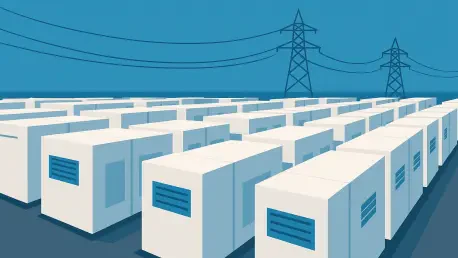

The rapid evolution of the Texas power grid faces an unprecedented test as industrial demand from data centers and artificial intelligence continues to skyrocket at a rate that traditional infrastructure struggles to match. Nightpeak Energy recently addressed this urgent need by successfully bringing the second phase of its Bocanova energy storage facility online in Brazoria County, effectively doubling the site’s total operational capacity to 300 megawatts. This expansion incorporates the advanced Bocanova 2 phase, which adds another 150 megawatts of flexible, two-hour battery storage to the Electric Reliability Council of Texas network. By utilizing Tesla Megapack 2 XL battery systems, the facility now provides 300 megawatt-hours of energy capacity specifically designed to discharge rated power during periods of peak volatility. This strategic upgrade ensures that the Houston metropolitan area maintains a reliable supply of electricity despite the increasing pressures of a modernizing economy.
Scaling Technology: The Role of Tesla Megapack Systems
The technical integration of the Tesla Megapack 2 XL systems represents a shift toward modular and highly efficient energy storage solutions that can be deployed with greater speed than conventional power plants. These high-density lithium-ion units are engineered to handle the rigorous demands of the ERCOT market, where frequency regulation and rapid-response capabilities are essential for preventing localized blackouts. Because the Bocanova facility is located near major load centers, it serves as a critical buffer between fluctuating renewable energy generation and the constant demand from heavy industrial sectors. The two-hour duration of the battery discharge allows the grid operator to smooth out sudden spikes in consumption, providing a layer of stability that was previously difficult to achieve without fossil fuel-based peaking plants. This deployment highlights how lithium-ion technology has matured into a cornerstone of grid management, offering a blueprint for future utility-scale projects.
Beyond the immediate technical benefits, the expansion of the Bocanova site directly addresses the massive energy requirements of the burgeoning artificial intelligence and high-performance computing sectors in the region. Data center developers are increasingly looking to Texas for its competitive energy market and available land, yet these facilities require a level of power reliability that traditional grids were not originally designed to provide. Nightpeak Energy recognized this transition early on, positioning its storage assets to capture excess solar and wind energy during off-peak hours and releasing it precisely when these digital hubs are operating at full tilt. This synergy between digital infrastructure and electrochemical storage is becoming the new standard for energy planning across the United States. As more high-density loads connect to the system from 2026 to 2028, the ability to rapidly deploy storage will be the deciding factor in whether regional economies can sustain their growth.
Strategic Finance: Building Resilience through Global Partnerships
The financial architecture supporting the Bocanova expansion demonstrates the growing maturity of battery storage as a preferred asset class for major global investment firms and banking institutions. Nightpeak Energy successfully secured a long-term offtake agreement with an investment-grade counterparty, which provided the predictable revenue stream necessary to attract significant capital for construction. The project was further bolstered by a tax equity investment from U.S. Bank and comprehensive construction-to-term loans provided by MUFG Bank, indicating a high level of confidence in the project’s long-term viability. These types of complex financial structures are essential for scaling the energy transition, as they allow developers to leverage institutional balance sheets to build out massive infrastructure projects quickly. By aligning the interests of private equity, commercial banks, and energy consumers, Nightpeak established a sustainable model for funding the next phases of its development pipeline.
The completion of the Bocanova project established a new standard for how energy developers approached the integration of large-scale storage into existing electrical networks. Stakeholders recognized that the ability to double capacity within a short timeframe was essential for maintaining the equilibrium of a market defined by rapid industrial growth. Planners focused on creating a more decentralized grid where storage units could act as the primary defense against unforeseen demand surges or supply disruptions. This shift encouraged a wider adoption of automated dispatch software that optimized battery performance in real-time based on market signals and grid health indicators. Moving forward, the industry prioritized the development of longer-duration storage technologies to complement existing lithium-ion assets, ensuring that energy security remained a top priority. These efforts led to a more robust and predictable energy landscape, providing a stable foundation for industrial innovation.