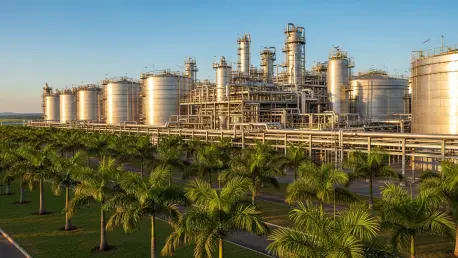

The global transition toward sustainable energy has reached a pivotal milestone as Acelen successfully secures a massive $1.5 billion investment package to accelerate the development of its flagship biorefinery in Bahia, Brazil. This substantial financial injection, backed by a consortium of international investors and the Brazilian Development Bank, positions the facility as a cornerstone of South America’s green fuel production capacity. By focusing on the large-scale manufacture of Renewable Diesel and Sustainable Aviation Fuel, the project addresses the pressing demand for decarbonization in the transport and aviation sectors. The strategic location in Mataripe leverages existing infrastructure while integrating advanced refining technologies to minimize carbon intensity. This initiative represents more than just industrial expansion; it signifies a fundamental shift in how traditional oil assets are being repurposed for a low-carbon economy. As global mandates for renewable fuel blending tighten, the facility stands ready to supply both domestic and international markets with high-quality bio-based energy solutions.
Financial Foundations: Strategic Investment Models
The financial structure of this venture highlights a sophisticated blend of private equity and public development finance, where Mubadala Capital has played a central role in orchestrating the necessary capital flow. A significant portion of the $1.5 billion originates from the Brazilian Development Bank, which has increasingly prioritized projects that align with the nation’s ecological transformation goals. This partnership reflects a growing confidence in Brazil’s ability to lead the global biofuels market, utilizing its vast agricultural resources and existing industrial expertise. The funding is specifically earmarked for the construction of specialized processing units capable of handling diverse feedstocks, ensuring the refinery remains adaptable to market fluctuations and technological advancements. By securing such a massive commitment, Acelen has effectively de-risked the early stages of the project, allowing for the procurement of high-tech hardware and the engagement of global engineering firms specializing in hydrotreated vegetable oil production.
Beyond the initial capital expenditure, the financial strategy incorporates long-term operational sustainability by establishing robust supply chains and securing off-take agreements with international carriers. These agreements are crucial for justifying the massive scale of the Bahia facility, as they guarantee a consistent market for the Sustainable Aviation Fuel produced on-site. The involvement of global financial institutions also brings a level of rigorous environmental, social, and governance auditing that enhances the project’s attractiveness to institutional investors. This structured approach ensures that every dollar invested contributes to a measurable reduction in carbon emissions, fulfilling both economic and environmental objectives simultaneously. Furthermore, the investment serves as a catalyst for local economic development, as the capital flows through regional service providers and construction companies. By creating a template for financing large-scale green energy projects, Acelen and its partners are setting a new standard for how the traditional energy sector can transition toward renewable alternatives.
Technical Innovation: Regional Socioeconomic Impact
At the heart of this biorefinery’s operational strategy is the innovative use of the Macauba palm, a native Brazilian species that offers significantly higher oil yields per hectare than traditional soy. Unlike conventional monocultures, Macauba can be integrated into silvopastoral systems, allowing for the simultaneous production of fuel feedstocks and livestock grazing on the same land. This approach not only maximizes land-use efficiency but also promotes biodiversity and soil health, which are critical components of a truly sustainable bioenergy lifecycle. Acelen has invested heavily in research and development to optimize the extraction process and ensure that the oil meets the stringent quality requirements for high-performance aviation fuels. The cultivation of Macauba is expected to revitalize degraded lands across the region, providing a reliable source of income for thousands of smallholder farmers who will be integrated into the refinery’s supply chain. This focus on native crops reduces the environmental footprint associated with feedstock transportation and supports the preservation of local ecosystems.
The successful acquisition of capital for this biorefinery established a definitive roadmap for integrating large-scale renewable energy production into existing industrial frameworks. Stakeholders moved beyond theoretical planning to implement a comprehensive strategy that combined cutting-edge technology with sustainable land management practices. Industry experts determined that the next logical step involved prioritizing the diversification of feedstocks and the optimization of logistics to ensure that green fuel production remained economically viable. Future initiatives were directed toward expanding the infrastructure for hydrogen production, which served as a critical component for the hydroprocessing stages of renewable fuel manufacturing. By fostering deeper collaboration between the public sector and private investors, the project demonstrated how to replicate this model in other regions with high agricultural potential. The Bahia project proved that large-scale decarbonization was achievable when financial resources aligned with ecological goals. This shift encouraged a global focus on scaling these solutions to meet climate targets.