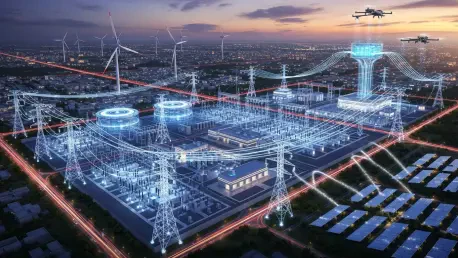

The American electrical grid is currently navigating an incredibly complex and fragile period of transition where the historical reliance on steady fossil fuels is clashing violently with the rapid integration of weather-dependent renewable energy sources. This evolution has left utilities in a precarious position, forced to maintain stability while moving toward a greener future. Consequently, the industry is witnessing a reliability crisis that has prompted unprecedented federal intervention. The U.S. Department of Energy has turned to legal mechanisms that were once considered extreme, attempting to freeze the retirement of aging coal plants to ensure the lights stay on during periods of peak demand.
However, the execution of these federal mandates has revealed a widening gap between regulatory policy and mechanical reality. As of early 2026, the reliance on Section 202(c) of the Federal Power Act has become a standard tool for grid management rather than a rare exception. This shift has introduced significant friction between investor-owned utilities, regional cooperatives, and federal authorities who are all grappling with the same fundamental question: can the grid survive the transition without these legacy assets? The answer remains elusive as the physical limitations of the nation’s aging fleet continue to undermine the effectiveness of government orders.
The current energy landscape is defined by this friction, as the demand for dispatchable power—energy that can be ramped up or down at a moment’s notice—outpaces the available supply. While renewables are expanding at a record pace, their intermittency requires a robust backstop that the current infrastructure is struggling to provide. Federal authorities are essentially trying to buy time, but time is a resource that aging mechanical systems do not possess in abundance. This report investigates the consequences of these emergency mandates, exploring whether the federal government’s attempt to secure the grid is actually creating a more fragile and expensive energy environment for everyone involved.
Evaluating the Current State of the U.S. Electrical Grid and Baseload Power
The nation’s energy sector is struggling to balance the aggressive pursuit of decarbonization with the immediate necessity of keeping the electrical grid functional. Major market players, including investor-owned utilities and regional cooperatives, are caught between federal mandates and the physical limitations of their aging fleets. This struggle is most visible in the debate over baseload power, which historically came from coal and natural gas. As these traditional sources are phased out, the reliability of the grid has come under fire, especially during extreme weather events that strain capacity to its breaking point.
Central to this friction is the U.S. Department of Energy’s unprecedented use of Section 202(c) of the Federal Power Act. This provision allows the government to force plants scheduled for retirement to remain operational to prevent blackouts. While the intention is to provide a safety net, the reality is that many of these facilities were never meant to operate indefinitely. The grid is essentially being held together by emergency orders that ignore the underlying mechanical degradation of the assets they seek to preserve, creating a false sense of security for policymakers and consumers alike.
Emerging Trends and Quantitative Performance of Retained Generation Units
Shifting Operational Behaviors and the Rise of Emergency Interventions
The primary trend currently affecting the energy industry is the shift toward what many experts call just-in-case generation. As renewable energy becomes a larger part of the mix, federal authorities are increasingly relying on emergency orders to keep coal and gas units on standby. This has led to the emergence of zombie plants, which are facilities that are legally required to be available for dispatch but are often too mechanically fragile to operate consistently when called upon. This trend reflects a broader struggle to bridge the gap between long-term environmental goals and the immediate, non-negotiable need for grid stability.
These emergency interventions have fundamentally changed how utilities plan their operations. Instead of focusing on efficiency and modernization, many operators are forced to keep old equipment on life support. This creates a cycle where plants that should have been decommissioned are kept in a state of suspended animation, occupying space on the grid without providing the reliable power that is expected of them. The rise of these emergency orders suggests that the regulatory framework is struggling to keep pace with the physical realities of energy production and distribution in the modern era.
Analyzing Diminishing Returns and Capacity Factor Data
Market data from the past year reveals a stark disconnect between regulatory intent and actual electricity production. Since the implementation of various emergency retention orders, the combined output of mandated plants has plummeted by roughly 65%. This decline is a clear indicator of the diminishing returns associated with keeping old plants online. Key performance indicators, such as the capacity factor, show that facilities like the J.H. Campbell plant and the F.B. Culley Unit 2 are operating well below their historical averages. For example, the J.H. Campbell facility recently saw its capacity factor drop to 46%, down significantly from its previous 66% average.
Forecasts suggest that as these units continue to age without significant capital investment, their contribution to the grid will continue to dwindle. The data suggests that many of these mandated units are essentially offline for the majority of the year, only ramping up for brief windows during high-stress periods. However, even during these periods, their reliability is questionable. If a plant has a capacity factor of only 14% or 17%, as seen with several units in Indiana, it cannot be considered a dependable part of the baseload infrastructure. This quantitative decline underscores the failure of mandates to produce the desired reliability outcomes.
Addressing the Mechanical and Economic Hurdles of Prolonging Asset Life
The industry faces a reliability paradox where aging infrastructure becomes more prone to failure the longer its retirement is delayed. These facilities typically suffer from years of deferred maintenance because operators logically stop investing in major upgrades once a decommissioning date is set. Reviving these units or keeping them in a state of constant readiness requires massive, unforeseen expenditures. For instance, some utilities have cited the need for multi-million dollar repairs just to comply with federal orders, costs that ultimately place a heavy financial burden on ratepayers.
Rethinking how standby status is funded has become a necessity for the sector. Strategies to overcome these challenges include finding more efficient ways to bridge the gap between fossil fuel retirements and the deployment of new capacity. However, the current approach of using 90-day emergency renewals creates an atmosphere of permanent uncertainty. Without a clear plan for funding the maintenance of these aging assets, utilities are forced to choose between grid compliance and financial responsibility, a choice that often results in expensive, short-term fixes rather than sustainable energy solutions.
Navigating the Complex Regulatory Environment and Legal Friction
The regulatory landscape is becoming increasingly contentious as the Department of Energy utilizes emergency powers in ways that were arguably never intended by the original authors of the Federal Power Act. Utilities are now facing a cycle of rolling 90-day emergency renewals, which makes long-term planning nearly impossible. Compliance with these federal orders often clashes with state-level environmental regulations and corporate decarbonization commitments. This creates a legal minefield where companies are forced to violate one set of rules to satisfy another, leading to a surge in litigation across the country.
Furthermore, the lack of a transparent exit strategy from these mandates has sparked significant legal challenges. Utility associations and environmental advocacy groups have filed various suits to determine the limits of federal intervention in the energy market. These groups argue that the government is essentially propping up a failing system rather than facilitating a smooth transition to newer technologies. This legal friction is not just a matter of policy; it has real-world consequences for how utilities allocate their resources and how much consumers pay for their monthly energy bills.
Projecting the Future of Grid Stability and Fossil Fuel Decommissioning
Looking ahead, the industry is clearly moving toward a more decentralized and technologically diverse grid, but the transition period remains high-risk. Future growth will likely be found in long-duration energy storage and advanced grid management software that reduces the need for emergency fossil fuel retention. However, until these technologies reach the necessary scale, the industry can expect continued volatility. The next few years will be a test of whether the grid can absorb the loss of legacy coal plants without suffering from widespread instability or prohibitive cost increases.
Market disruptors, such as sudden extreme weather events and shifting federal priorities, will dictate whether the government continues to lean on aging infrastructure. There is a growing interest in accelerating the deployment of new baseload alternatives, such as modular nuclear reactors or expanded natural gas infrastructure with carbon capture capabilities. However, these solutions are still years away from being a primary part of the energy mix. In the meantime, the tension between maintaining the old and building the new will define the strategic direction of every major utility in the country.
Synthesis of Findings and Strategic Recommendations for the Energy Sector
The investigation into federal mandates suggested that while emergency orders were intended to provide a safety net, they yielded diminishing returns and created significant economic strain. The mechanical state of the nation’s aging coal fleet made these plants unreliable partners for grid stability, as evidenced by the sharp drop in their actual power output. It was found that the reliance on Section 202(c) created a cycle of deferred maintenance and high costs that did not translate into a more secure energy supply. Instead, the mandates often served to prolong the life of assets that were no longer capable of meeting modern performance standards.
To move toward a more stable future, it is recommended that federal authorities establish clearer criteria for emergency designations and provide robust financial mechanisms to cover the costs of mandated operations. The industry’s long-term health depended on a more synchronized approach to decommissioning that aligned federal reliability mandates with the physical and financial realities of modern utility management. Policymakers and industry leaders were encouraged to prioritize the rapid scaling of storage and modular baseload technologies rather than relying on the repeated extension of legacy units. Ultimately, a successful transition required a departure from emergency reactive measures in favor of a proactive, data-driven strategy for grid modernization.