
Christopher Hailstone joins us to navigate the increasingly complex intersection of energy reliability and legislative strategy. With his extensive background in energy management and renewable integration, he provides a seasoned perspective on how the Midwest is grappling with a sudden, massive surge in electricity demand. As a Utilities expert who has watched grid dynamics shift from the flat growth of the late nineties to the current data center explosion, he is uniquely positioned to explain why Illinois’ recent policy pivots represent a departure from the traditional energy playbook. In this conversation, we explore how the state is moving away from the “panic” of building slow, expensive centralized plants and instead leaning into a decentralized future where local resources like solar, storage, and smart technology take center stage to keep costs manageable and the lights on.
Our discussion centers on the transformative potential of the Clean and Reliable Grid Affordability (CRGA) Act and its two-phase approach to virtual power plants. We dive into the specific failures of other leading states, the reality of construction timelines for gas and nuclear power, and why long-term integrated resource planning is essential in a post-deregulation world. We also unpack the “Swiss Army Knife” role of energy storage and how smart thermostats and electric vehicles are being orchestrated to act as a single, dispatchable power plant to protect ratepayers from volatile market prices.
The sudden surge in energy demand from data centers has sparked a heated debate about returning to baseload sources like gas and nuclear. Given the urgency of the capacity crunch, why isn’t the traditional approach of building large centralized plants the fastest way to stabilize the grid?
The traditional 20th-century playbook suggests that when you need more power, you simply build a massive, centralized plant, but that logic fails to account for the grueling reality of modern construction timelines. Promising new nuclear expansion as a quick fix for today’s energy hunger is frankly disingenuous when you consider that these projects often take over a decade to complete and almost always suffer from massive budget overruns. Even if we look at natural gas turbines, which many see as a bridge, we are facing supply chain bottlenecks that push deployment out three to five years at the minimum. Ratepayers who are opening their bills today and feeling the sting of rising prices simply do not have five or ten years to wait for relief. Locking the state into these volatile fuel markets for decades to come creates a long-term financial trap, whereas we need resources that can meet the moment right now.
With the passage of the Clean and Reliable Grid Affordability Act, Illinois seems to be pivoting toward a decentralized model. How do community power networks and virtual power plants actually change the daily economic equation for a typical resident?
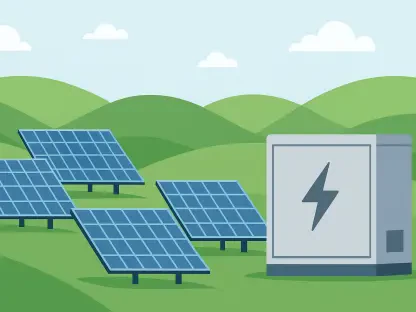
The CRGA Act is a total game-changer because it prioritizes the only resources we can actually deploy fast enough to make a dent in the current capacity crisis: local solar and energy efficiency. By organizing these local assets into virtual power plants, or VPPs, the state can essentially tap into the “latent potential” sitting at the edge of the grid. This summer, we will see the launch of phase one, which focuses on better compensation for customers who discharge their home batteries during those sweltering, high-demand afternoons. This isn’t just about the person with the solar panel; it helps every single ratepayer by reducing the need for the state to buy incredibly expensive spot power from peaker plants. It bends the demand curve downward, which suppresses the prices in the large capacity auctions held by regional operators like PJM and the Midcontinent Independent System Operator.
Looking ahead to the second phase of this policy, how do you see the integration of everyday devices like smart thermostats and electric vehicles affecting grid reliability?
The second phase of the VPP program is where we truly see the orchestration of the modern grid, turning thousands of individual small assets into a single, dispatchable power plant. Imagine a July afternoon where the humidity is thick and every air conditioner in the state is humming at full tilt; rather than firing up a dirty gas peaker, a VPP can instantly signal thousands of smart thermostats to adjust by a degree or pause an electric vehicle’s charging cycle for a brief window. This creates immediate “headroom” on the grid without the consumer even noticing a change in their comfort or routine. It transforms the grid from a one-way street of delivery into a flexible, living network that can breathe with the demands of the population. By aggregating these residential batteries and chargers, we are creating a resource that is as reliable as a traditional plant but far more agile and cost-effective.
Energy storage is often called the ‘Swiss Army Knife’ of the grid, and Illinois has set a significant target for 3 GW of utility-scale storage by 2030. What specific role does this goal play in managing the intermittency of renewable energy?
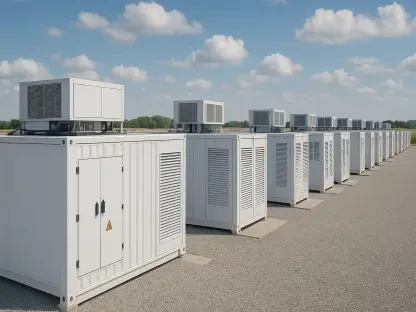
A 3 GW storage target sends a massive, clear signal to the market that Illinois is serious about modernizing its infrastructure and solving the intermittency challenge. Batteries are essential because they perform a variety of high-value tasks, such as frequency regulation and shifting the solar energy captured during the bright midday hours to the evening peak when everyone returns home and turns on their appliances. This target ensures that as we build out more wind and solar, we have the “bucket” ready to catch that energy and pour it back into the grid exactly when it is needed most. It effectively smooths out the peaks and valleys of production, providing a level of reliability that matches or exceeds traditional fossil fuel sources. Without this scale of storage, we would be leaving gigawatts of clean, cheap energy on the table while still paying for expensive, standby gas plants.
We are seeing some established energy leaders like California, New York, and Massachusetts make significant policy shifts or even backtrack on efficiency goals. What can other state legislatures learn from the pitfalls currently unfolding in those markets?
It is disheartening to see states like Massachusetts gutting award-winning efficiency programs with $1 billion cuts or New York leaning into a false binary that pits climate goals against ratepayer protection. California has also struggled, with high-profile vetoes of bipartisan bills that would have catalyzed virtual power plants, effectively leaving proven resources untapped while prices continue to climb. These are “unforced errors” driven by a misunderstanding of the assignment; they are confusing climate backtracking with cost control, when in reality, efficiency and local power are the most effective tools for lowering bills. Illinois has chosen a different path by recognizing that the cheapest and fastest resource to market is renewable energy coupled with demand-side flexibility. By refusing to follow the path of stranded fossil fuel assets, Illinois is proving that you don’t have to sacrifice your climate commitments to keep energy affordable.
For decades, Illinois operated under a deregulated market with relatively flat demand, but the data center boom has changed everything. How does the new requirement for long-term integrated resource planning protect the state from making desperate, high-cost decisions?
Since deregulation in 1997, Illinois benefited from a market that worked well enough when demand wasn’t moving, but we can no longer afford to fly blind and rely solely on market signals that only react after prices have already skyrocketed. Integrated resource planning provides a proactive roadmap that allows the state to manage the electrification transition and the data center boom with real foresight rather than knee-jerk desperation. It allows us to look twenty years down the road and build the infrastructure we need today, ensuring we aren’t caught off guard by speculative energy appetites. This planning process brings a level of transparency and security back to the system, making sure that when we do invest ratepayer money, it is going toward the most efficient and reliable mix of resources possible. We are finally moving away from a reactive posture and toward a strategy that anticipates growth before it becomes a crisis.
What is your forecast for the future of energy reliability in the Midwest over the next decade?
I believe we are entering an era where Illinois will serve as the primary blueprint for the rest of the country, proving that a clean grid is fundamentally a more reliable and affordable grid. Over the next ten years, as the 3 GW of storage comes online and our community power networks begin to aggregate thousands of local devices, we will see a dramatic stabilization of energy prices despite the massive load growth from the tech sector. We will likely see more states regretting their “unforced errors” and looking toward the Midwest for guidance on how to implement virtual power plants that actually suppress capacity auction prices. The “storm clouds” I worried about in 2024 are being broken up by a commitment to planning and local resources, and I expect Illinois to emerge as a national leader in grid security. We are successfully moving past the age of “panic” and into an age of sophisticated, decentralized energy management that treats the ratepayer as a partner rather than just a customer.