
The traditional paradigm in biochar production has long held that moisture is the enemy of efficiency, necessitating extensive pre-drying of biomass before it enters the pyrolysis kiln. However, recent breakthroughs in thermochemical engineering are challenging this long-standing assumption, suggesting that controlled levels of hydration within the feedstock can catalyze unique chemical pathways. While it is true that evaporating water requires a significant energy input, the presence of steam during the heating process appears to modify the structural evolution of the carbonized material in ways that dry processes simply cannot replicate. Engineers and environmental scientists are now exploring how water vapor influences the polymerization of organic vapors into stable solid carbon, potentially turning a perceived waste product into a valuable processing tool. This shift in perspective could redefine the economic viability of carbon sequestration technologies by reducing the overhead associated with industrial drying systems and allowing for the direct processing of diverse organic residues.
Structural Evolution: Hydrothermal Mechanisms and Industrial Scalability
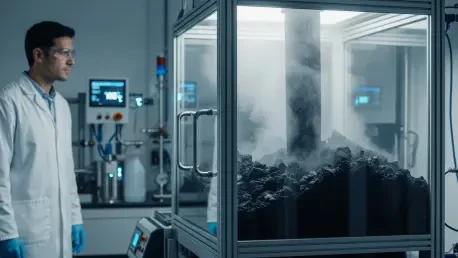
When moisture-laden biomass enters a reactor, the internal water transforms into steam, creating a localized hydrothermal environment that influences the breakdown of cellulose and lignin. This steam acts as a reactive agent rather than a passive byproduct, facilitating the removal of volatile organic compounds while simultaneously promoting the formation of aromatic ring structures. These aromatic compounds are the building blocks of stable carbon, and their density often determines how long the biochar will remain in the soil before decomposing. Research indicates that the presence of water vapor can inhibit certain secondary reactions that would otherwise lead to the loss of carbon as gaseous carbon dioxide or methane. By preserving more of the original carbon from the biomass, the overall yield of the solid product increases, provided that the temperature and pressure are managed with precision. This interactive process effectively cleans the carbon pores, increasing the surface area and the resulting functionality of the material.
Integrating moisture into the production cycle offers a compelling solution to the energy-intensive bottleneck of feedstock preparation, which often accounts for a large portion of operational costs in commercial facilities. In conventional setups, biomass must be dried to below ten percent moisture content, but leveraging damp materials directly bypasses this requirement entirely. Modern reactor designs, such as continuous-flow auger systems, are optimized to recapture the latent heat of vaporization from the escaping steam to pre-heat incoming material. This creates a circular energy loop where the water content actually contributes to the thermal stability of the reaction zone by moderating temperature spikes that could lead to over-carbonization. Furthermore, the increased density of the resulting biochar reduces transport costs and improves the logistics of large-scale land application. Companies specializing in carbon removal are adopting these wet-feedstock techniques to produce a more consistent product that meets certification standards.
Observations from recent pilot projects demonstrated that biochar produced in the presence of moisture exhibited superior cation exchange capacity and nutrient retention when introduced to depleted agricultural soils. Stakeholders determined that the chemical signature of hydrated pyrolysis products facilitated faster colonization by beneficial mycorrhizal fungi, which played a crucial role in enhancing crop yields across diverse climates. Moving forward, the industry prioritized the development of real-time moisture sensors and automated kiln controls to maintain the optimal vapor pressure throughout the entire production cycle. Research institutions recommended that policy frameworks for carbon credits should be updated to recognize the increased stability of steam-conditioned biochar as a superior form of atmospheric carbon removal. Agricultural cooperatives began implementing on-site pyrolysis units that handled green waste without pre-treatment, significantly reducing the carbon footprint of the supply chain itself. The transition to moisture-tolerant production methods eventually unlocked new opportunities for processing aquatic biomass and wet food waste.