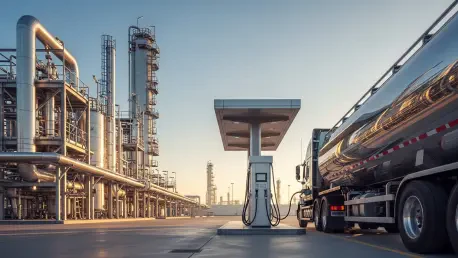

Sustainable aviation and heavy-duty shipping sectors are increasingly turning toward hydrotreated vegetable oil as a drop-in replacement for conventional diesel to meet stringent emissions standards across international borders. Unlike the first generation of biofuels that relied heavily on food crops, modern waste-based diesel utilizes secondary materials such as used cooking oil, animal fats, and industrial residues. This shift represents a fundamental change in how the energy sector views waste, transforming it from a liability into a high-value commodity. The current market dynamics are driven by a dual necessity: reducing the carbon intensity of logistics while maintaining the operational efficiency of existing internal combustion engines. As major logistics hubs expand their bunkering facilities to accommodate these renewable alternatives, the industry is witnessing a decoupling of economic growth from carbon output. This evolution is not merely a technical upgrade but a reimagining of a circular economy where every byproduct becomes a potential fuel source for the global commerce network.
The Engineering Frontier of Renewable Diesel Production
Refining Processes: Achieving Chemical Equivalence
Hydrotreating represents the pinnacle of modern bio-refining by utilizing hydrogen to remove oxygen from biomass molecules at high temperatures and pressures. This sophisticated chemical process results in a paraffinic hydrocarbon that is chemically nearly identical to fossil-derived diesel but possesses a higher cetane number and lower sulfur content. The resulting fuel offers superior cold-start performance and cleaner combustion, which significantly reduces the maintenance burden on particulate filters and exhaust after-treatment systems. Because the molecular structure is so stable, waste-based diesel does not suffer from the degradation issues common in traditional fatty acid methyl ester biodiesels. Refineries are currently optimizing these hydrocracking stages to maximize the yield of middle distillates from increasingly complex feedstock mixtures. This technical precision ensures that the final product meets the EN 15940 standard, providing fleet operators with the confidence to transition without risking engine integrity.
Integration Strategy: The Seamless Transition for Heavy Duty Fleets
The primary advantage of waste-based diesel lies in its status as a drop-in fuel, meaning it requires zero modifications to existing vehicle fuel systems or fuel storage infrastructure. This allows logistics companies to implement immediate decarbonization strategies without the massive capital expenditure required for electrification or hydrogen fuel cell conversion. For long-haul trucking companies operating across vast geographic regions, the ability to blend renewable diesel with conventional fuel at any ratio provides a vital safety net during the current scale-up phase. This flexibility is essential for maintaining service reliability while navigating the varying availability of renewable fuels at different regional hubs. Furthermore, the high energy density of these synthetic hydrocarbons ensures that vehicle range and payload capacity remain unaffected, addressing the primary concerns of the heavy transport sector. By leveraging the existing network of pipelines, the industry is accelerating the adoption of low-carbon solutions.
Market Dynamics and the Feedstock Challenge
Supply Chain Diversification: Beyond Used Cooking Oil
As the demand for waste-based diesel surges from 2026 to 2028, the primary bottleneck has shifted from refining capacity to the reliable sourcing of sustainable feedstocks. While used cooking oil remains the most sought-after input due to its high yield and low indirect land-use change impact, industrial players are now looking toward more advanced residues. These include technical corn oil, acid oils from chemical refining, and even lignocellulosic waste from the forestry sector. To ensure transparency and prevent fraud, global certification bodies have implemented rigorous tracking systems that verify the origin of every gallon of waste-based fuel entering the market. This focus on traceability is crucial for corporate ESG reporting and compliance with government-mandated carbon intensity targets. Strategic partnerships between fuel producers and waste management firms are becoming the norm, creating integrated value chains that secure long-term feedstock supply and stabilize local market prices.
Economic Viability: Scaling Production for Global Impact
The transition to waste-based diesel proved to be a critical bridge toward a zero-emission future, as it addressed the immediate need for carbon reduction in hard-to-abate sectors. Investors and policy makers successfully prioritized the expansion of production facilities, which helped lower the price premium relative to traditional fossil fuels. For organizations looking to lead in this landscape, the next actionable steps involved conducting comprehensive life-cycle assessments of current energy consumption and identifying specific routes where high-blend renewable fuels offered the greatest impact. Fleet managers were encouraged to collaborate with energy suppliers to secure long-term off-take agreements, thereby de-risking the development of new biorefineries. Additionally, governments focused on harmonizing tax incentives for waste-based products to ensure a level playing field across different jurisdictions. By integrating these advanced fuels into decarbonization portfolios, the transport sector demonstrated that circular economy principles could deliver results.