
The global energy landscape is undergoing a structural shift as the white coal market transitions from a niche industrial curiosity into a vital pillar of the circular economy. This transformation is not merely a reaction to tightening environmental regulations but a proactive move by industries to secure reliable, cost-effective thermal energy sources. As of the current fiscal period in 2026, the sector is valued at approximately $3.1 billion, reflecting a significant increase in demand compared to the start of the decade. Market analysts and industry experts are now projecting that this upward trajectory will continue, with the market expected to reach $6.1 billion by 2035. This growth represents a steady compound annual growth rate of 6.3 percent, signaling a fundamental reorganization of how manufacturing facilities and power plants view their fuel procurement strategies. By leveraging organic byproducts that were once considered liabilities, the white coal industry is effectively turning agricultural waste into a high-value commodity, providing a blueprint for sustainable industrial growth in an era defined by carbon consciousness.
The Engineering of High-Density Biomass Briquettes
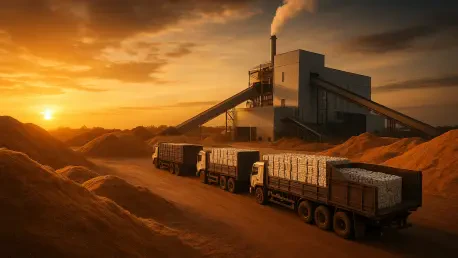
White coal, scientifically classified as high-density biomass briquettes, represents a significant advancement in the field of renewable fuel engineering. Unlike traditional black coal, which is a finite fossil fuel extracted through invasive mining, white coal is manufactured through the mechanical densification of various agricultural and organic residues. The feedstock for this process is diverse, including materials such as rice husks, sawdust, sugarcane bagasse, groundnut shells, and cotton stalks. These raw materials are often sourced from farming operations where they were previously discarded or burned in open fields. The manufacturing process utilizes high-pressure extrusion or piston press technology to compress the biomass. This intense pressure causes the natural lignin in the plant fibers to soften and act as a binding agent, meaning no chemical additives or external binders are necessary to maintain the structural integrity of the final briquette.
The resulting product is a fuel source characterized by its high calorific value and uniform density, which makes it an ideal drop-in substitute for coal or diesel in industrial boilers. Because the briquettes are highly concentrated, they offer significantly better storage and transport efficiency compared to loose biomass. Furthermore, the combustion profile of white coal is remarkably cleaner than its fossil fuel counterparts. It typically contains lower moisture and ash content, which prevents the rapid degradation of industrial hardware and reduces the frequency of maintenance cycles for furnaces. The ability of white coal to deliver consistent thermal output while minimizing sulfur dioxide and nitrogen oxide emissions has positioned it as a preferred alternative for heavy industries looking to optimize their performance without compromising their environmental responsibilities.
Strategic Drivers: The Path to Industrial Decarbonization
The urgent global mandate for rapid decarbonization serves as the primary catalyst for the widespread adoption of white coal across multiple industrial sectors. As nations implement increasingly stringent climate policies, companies are forced to evaluate the carbon intensity of their operations. White coal provides a practical solution because it utilizes carbon that was recently sequestered from the atmosphere by plants during their growth cycle. When these briquettes are burned, they release that same carbon back into the cycle, making the process virtually carbon-neutral. This allows massive manufacturing facilities, such as those in the textile, cement, and chemical sectors, to transition toward greener operations without necessitating a complete and costly overhaul of their existing thermal energy infrastructure. The “plug-and-play” nature of biomass briquettes ensures that sustainability goals are achievable within current budgetary and technical constraints.
Beyond the environmental imperatives, the market is being driven by a fundamental shift in how agricultural waste is managed on a global scale. In many developing and industrialized nations, the seasonal burning of crop residues has historically contributed to catastrophic levels of air pollution. The emergence of a robust white coal industry has transformed this environmental hazard into a lucrative economic resource. By creating a commercial value for agricultural waste, the industry incentivizes farmers to collect and sell their residues rather than burning them in the field. This mechanism not only mitigates the risk of seasonal smog but also establishes a secondary income stream for rural communities, effectively bridging the gap between agricultural productivity and industrial energy requirements. The integration of these two sectors creates a resilient supply chain that benefits both the environment and the local economy.
Economic Resilience and Localized Supply Chains
The economic stability inherent in biomass fuels further enhances their appeal to large-scale industrial consumers who are wary of global market fluctuations. While traditional fossil fuel prices are often subject to extreme volatility due to geopolitical tensions, shipping lane disruptions, and international trade disputes, white coal relies on locally sourced raw materials. This proximity to feedstock sources ensures that supply chains are shorter and more transparent, leading to predictable pricing structures that allow for better long-term financial planning. Industrial facilities can often secure multi-year contracts with local biomass processors, insulating themselves from the price shocks that frequently plague the global oil and coal markets. This localized approach to energy production also reduces the carbon footprint associated with long-distance logistics, further aligning the product with corporate environmental goals.
Furthermore, the low ash content and absence of corrosive sulfur in white coal briquettes provide hidden economic advantages through reduced operational overhead. Traditional coal-fired systems often suffer from significant slagging and fouling, which can lead to frequent downtime and expensive repairs. By switching to high-quality biomass briquettes, facility managers can extend the life of their equipment and improve overall thermal efficiency. When these internal cost savings are combined with supportive government policies, such as the implementation of carbon taxes on fossil fuels and the provision of subsidies for renewable energy transitions, the financial case for white coal becomes undeniable. This convergence of policy and profitability is attracting significant private equity investment into the sector, which is fueling the expansion of production capacity across both developed and emerging markets.
Regional Dominance and the Global Policy Environment
The Asia Pacific region currently stands as the dominant powerhouse for the global white coal market, driven by a unique combination of agricultural abundance and industrial demand. Countries such as India, China, and Vietnam possess massive agricultural sectors that generate millions of tons of feedstock annually. In these regions, government initiatives are aggressively promoting the use of biomass to reduce a heavy reliance on imported fossil fuels and to combat the air quality crises in major urban centers. India, in particular, has seen a surge in “co-firing” mandates, where power plants are required to blend a certain percentage of biomass with coal. This policy landscape has created a massive and stable market for white coal producers, encouraging them to scale their operations and invest in more sophisticated processing technology to meet the rising demand for high-quality briquettes.
In contrast, the market dynamics in Europe and North America are shaped more by sophisticated environmental regulations and corporate sustainability mandates. The European Union’s commitment to the Green Deal has made white coal an essential tool for meeting carbon reduction targets in district heating systems and heavy manufacturing. Many European companies are utilizing biomass to achieve “net-zero” certifications, which are increasingly required by investors and consumers alike. In North America, the focus is shifting toward integrating white coal into the supply chains of large-scale manufacturing to satisfy internal ESG (Environmental, Social, and Governance) targets. While the motivations vary by region, a global consensus has emerged that white coal is a vital instrument for the decarbonization of industrial heat, a sector that is traditionally much more difficult to transition than the electricity generation sector.
Technological Evolution and Scalability Challenges
To reach the projected valuation of $6.1$ billion by 2035, the industry must address several structural hurdles, primarily concerning the seasonality of feedstock and logistical complexity. Because agricultural residues are inherently tied to harvest cycles, white coal manufacturers must manage significant variations in raw material availability. To mitigate this, industry leaders are investing in large-scale, climate-controlled storage facilities and implementing sophisticated inventory management software to ensure a consistent year-round supply for their industrial clients. There is also a notable rise in decentralized energy systems, where processing plants are strategically located near both the source of the waste and the end-user. This reduces the costs and energy expenditures associated with transporting bulky materials, making the entire ecosystem more efficient and scalable.
Technological advancements in the briquetting process itself are also playing a crucial role in the maturation of the market. Modern equipment now features automated moisture sensors and precision cooling systems, which result in fuel that has higher density and better durability than previous generations of biomass products. Improved durability is particularly important for export markets, as it prevents the briquettes from crumbling during long-distance shipping and handling. Furthermore, researchers are exploring the integration of urban wood waste and municipal organic residues into the production process, which could expand the feedstock base beyond the agricultural sector. As these technologies continue to evolve and the regulatory environment becomes more favorable, white coal is positioned to become a staple of the global energy mix, providing a practical and profitable path toward a sustainable industrial future.
Strategic Outlook: Future Proofing Industrial Energy
The expansion of the white coal market reflected a broader global commitment to transforming the industrial thermal energy sector. Stakeholders who recognized the potential of biomass briquettes early on were able to secure a competitive advantage by stabilizing their energy costs and meeting ambitious carbon reduction targets. The transition toward this fuel source demonstrated that economic growth and environmental stewardship were not mutually exclusive but were instead deeply interconnected. As the industry moved toward 2035, the focus shifted from simple adoption to the optimization of decentralized supply chains and the refinement of waste-to-energy technologies. This progress allowed for a more resilient energy grid and a significant reduction in the environmental impact of heavy manufacturing processes.
Looking forward, the successful integration of white coal into the global energy portfolio required a multi-faceted approach involving policy support, technological innovation, and cross-sector collaboration. Governments played a critical role by standardizing fuel quality and providing the necessary infrastructure for biomass collection and distribution. Manufacturers who invested in automated production lines and diversified their feedstock sources managed to overcome the challenges of seasonality and logistical costs. The path to a $6.1$ billion market value was paved by those who understood that the circular economy provided the most viable solution for future energy security. By prioritizing the conversion of organic waste into high-density fuel, the global industrial sector established a sustainable foundation that will continue to support energy needs for decades to come.