
Christopher Hailstone is a seasoned authority in the complex world of energy management and grid infrastructure, bringing years of hands-on experience in navigating the transition toward renewable power. As a utilities expert who has witnessed the evolution of electricity delivery firsthand, he possesses a unique perspective on the intersection of corporate energy demand and regional grid security. Today, we sit down with him to explore the implications of Google’s landmark investment in the Steel River Energy Center, a project that promises to reshape the energy landscape of the American South. Our conversation delves into the staggering scale of modern solar-plus-storage facilities, the revitalization of domestic manufacturing through local supply chains, and the pressing challenge of balancing the energy-hungry expansion of artificial intelligence with ambitious carbon neutrality goals.
How do massive solar-plus-storage projects like the Steel River Energy Center fundamentally alter our approach to regional grid reliability and energy delivery?
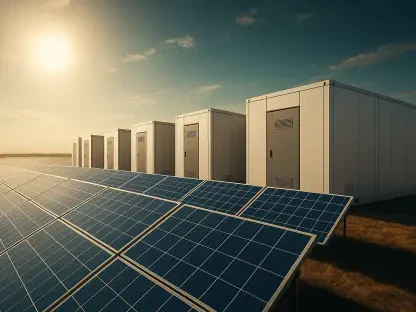
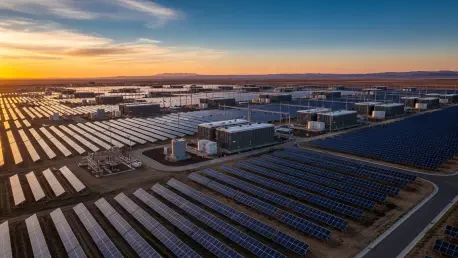
The sheer magnitude of a project like Steel River, which is set to deliver 2.5 GW of generation and 2.9 GWh of battery storage, represents a seismic shift in how we stabilize the grid. By pairing vast solar arrays with advanced storage, we are moving past the era of intermittent energy and into a period where renewable sites can provide consistent, “firm” power long after the sun sets. When you consider that solar and battery storage accounted for a staggering 91% of all new electricity generation capacity in the U.S. in the first quarter of this year, it becomes clear that this is no longer a niche solution but the new backbone of our utility infrastructure. For a grid operator, seeing a project of this scale break ground in Arkansas provides a sense of security, as those 2.9 GWh of batteries act as a massive reservoir that can dispatch energy during peak demand. This isn’t just about clean electrons; it’s about the sensory reality of thousands of acres of panels and humming battery enclosures working in concert to ensure that the lights stay on across the entire region.
With the project emphasizing a domestic supply chain, what does the use of American-made components mean for the long-term resilience of the renewable energy sector?
The decision by Cypress Creek Energy and Google to utilize solar panels made entirely in the United States, along with steel sourced almost exclusively from Mississippi County facilities, is a powerful statement of industrial independence. This approach mitigates the volatile risks associated with international shipping and geopolitical trade tensions, ensuring that the physical components of our energy transition are forged right here at home. Kevin Smith, the CEO of Cypress Creek, hit the nail on the head when he noted that this project serves as living proof that a domestic solar supply chain is not just a dream, but a functional reality. There is a certain pride in knowing that the very steel structures holding up these panels were produced by local workers just a few miles from the site, creating a circular economy that reinforces the stability of the project. It proves that we can build the infrastructure of the future while simultaneously revitalizing the manufacturing heartlands that have the expertise and the “steely” resolve to deliver at this scale.
In light of the fact that Google’s carbon footprint has grown 81% since 2019, how do these types of “anchor” investments serve to counteract the environmental pressures of the AI revolution?
The rapid buildout of artificial intelligence has created an insatiable appetite for electricity, leading to a situation where Google’s emissions in 2025 are already 18% higher than they were just a year prior. Acting as an anchor investor and offtaker for the Steel River project is a strategic move to aggressively inject massive amounts of clean energy into the grid to offset this surge in demand. By signing power purchase agreements for the first two phases, which alone will bring 1.6 GW of solar and 1.9 GWh of storage online, the company is attempting to bend the curve of its emissions trajectory. It is a high-stakes race against time; as the data centers hum with the heat of AI processing, projects of this “game-changer” status must be deployed to ensure that corporate growth doesn’t permanently detach from sustainability targets. These investments are essential because they provide the financial certainty needed to break ground on projects that might otherwise be too large for the market to absorb on its own.
Beyond the environmental and technical specifications, what kind of lasting socio-economic impact does a multi-billion dollar energy facility have on a local community like Mississippi County?
The economic ripples of a project this size are felt far beyond the perimeter fence of the solar farm, starting with the 700 construction jobs generated during each of the three development phases. We are looking at an estimated $300 million in local tax revenue over the life of the project, which provides a transformative financial windfall for local government services and infrastructure. Beyond the taxes, the commitment of $5 million for local energy affordability initiatives and a $3 million community investment fund shows a dedicated focus on the human element of the energy transition. I find it particularly heartening that the first phase of this investment includes a $400,000 contribution to build a new playground for a nearby school district, giving the next generation a tangible benefit from the clean energy being produced in their backyard. This creates a holistic benefit where the community isn’t just hosting a power plant, but is actively seeing their schools and neighborhoods improved by the presence of these modern energy giants.
What is your forecast for the future of large-scale renewable integration as tech giants continue to expand their digital infrastructure?
I anticipate that the “Steel River model”—characterized by massive scale, integrated storage, and a localized supply chain—will become the mandatory blueprint for all major energy developments through the end of this decade. As we look toward the 2029 completion date for this facility, we will likely see more tech conglomerates moving from mere purchasers of energy to “anchor investors” who take a hands-on role in project financing and domestic manufacturing. The pressure to reconcile the 81% increase in emissions with net-zero promises will drive a flurry of similar 2-plus gigawatt announcements across the American South and Midwest, where land is available and the grid is hungry for modernization. We are entering an era where the digital cloud and the physical electrical grid are becoming inextricably linked, and only those who invest deeply in large-scale storage will be able to navigate the volatility of this new energy frontier. Ultimately, the success of these ventures will be measured not just in megawatts, but in our ability to build a self-sustaining domestic industry that can keep pace with the relentless march of technological innovation.