
As the global retail landscape shifts toward a greener horizon, the logistics of moving goods is being redefined by a transition from traditional energy consumption to localized, sustainable power generation. Christopher Hailstone, a seasoned expert in utilities and renewable energy delivery, joins us to discuss how the industry’s biggest players are transforming their physical footprints into high-tech energy assets. With a deep background in grid reliability and the technical nuances of electricity delivery, Hailstone offers a unique perspective on why the rooftops of sprawling distribution centers have become the new frontier for corporate sustainability.
This discussion explores the strategic rollout of solar arrays across key logistical hubs in the United States, highlighting the impressive progress made by retailers who are already exceeding their long-term environmental targets. We delve into the specific regional investments in states like California, Georgia, and Arizona, and examine the massive scale of onsite generation achieved by industry leaders like Walmart and Gap. Furthermore, Hailstone provides insights into how these solar fields, some producing millions of kilowatt-hours annually, are not only slashing carbon footprints but also providing a vital buffer against the volatility of the modern energy grid.
Major retailers are increasingly prioritizing solar installations at distribution centers in states like Georgia, Arizona, and California. What makes these specific regions the strategic “sweet spot” for solar-powered logistics right now?
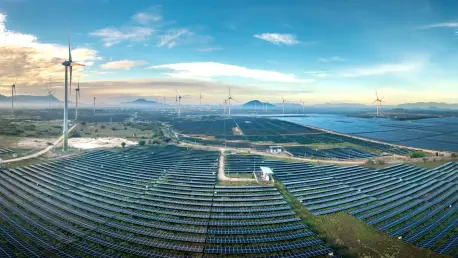
The decision to focus on regions like Georgia, Arizona, and California is a masterclass in aligning geographic reality with operational necessity. In Ellabell, Georgia, where Burlington is advancing plans for a massive new distribution center, and across the sun-drenched landscapes of Arizona and California, the solar potential is simply too significant to ignore. These areas offer a high number of peak sun hours, allowing the expansive flat roofs of modern warehouses to act as massive collection plates for clean energy. When you stand on the roof of one of these facilities, the sheer scale of the glimmering glass panels stretching toward the horizon is a testament to how retail logistics is being reimagined. For the two new California centers currently on track for 2026, this infrastructure isn’t just an add-on; it is a core component of the building’s design intended to mitigate the high cost of traditional power in the West.
Burlington recently reported that they hit 25% renewable electricity consumption by the end of fiscal year 2025, effectively beating their 2030 goal of 20% several years early. How is such an accelerated transition possible in a sector as complex as retail?
Seeing a major retailer blow past a five-year goal so early reveals an aggressive and highly effective procurement strategy that moves beyond just installing panels. Burlington didn’t just wait for onsite builds; they actively expanded renewable electricity supply agreements across the Midwest, the Mid-Atlantic, and the West Coast simultaneously. This multi-pronged approach—combining onsite solar in states like New Jersey and Massachusetts with offsite agreements—allows them to scale their green energy intake far faster than a site-by-site construction schedule would permit. You can almost feel the momentum in their corporate strategy as they pivot from “planning” to “executing” at a pace that has left their original 2030 benchmarks in the rearview mirror. It proves that when the contractual framework for renewable energy is integrated into the broader supply chain, the transition can happen with surprising speed.
When we look at the sheer scale of Walmart’s 125 megawatts of onsite solar capacity across 303 facilities, or Gap reaching 46% renewable sourcing, how does this level of generation change the internal “heartbeat” of a distribution center?
A distribution center with its own massive solar array, like Gap’s facility in Fresno, California, operates with a level of energy independence that changes the entire industrial atmosphere. Instead of being entirely beholden to the local utility, these facilities are powered by the quiet, steady conversion of light into the electricity that drives automated sorting systems and high-intensity LED lighting. For a giant like Walmart, reaching over 53% global renewable electricity usage by the start of 2026 means that more than half of their global operations are fueled by the wind and sun. There is a palpable shift in the reliability of these sites; they become less of a drain on the local grid and more of a self-sustaining node in a global network. This transition to 125 megawatts of onsite power is a massive hedge against future energy price spikes, providing a predictable cost structure that every CFO dreams of.
Best Buy recently installed a solar field at a California distribution center capable of generating nearly 6 million kilowatt-hours annually. Beyond the environmental benefits, what does this level of localized generation mean for the reliability of the supply chain?
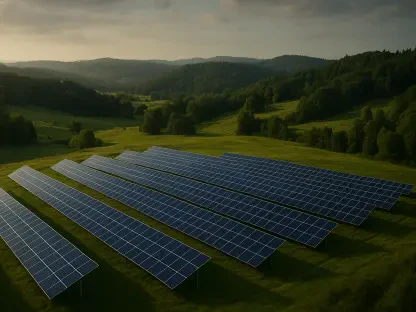
A 6-million-kilowatt-hour annual output is a staggering amount of energy that provides a robust shield for Best Buy’s operations against the instability of a modern electrical grid. By generating that power onsite, they are effectively “slashing emissions” while ensuring that the high-energy demands of a 24-hour distribution hub are met with a dedicated, local source. During peak summer months in California, when the grid is often pushed to its limits, a facility that produces its own power is much less likely to face operational disruptions or mandatory load shedding. You can imagine the peace of mind that comes with knowing the facility’s critical sorting and shipping infrastructure is being fed by a field of panels just a few hundred yards away. It transforms the distribution center from a passive consumer of energy into an active, resilient participant in the local energy ecosystem.
What is your forecast for the integration of solar energy within the broader retail supply chain?
I predict that within the next few years, we will see the “distribution-center-as-power-plant” model become the standard requirement for any new industrial build, rather than a headline-grabbing exception. As we’ve seen with TJX Companies deploying solar across Arizona, Connecticut, Nevada, and Texas, the geographical footprint of solar is expanding far beyond the traditional “green” states. We are moving toward a reality where the 100% renewable goals set by Gap for 2030 and Walmart for 2035 will likely be met ahead of schedule, much like Burlington’s recent success. Retailers will increasingly leverage their massive rooftops not just to power their own belts and lights, but to feed excess energy back into the community, turning their logistics network into a critical pillar of national energy security. The “green” warehouse is no longer a pilot project; it is the blueprint for the future of global commerce.