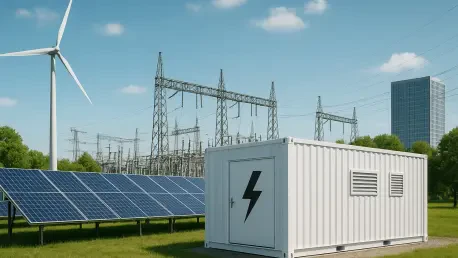

While value-based methods like Q-learning offer simplicity, they are increasingly being replaced by more dynamic models that track rapidly changing grid statistics. This evolution reflects a broader trend within the energy sector as centralized, legacy power systems struggle to accommodate the volatile nature of a modern, green-focused energy landscape. Smart microgrids have moved from the periphery to the center of power engineering, serving as critical testing grounds for decentralized intelligence. Unlike the massive utility grids of the past, these localized systems must navigate the unpredictable output of renewable sources while maintaining the ability to operate independently through islanding. This transition requires more than just better hardware; it demands a fundamental change in control logic. By moving away from rigid, pre-programmed scripts, energy engineers are now deploying systems that can learn and adapt in real time, ensuring that local energy distribution remains stable even when the primary utility connection fails or when environmental conditions shift without warning.
The Paradigm Shift: From Fixed Logic to Adaptive Intelligence
The implementation of Reinforcement Learning marks a departure from traditional control theory, which often relies on complex mathematical models of every physical component. In a modern microgrid, an RL agent operates by interacting with its environment, receiving numerical rewards for maintaining stability or penalties for allowing voltage fluctuations. This trial-and-error process allows the system to develop a sophisticated policy that maps specific grid states to optimal control actions. For example, if a sudden cloud cover reduces solar output while local demand spikes, an RL agent can instantly recalculate the most efficient way to draw from battery storage or curtail non-essential loads. This adaptability is crucial because it allows microgrids to handle scenarios that human designers might not have explicitly coded into the system. As these agents gain experience, they become increasingly proficient at balancing the competing goals of cost reduction, carbon footprint minimization, and overall electrical reliability.
To effectively organize the rapid influx of new algorithms, researchers have developed a multi-dimensional taxonomy that categorizes these systems based on their specific learning architectures and operational goals. While early iterations focused purely on cost-minimization, current frameworks prioritize multi-objective optimization, balancing financial savings with long-term hardware health and environmental sustainability. The move toward policy-gradient methods allows for continuous control over power flows, which is a significant improvement over the discrete, “on-off” decisions characterized by older value-based models. This granular level of control is essential for managing the sensitive power electronics found in modern solar inverters and high-speed electric vehicle chargers. By categorizing research along these lines, the industry has established a clear path for maturing these technologies, ensuring that the most effective learning strategies are matched to the specific physical constraints of different regional microgrids.
Resilience Through Distributed Learning Models
A central theme in the current modernization of energy networks is the move toward Multi-Agent Reinforcement Learning (MARL), which recognizes that a microgrid is a collection of diverse physical components rather than a single machine. In this decentralized architecture, each solar panel array, battery bank, and smart building acts as an individual agent with its own learning objectives. This distributed intelligence provides a natural layer of resilience; if a single controller fails or a communication line is compromised, the remaining agents can continue to manage their local sectors autonomously. This prevent a localized fault from cascading into a total system blackout. However, decentralized learning also introduces the challenge of non-stationarity, where the environment is constantly changing because every agent is learning and shifting its behavior simultaneously. Balancing this collective intelligence requires sophisticated coordination techniques that allow agents to reach a stable consensus without a central authority.
To manage the complexities of decentralized intelligence without overwhelming network bandwidth, federated learning has become a standard approach in current grid operations. This method allows different components of the microgrid to share the “intelligence” they have gained—represented by updated model weights—without having to transmit massive amounts of raw operational data. This not only preserves the privacy of individual energy consumers but also significantly reduces the computational burden on the communication infrastructure. By pooling their collective experience, agents can learn from events that occurred in other parts of the grid, such as an unexpected hardware failure or a unique weather pattern. This collaborative learning environment ensures that the entire microgrid becomes smarter over time, even if specific nodes only encounter a limited range of operational conditions. This approach effectively bridges the gap between individual autonomy and system-wide optimization.
Bridging the Gap: Communication and Physical Reality
One of the most critical realizations in the current engineering landscape is that control algorithms cannot exist in a vacuum, isolated from the communication networks that carry their signals. In a physical microgrid, data transmission is never instantaneous; it is subject to latency, jitter, and occasional packet loss. A control policy that appears perfect in a vacuum might lead to catastrophic instability if it receives a sensor update 200 milliseconds late. Consequently, modern researchers are focusing on “co-design” strategies that make RL agents inherently aware of the communication environment. These delay-aware algorithms can adjust their confidence levels and control actions based on the quality of the data link, ensuring that the grid remains stable even when the local wireless or fiber network is under heavy load. This integration of communication constraints into the learning process is what allows these systems to transition from laboratory curiosities to dependable industrial tools.
The transition from software to hardware, frequently referred to as the “Sim2Real” gap, remains a major hurdle for widespread deployment. Most reinforcement learning agents are trained in idealized virtual environments that lack the chaotic “noise” and complex electromagnetic interference found in a real-world power substation. To address this, the industry has turned to high-fidelity digital twins—highly detailed virtual replicas that model both the electrical physics and the network communication layers of a specific microgrid site. These digital twins allow engineers to stress-test their learning agents under extreme conditions, such as simulated cyberattacks or severe weather, without risking expensive physical equipment. By validating the RL policies in these hyper-realistic environments, the transition to live hardware becomes significantly safer and more predictable. This rigorous validation process ensures that when an agent is finally deployed to a physical controller, it is already prepared for the messy realities of the power grid.
Security Architectures and Safe Deployment Standards
As microgrids become increasingly reliant on networked intelligence, they also face a growing spectrum of sophisticated cyber threats. The very nature of reinforcement learning introduces unique vulnerabilities, such as reward poisoning, where an attacker might subtly alter the feedback signals sent to an agent to trick it into an unstable or inefficient state. To combat these risks, modern security frameworks are integrating adversarial resilience directly into the training process. This involves training agents in environments where they are periodically subjected to “attacks,” forcing them to develop policies that are robust against data manipulation. Rather than treating security as an external firewall, engineers are now building it into the core logic of the controller. This holistic approach ensures that the digital intelligence managing the grid is just as resilient as the physical transformers and wires that make up the electrical infrastructure.
The path forward for smart microgrids relied on the establishment of unified benchmarks and safety-constrained learning protocols. The industry recognized that for these systems to be trusted by utility operators, they had to guarantee that they would never violate hard physical limits, such as maximum voltage thresholds or thermal limits of battery cells. The engineering community prioritized the development of “safe exploration” techniques, which allowed RL agents to continue learning and optimizing while staying within a predefined “safety envelope.” By the time these technologies reached maturity, they had moved beyond simple energy management to become the primary defense mechanism against grid volatility. These developments ensured that the intelligent nervous system of the grid was capable of supporting the massive influx of renewable energy, paving the way for a more resilient and sustainable energy future. The transition was marked by a shift from purely theoretical research to a standardized engineering practice that valued reliability as much as innovation.