
The global race toward a carbon-neutral economy has positioned South America as a vital laboratory for large-scale renewable energy solutions. Applying 150 cubic meters of vinasse per hectare provides a potassium and nitrogen equivalent that matches the performance of synthetic fertilizers. This technical efficiency is at the heart of the current strategy to maintain the status of the leading sugarcane-based bioethanol producer while addressing the environmental costs of industrial farming. While the sheer volume of ethanol production often dominates headlines, the long-term viability of the sector relies on the hidden health of the soil. Soil Organic Matter (SOM) is the true engine of this industry, acting as a dynamic reservoir that governs water retention, nutrient cycling, and carbon storage. In the tropical Oxisols that dominate the landscape, maintaining SOM is not just an ecological preference but a fundamental requirement for agricultural resilience against an increasingly volatile climate.
Modernizing the Harvest and Enhancing Biological Soil Architecture
Transitioning to Green Cane Systems
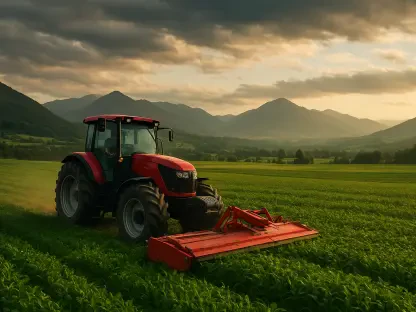
The industrial shift from traditional “burned cane” to mechanized “green cane” harvesting represents one of the most significant environmental transformations in modern tropical agriculture. For decades, the practice of setting fields on fire before harvest was a standard method to clear sharp leaves and protect workers from pests, yet this released substantial volumes of carbon dioxide and hazardous particulate matter into the atmosphere. The current widespread adoption of mechanical harvesters has largely eliminated these emissions while leaving a vital layer of crop residue, known as straw, on the ground. This straw serves as a protective mulch that significantly alters the carbon balance of the field, transforming what was once a source of pollution into a robust carbon sink that captures atmospheric gases and stores them within the earth’s profile.
Empirical data from ongoing field assessments highlights the dramatic sequestration potential of these unburned systems. In regions with clay-heavy soils, green sugarcane management has demonstrated the ability to accumulate approximately 1.87 megagrams of carbon per hectare on an annual basis. This performance is particularly impressive when compared to other staple rotations; for instance, soybean and corn cycles under no-till systems typically sequester less than a quarter of that amount. If the remaining small percentage of manual, burned harvests were fully phased out across the country, the potential for additional carbon storage would reach over one teragram annually. This massive sequestration capacity suggests that the sugarcane industry is not merely a fuel provider but a critical component of the national strategy to mitigate atmospheric carbon levels.
Fostering Soil Quality and Microbial Life
Beyond the simple metrics of carbon volume, the functional quality of the soil depends on the preservation of “labile” carbon pools, which are the easily accessible nutrients required to sustain diverse microbial communities. Traditional burning practices historically decimated these microbial populations, forcing a heavy reliance on external synthetic fertilizers to maintain crop yields. In contrast, modern green cane systems encourage a healthy biological ecosystem where microbes thrive on decomposing straw. This biological activity is essential for efficient nutrient cycling, ensuring that nitrogen and phosphorus remain available to the plants rather than leaching into groundwater or escaping as greenhouse gases. By prioritizing the life within the soil, producers are building a self-sustaining foundation that requires fewer chemical interventions over time.
Over extended periods, typically spanning two decades or more, consistent green management facilitates a complex chemical process known as humification. This leads to the development of stable carboxylic and phenolic groups that strengthen the soil’s “biochemical architecture,” enhancing its ability to retain moisture and resist erosion. This structural improvement makes sugarcane crops significantly more resilient to the intense heat and irregular rainfall patterns that are becoming more frequent. Instead of a fragile system that necessitates constant human correction, the soil becomes a stabilized asset that can support high yields while simultaneously providing ecological services. This shift toward biological management represents a transition from viewing the land as a simple medium for growth to treating it as a sophisticated, living carbon-capture technology.
Overcoming the Renovation Crisis and Managing Crop Residues
Mitigating Carbon Loss During Replanting
Despite the gains made during the growth cycle, the semi-perennial nature of sugarcane introduces a critical vulnerability during the “renovation stage” every five to six years. When the productivity of the original planting declines, the common industrial response involves intensive mechanized tillage, including heavy harrowing and subsoiling to prepare for new seedlings. However, this aggressive intervention can be counterproductive, as the physical disruption of the soil structure exposes long-protected organic matter to oxygen. This exposure triggers a rapid mineralization process where soil microbes “burn” through the accumulated carbon, releasing it back into the atmosphere as carbon dioxide. Research has shown that a single intensive tillage event can wipe out 80 percent of the carbon sequestered over the previous five years in just over a month.
To safeguard carbon stocks, there is an urgent need to adopt “minimum tillage” or “no-till” strategies during these renewal cycles. By limiting soil disturbance strictly to the planting furrow, operators can reduce carbon losses by nearly half compared to traditional methods. Furthermore, the integration of cover crops, such as nitrogen-fixing legumes like peanuts or soybeans, during the fallow period between sugarcane cycles provides continuous ground cover. These secondary crops not only provide an additional source of income but also actively suppress weed growth and prevent topsoil erosion. Adopting these conservation-focused renovation techniques ensures that the ecological progress made during the green harvesting years is not lost in a single season of mechanical preparation, creating a more continuous and reliable carbon-capture lifecycle.
Balancing Straw Removal for Energy Production
A growing tension exists between the need for soil protection and the rising demand for “second-generation” (2G) bioethanol and bioelectricity. Many industrial facilities now advocate for the removal of harvest straw from the fields to be used as a primary feedstock for advanced fuel production or as a fuel source for power plants. While this approach maximizes the energy output per hectare, it risks depleting the soil of its essential protective barrier. Straw acts as a thermal insulator and a moisture regulator, maintaining the cool, damp conditions necessary for microbial life and root health. Removing three-quarters of this mulch has been shown to result in a 14 percent decline in soil carbon stocks, highlighting the delicate balance required to satisfy both energy markets and agricultural sustainability.
The risks associated with straw removal are not uniform and depend heavily on the specific texture of the soil. Clay-rich soils possess mineral properties that offer some inherent protection for organic matter, allowing for a modest degree of straw extraction without catastrophic consequences. Conversely, sandy soils lack this natural defense and are highly susceptible to rapid degradation if the surface mulch is stripped away. This suggests that straw-to-energy policies cannot be applied as a universal industrial mandate; instead, they must be tailored to the specific geological conditions of each region. Maintaining a “carbon-first” priority in sandy regions while allowing for surplus straw collection in clay-dominant areas represents a sophisticated, data-driven approach to resource management that protects the long-term productivity of the land.
Circular Economy Through Industrial By-products
Recycling Nutrients with Bio-fertilizers
The production of sugar and ethanol inherently generates massive quantities of industrial by-products, such as vinasse and filter cake, which were once viewed as waste management burdens. Today, these materials are recognized as vital components of a circular economy, serving as potent organic fertilizers that can return essential minerals to the fields. Vinasse, a liquid residue from the distillation process, is exceptionally rich in potassium and can be applied through specialized irrigation systems to replace large quantities of imported chemical fertilizers. Similarly, filter cake—a solid byproduct of juice clarification—is a dense source of phosphorus and calcium, which are critical for the early development of sugarcane root systems. Utilizing these resources allows the industry to reduce its environmental footprint while lowering operational costs for farmers.
By recycling these nutrients locally, the industry effectively closes the nutrient loop, ensuring that the elements extracted by the crop are returned to the same soil from which they came. This circularity extends beyond simple plant nutrition; the organic components of these by-products also contribute to the long-term stabilization of soil carbon. When applied in conjunction with modern harvesting techniques, these bio-fertilizers enhance the formation of stable soil aggregates, further protecting organic matter from microbial degradation. This integrated approach transforms the refinery from a simple processing plant into a hub for agricultural regeneration. Transitioning toward this model has reduced the carbon intensity of bioethanol production, making it one of the most competitive renewable fuels in a global market that is increasingly focused on lifecycle analysis.
Integrating Organomineral Solutions
The development and integration of organomineral fertilizers have provided a more efficient pathway for nutrient delivery than traditional mineral-only alternatives. These advanced fertilizers combine the immediate availability of mineral nutrients with the slow-release benefits of organic bases, ensuring that the plants receive a steady supply of energy throughout their growth cycle. Studies have indicated that the use of organomineral blends allows for a nearly 20 percent reduction in phosphate application without any loss in crop yield. This efficiency is particularly important in the context of global phosphorus scarcity and the environmental risks associated with nutrient runoff. By optimizing the delivery of these essential elements, the industry has demonstrated that it can maintain high productivity while significantly reducing its chemical dependency.
The transition toward these integrated management practices has solidified the role of sugarcane as a cornerstone of the green energy sector. The industry moved beyond simple production metrics to adopt a holistic strategy that prioritized soil health as a strategic asset. By mandating green harvesting, implementing minimum-tillage renovation, and strictly regulating straw removal based on soil texture, stakeholders ensured that carbon sequestration became a permanent feature of the agricultural landscape. Future efforts should focus on the deployment of precision sensors to monitor soil carbon in real-time, allowing for even more granular adjustments to nutrient application and residue management. This commitment to scientific management provided the necessary evidence to convince global markets that bioethanol could truly power a sustainable future without compromising the integrity of the earth that produced it.