
Economic analysts from the New York Energy Alliance have raised concerns that current market prices are insufficient for solar projects to recover their full costs. This specific financial warning comes at a pivotal moment as the New York Power Authority moves to take a 51 percent majority stake in the 240-megawatt Rich Road Solar project in St. Lawrence County. This initiative marks the largest solar venture for the authority since its operational mandate was significantly expanded by the recently enacted state budget. Traditionally serving as a manager of the state’s massive hydroelectric resources, the authority is now tasked with developing and owning large-scale renewable projects to supply municipal utilities and rural cooperatives. The shift into solar represents a fundamental change in the state’s energy strategy, moving from purely private development to a model where the public sector carries the majority of the financial risk and long-term asset ownership for decarbonization.
Public-Private Collaboration and Regional Economic Development
The project utilizes a distinct public-private partnership model designed to leverage federal tax credits while accelerating the clean energy transition across northern New York. EDF Renewables North America, which maintains a 49 percent minority stake, is responsible for the direct management of the construction phase scheduled to begin in late 2027. This collaborative approach ensures that the facility can reach full commercial operation by 2030, contributing significantly to the state’s 5.5-gigawatt renewable energy capacity goal. Beyond the energy generation aspects, the Rich Road project includes significant social commitments such as 1.2 million dollars in host community benefit payments over the first ten years of operation. Additionally, 300,000 dollars in annual contributions are directed to the REACH program, which provides essential electricity bill credits for low-income residents. These financial mechanisms are designed to ensure that the transition to renewable energy provides tangible benefits to the local populations hosting the infrastructure.
Despite these milestones, the initiative faces intense scrutiny regarding its long-term economic viability in a fluctuating market environment. Internal projections from recent renewable energy plans suggest that while solar generation costs are estimated at approximately 100 dollars per megawatt-hour, the projected market recoupment stands at only 50 dollars per megawatt-hour. This substantial gap highlights the fiscal challenges of integrating these resources into the existing grid without a heavy reliance on state-funded subsidies. Critics argue that many projects currently in the state’s pipeline are rebranded versions of private deals that previously failed to secure financing due to these exact market pressures. The authority’s ability to successfully navigate these headwinds will serve as a critical test case for the broader public-ownership model. The 20-year renewable energy certificate contract through the state’s energy research office provides some stability, but the underlying price disparity remains a point of contention for analysts.
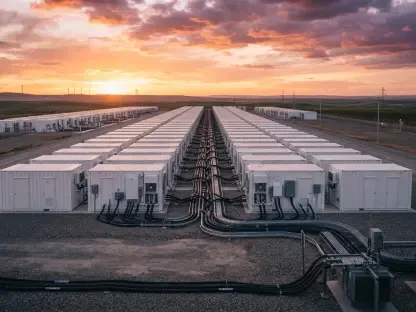
Decision-makers recognized that the long-term success of the Rich Road project required a multifaceted approach to bridge the gap between production costs and market rates. Stakeholders shifted their focus toward implementing advanced grid modernization and long-duration storage technologies that enhanced the value of solar assets during non-peak hours. The path forward involved refining the state’s procurement strategies to prioritize projects with higher efficiency ratings and lower localized impact. Analysts recommended that the state explore new ways to monetize the ancillary benefits of carbon-free generation to create a more balanced financial ecosystem for public utilities. Future considerations included the development of integrated energy hubs that combined solar production with green hydrogen or battery storage to maximize grid resilience. Ultimately, the lessons learned from this majority-stake acquisition provided a framework for future renewable investments that balanced environmental goals with fiscal responsibility. Policymakers took action to ensure that the regulatory framework evolved.