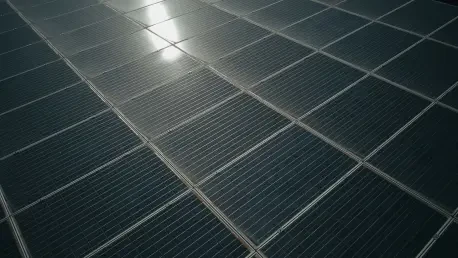

The prototype panels used in the Swedish study were originally intended for architectural aesthetics but are now being repurposed to test their agricultural potential. This innovative approach addresses one of the most pressing dilemmas in modern renewable energy: the competition for land between food production and solar infrastructure. Researchers at Mälardalen University in Sweden have pioneered a concept known as agrivoltaics, which seeks to harmonize these two essential sectors by utilizing the same geographical footprint for both power generation and farming. The central focus of their investigation involves semi-transparent, rose-tinted solar panels that are specifically engineered to share the solar spectrum. By allowing specific wavelengths of light to bypass the energy-capturing material and reach the vegetation below, these scientists aim to maximize land-use efficiency. This technology represents a significant shift from traditional solar farms, which typically render the ground beneath them unproductive due to total shading.
Testing Plant Growth: Analysis of the Broccoli Field Trials
To evaluate the practical implications of this technology, the research team conducted a rigorous field trial utilizing broccoli as a representative crop for modern commercial agriculture. Broccoli was selected not just for its market value, but because it belongs to the diverse Brassica oleracea family, which includes common staples like kale, cabbage, and cauliflower. This selection ensures that the data gathered could be applicable to a wide range of horticultural practices. The experiment utilized three distinct twenty-square-meter plots: a control group grown in full, unshielded sunlight, a group under panels with fifty percent transparency, and a third group under panels with seventy percent transparency. Throughout the growing season, the scientists meticulously monitored growth rates, biomass accumulation, and electricity output. This methodical structure allowed for a direct comparison of how varying levels of filtered magenta light affected the physiological development of the plants.
The observations revealed a fascinating biological response to the modified light environment, as the broccoli grown in the “rosy shade” eventually achieved yields comparable to those grown in the control plot. This outcome suggests that the plants were remarkably resilient, adapting to lower light levels by becoming significantly more efficient at processing the red and blue photons they received. In fact, plants under the fifty percent transparency panels demonstrated a light-use efficiency nearly four and a half times greater than the control group. However, this physiological adaptation was not without its drawbacks, as the harvested broccoli took an additional twenty-five days to reach full maturity. For a commercial farming operation, a delay of nearly a month poses a significant challenge to seasonal profitability and crop rotation schedules. Farmers operating on thin margins must weigh the benefits of dual-use land against the extended time required to bring products to market.
Economic Viability: Bridging the Energy Performance Gap
From a technical standpoint, the energy generation performance of these semi-transparent systems currently lags behind traditional photovoltaic installations. The study recorded an electrical output of approximately 224.7 megawatt-hours per hectare from the magenta panels, which is roughly one hundred megawatt-hours less than what a fully opaque, standard solar array would produce over the same duration. This discrepancy highlights a critical performance gap that engineers must bridge to make the technology commercially competitive. While the panels successfully allow photosynthesis-friendly light to pass through, the current design utilizes thin strips of cadmium telluride that occupy only a fraction of the glass surface. Consequently, a large portion of the energy potential is sacrificed to ensure the survival of the crops below. This creates a difficult trade-off for energy providers who are primarily focused on maximizing grid contributions and return on investment within the renewable energy market.
The economic viability of agrivoltaics hinges on finding a specific “offset value” where the combined revenue from electricity and food exceeds the income of either industry alone. Independent experts emphasize that for large-scale adoption to occur, the agricultural output must be high enough to compensate for the reduction in power sales. Calculations suggest that a farmer might need to harvest between 1.2 and 3.2 additional tonnes of broccoli per hectare to justify the use of these specialized panels. This financial puzzle is the primary barrier preventing the transition from small-scale experimental plots to expansive commercial farms. It requires a delicate balance of government subsidies, energy pricing, and agricultural market stability to ensure that neither the farmer nor the power producer is at a financial disadvantage. Until the technology can produce a more favorable ratio, its application may remain limited to regions where land prices are exceptionally high.
Engineering Evolution: The Future of Integrated Land Use
Despite the current limitations, the technological trajectory for these wavelength-selective panels remains highly optimistic as researchers transition from aesthetic prototypes to purpose-built agricultural tools. The original panels were designed to provide a warm, decorative glow for building interiors, meaning they were never truly optimized for the specific absorption spectra of crops. Future engineering efforts are expected to focus on developing multi-junction cells that can capture the filtered green light for electricity production while remaining transparent to the red and blue light needed by the plants. By refining the chemical composition of the solar cells and the density of the active material, manufacturers could significantly narrow the efficiency gap. Furthermore, integrating smart sensors that can adjust the angle or transparency of the panels based on real-time weather data could provide a more dynamic environment for plant growth.
Moving forward, the integration of these systems focused on the secondary benefits of physical shielding, such as protection against extreme weather events and reduced water evaporation. The glass structures acted as a buffer against heavy hail and excessive heat, which became more frequent in many agricultural regions. Rather than viewing these panels solely as energy generators, developers treated them as sophisticated climate-control tools for high-value crops. Implementation strategies prioritized greenhouses and urban community gardens where space was at a premium and the dual-use nature of the technology provided immediate relief. As engineering improvements continued to refine light capture, the potential for these systems to coexist with mainstream farming grew. Stakeholders found that the best path toward widespread adoption involved collaborative pilot programs that shared risks and rewards between energy companies and landowners. This holistic view of land management transformed the technology from a niche curiosity into a viable asset.