
Large-scale integrated wind and storage facilities like the Golden Plains complex are becoming the primary model for achieving national energy security and emissions targets in Australia. The landscape of the Australian energy market is undergoing a significant transformation as major institutional investors move to secure reliable, high-capacity renewable assets. Octopus Investments has officially entered into an agreement to acquire the second phase of the Golden Plains Wind Farm from TagEnergy, a deal valued at approximately A$2 billion. Located near Rokewood in Victoria’s Golden Plains Shire, this 577-megawatt expansion is currently in its critical commissioning phase, already contributing initial power to the national grid. This transaction reflects a broader trend of global capital flowing into mature green infrastructure within the Oceania region, where the stability of established projects offers a compelling risk-return profile for firms looking to anchor their sustainable portfolios with long-term, high-yield generation capacity.
Advanced Engineering and Strategic Project Delivery
The engineering complexity of the Golden Plains Stage Two project is defined by its deployment of ninety-three state-of-the-art turbines from the Danish manufacturer Vestas. Utilizing the V162-6.2MW EnVentus platform, the facility represents a significant step forward in turbine efficiency and energy density. These units are specifically engineered to maximize energy capture in varied wind conditions, ensuring that each of the ninety-three towers contributes optimally to the 577-megawatt total capacity. By adopting such high-capacity technology, the project minimizes the physical footprint required while maximizing the electrical output injected into the grid. The construction of this phase, which began in early 2024, has progressed rapidly through the efforts of a dedicated workforce, positioning the farm as a cornerstone of Victoria’s renewable energy generation. The successful implementation of these advanced systems demonstrates the feasibility of ultra-large-scale wind developments in the current technological era.
Beyond the turbine technology, the success of Stage Two is underpinned by a collaborative framework of industry-leading partners who managed the intricate requirements of grid connection and asset management. Vestas serves a dual role not only as the technology provider but also as the primary contractor for engineering, procurement, and construction. This integrated approach ensures that the technical specifications of the EnVentus platform are seamlessly aligned with the site’s structural infrastructure. Meanwhile, AusNet Services has been instrumental in developing the essential high-voltage connection works required to link the massive output of the farm to the Victorian power grid safely and efficiently. WestWind Energy completes this operational ecosystem by acting as the asset manager, providing the specialized oversight necessary to navigate the complexities of national energy market participation. This synergy between global manufacturers and local infrastructure experts creates a robust model for future large-scale projects across the Australian continent.
Capital Deployment and Long-Term Revenue Security
The financial structure of the Golden Plains transaction highlights a sophisticated capital recycling strategy that has become a hallmark of modern renewable energy development. By divesting Stage Two to Octopus Investments at a price exceeding A$2 billion, TagEnergy has successfully unlocked substantial liquidity from a project that is already transitioning from construction to commissioning. This “de-risking” phase is highly attractive to institutional investors who prioritize assets with proven operational viability and predictable cash flows over the uncertainties of early-stage development. For the seller, the move is not an exit from the market but rather a strategic realignment, providing the necessary capital to fund a burgeoning global pipeline of wind, solar, and battery storage projects. This continuous flow of capital from established assets into new developments is essential for maintaining the high pace of the energy transition, allowing developers to scale their impact without being constrained by stagnant capital in long-term operational holds.
Revenue stability for the Golden Plains facility is guaranteed by a series of long-term offtake agreements and a diverse consortium of financial backers. EnergyAustralia, one of the nation’s major energy retailers, has secured a significant contract to purchase approximately forty percent of the electricity generated by Stage Two, providing a reliable foundation for the project’s financial projections. Furthermore, the investment is supported by a broad group of lenders, including the Clean Energy Finance Corporation and international institutions such as Mizuho Bank and Deutsche Bank. A notable aspect of the project’s ownership structure is the continued involvement of Ingka Investments, the investment arm of the IKEA group, which maintains a fifteen percent minority stake. This participation by socially responsible institutional investors underscores the project’s alignment with global environmental, social, and governance standards, making it a premier example of how private capital can be successfully leveraged to meet ambitious public climate goals.
Scalability and the Integrated Storage Paradigm
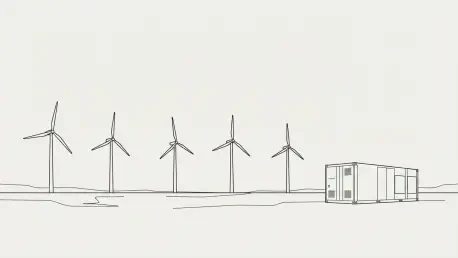
A defining characteristic of the Golden Plains complex is its integration of massive energy storage capacity, which addresses the inherent variability of wind power generation. The facility includes a 150-megawatt battery with 600 megawatt-hours of storage, providing a vital buffer that enhances grid stability and reliability. This battery system is managed through a “virtual toll” agreement with Snowy Hydro, a sophisticated financial and operational arrangement that allows the off-taker to manage energy supply and demand in real-time. By pairing high-capacity generation with significant storage, the Golden Plains complex can provide firm energy delivery even during periods of low wind, making it a far more versatile asset than traditional standalone wind farms. This integrated approach is essential for modern power systems, as it allows renewable sources to perform many of the grid-stabilizing functions formerly provided by fossil fuel plants. The success of this storage model serves as a blueprint for the next generation of renewable hubs globally.
The ambition for the Golden Plains site extends beyond its current phases, with preliminary groundwork already laid for a potential Stage Three expansion. This proposed third stage could involve the installation of up to 129 additional turbines, potentially adding between 700 and 1,000 megawatts of further capacity to the already massive 1.33-gigawatt complex. While such an expansion would require further planning approvals and is not expected to commence construction until late 2028 or beyond, it illustrates the long-term strategic value of the Rokewood site as a centralized hub for green energy. This regional concentration of renewable assets is part of a broader Australian trend where states are racing to replace aging coal-fired power stations with massive, integrated renewable clusters. Projects like the West Arthur Wind Farm in Western Australia, which combines 500 megawatts of wind with 2,000 megawatt-hours of battery storage, mirror the Golden Plains strategy, indicating a nationwide shift toward high-capacity, multi-technology energy precincts.
Strategic Evolution: Navigating the Future of National Energy Networks
The acquisition of Golden Plains Stage Two by Octopus Investments represented a pivotal moment for the Australian renewable landscape, proving that secondary markets for large-scale assets remained robust despite shifting economic conditions. This transaction validated the commercial viability of mega-projects and demonstrated how technical coordination between developers like TagEnergy and manufacturers like Vestas could deliver infrastructure at an unprecedented scale. By securing a combined 1.33 gigawatts of power, the complex established itself as a foundational element of the state’s transition toward a sustainable energy future. The successful commissioning process of Stage Two served as a testament to the reliability of modern turbine technology and the efficacy of integrated battery storage systems in stabilizing the national grid. This project did not just add capacity; it redefined the standards for technical excellence and financial collaboration in the Oceania region, paving the way for even larger future investments in green power.
Moving forward, the industry must prioritize the replication of these integrated generation and storage models to ensure the long-term resilience of national power networks. Investors and developers should focus on creating multi-staged precincts that allow for capital recycling and technical scalability, similar to the approach seen at Rokewood. There is also a clear need for increased focus on the development of virtual tolling and offtake agreements that provide financial certainty while allowing for flexible grid participation. Policymakers and grid operators should streamline the approvals for storage expansions and high-voltage interconnectors to prevent bottlenecks that could stall the deployment of massive projects like Stage Three. The transition toward a carbon-neutral economy requires not just the construction of more turbines, but the creation of a sophisticated, interconnected ecosystem where storage, generation, and finance work in unison. By learning from the Golden Plains model, the energy sector can accelerate the retirement of coal assets while maintaining security.