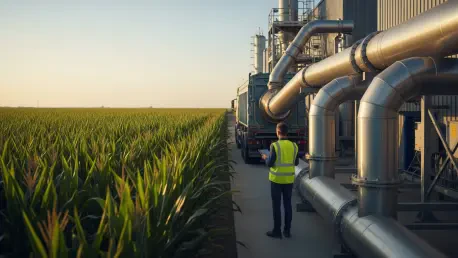

The expansive fields of yellow maize stretching across the American Midwest have long served as a bedrock for conservative political identity and rural economic stability throughout the heartland. For decades, the agricultural sector operated under a predictable political binary where Republicans championed deregulation and trade, while Democrats focused on labor and environmental constraints. However, a significant realignment has taken place within the corridors of Washington D.C., where “Big Corn”—represented by massive trade groups and industrial processors—has increasingly channeled significant financial contributions toward Democratic candidates. This shift reflects a sophisticated calculation by industry leaders who recognize that the federal government’s massive pivot toward decarbonization requires direct influence over the party currently setting the environmental agenda. As the United States intensifies its transition toward a bio-based economy, the corn industry has moved beyond traditional partisan boundaries to secure its place in a reality dominated by renewable energy mandates and federal climate subsidies. This strategic repositioning ensures that the interests of industrial agriculture are integrated into the foundational elements of the emerging green economy.
Strategic Shifts in Biofuel Incentives
The Impact of Climate-Related Tax Credits
The primary driver behind this evolving financial landscape is the implementation of the Clean Fuel Production Credit, known as 45Z, which has transformed corn from a simple commodity into a high-tech energy feedstock. Under current federal guidelines, ethanol producers receive significant tax incentives for every gallon of fuel that meets specific carbon-reduction thresholds, creating a direct link between industrial profitability and the climate policies championed by the Democratic platform. Industry giants like Archer Daniels Midland and various ethanol trade associations have recognized that maintaining access to these lucrative credits requires a seat at the table with the policymakers who design and enforce the technical requirements of the program. By funding Democratic campaigns, agricultural interests ensure that the definitions of “low-carbon” remain favorable to corn-based fuels rather than solely prioritizing electric vehicles or synthetic alternatives. This engagement allows the industry to frame corn ethanol as an essential bridge fuel in the national strategy for energy independence and rapid carbon reduction.
Expansion Into Sustainable Aviation Fuels
Furthermore, the burgeoning market for Sustainable Aviation Fuel (SAF) has opened a massive new frontier for corn growers, necessitating deep ties with the Department of Energy and the Environmental Protection Agency. The aviation industry faces immense pressure to lower its carbon footprint, and corn-based ethanol serves as a primary candidate for “alcohol-to-jet” conversion technologies that are being deployed across the country. Because the federal government allocates billions of dollars in grants for the development of biorefineries and blending facilities, the agricultural lobby must navigate the intricate regulatory landscape managed by Democratic appointees who prioritize environmental impact scores. This has led to a strategic diversification of campaign donations, as industry leaders seek to influence the life-cycle analysis models that determine whether corn-based SAF qualifies for the highest tiers of federal support. Maintaining a bipartisan funding profile ensures that even as administrations change, the fundamental infrastructure for bio-based fuels remains a core component of the American industrial strategy.
Economic Realignment Through Carbon Infrastructure
Federal Support for Sequestration Networks
Moving beyond traditional energy markets, the corn industry has focused heavily on the expansion of carbon capture and sequestration infrastructure, which aligns with the modern Democratic focus on large-scale climate projects. Many ethanol plants throughout the Midwest are now integrating with massive pipeline networks designed to transport carbon dioxide from fermentation tanks to underground storage sites in the heartland. These projects are capital-intensive and rely heavily on federal loan guarantees and tax credits provided through legislative packages that were largely passed with Democratic support. To protect these investments, the corn lobby has actively supported Democratic incumbents who defend the longevity of these subsidies against fiscal conservatives who might seek to repeal them. This relationship demonstrates a pragmatic approach where the industry prioritizes the survival of its new green-energy business models over traditional ideological alignments that might prioritize limited government intervention in the energy sector.
Long-Term Regulatory and Technical Integration
In the final analysis, the corn industry successfully pivoted to a model of radical transparency regarding carbon intensity, which allowed it to thrive under increasingly stringent environmental regulations. Producers prioritized the adoption of regenerative farming techniques and precision nitrogen application to ensure their feedstock met the highest standards for federal tax eligibility. By fostering deep technical collaborations with government scientists, the sector moved beyond simple lobbying to become a necessary partner in the national decarbonization strategy. This transition required industrial leaders to provide data-driven evidence of corn’s environmental benefits, effectively neutralizing opposition from restrictive ecological factions. The sector also expanded its influence by investing in partnerships that developed new uses for corn fiber in the bioplastics industry. These actions successfully transformed the agricultural heartland into a hub for sustainable innovation, ensuring that corn remained the primary driver of rural economic prosperity and a central component of the American energy portfolio.