
Town Manager Kerry Lafleur anticipates that the expanded landfill solar project will serve as a model for future large-scale renewable energy execution. This perspective highlights the town’s commitment to reaching a 20-megawatt solar capacity on municipal land by the year 2030, a target that remains central to its environmental strategy. Currently, the community finds itself at a pivotal crossroads where ambitious green policies meet the logistical complexities of municipal governance. While the drive toward sustainability is supported by a strong local consensus, the path to implementation is often blocked by administrative friction and the technical nuances of multi-departmental coordination. By examining both the successes and the setbacks of current initiatives, it becomes clear that the transition to renewable energy requires more than just political will; it demands a rigorous alignment of legal, technical, and financial frameworks to ensure that every project contributes effectively to the region.
Maximizing Utility Through Landfill Redevelopment
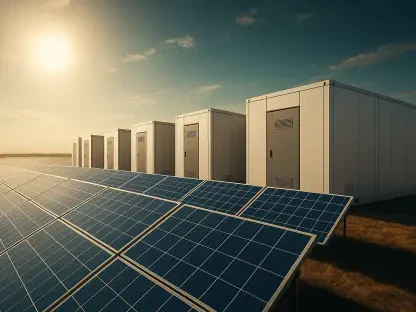
The most prominent success in the local energy portfolio is the comprehensive redevelopment of the former town landfill, a project that demonstrates the potential of modernizing existing infrastructure. While the site originally began generating power over a decade ago, it is currently undergoing a massive technical upgrade that involves replacing outdated solar panels with advanced, high-efficiency arrays. This renovation is projected to increase the site’s total capacity to approximately 4.5 megawatts, more than doubling its previous energy output. According to data provided by the Solar Energy Industries Association, this expanded footprint will be sufficient to provide clean electricity to nearly 780 homes, significantly moving the needle toward the town’s broader 2030 renewable goals. This specific development serves as a concrete example of how existing municipal land can be optimized to meet growing energy demands without encroaching on undeveloped green spaces.
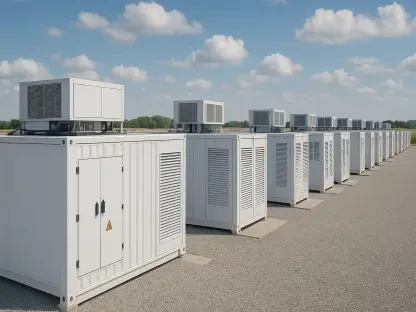
Beyond simple power generation, the landfill overhaul incorporates a sophisticated battery storage system designed to address the inherent variability of solar energy. This technological integration allows for the capture of excess electricity during peak daylight hours, which can then be released back into the municipal grid during periods of high demand. Such a feature is essential for maintaining grid stability and reducing reliance on fossil-fuel-based peaking plants. Town officials expect this facility to be fully operational by January 2027, following a smooth progression through local permitting processes and receiving strong support from the Select Board. The success of the landfill project is largely attributed to the clear alignment between technical execution and municipal oversight. It underscores the importance of having a unified vision among town boards when pursuing complex energy infrastructure upgrades to ensure long-term resilience for the entire community.
Navigating Bureaucratic Friction in Educational Facilities
In contrast to the steady progress at the landfill, the solar initiative at the new Concord Middle School’s Ellen Garrison Building has become a focal point for administrative stagnation. Although the school officially opened its doors to students in early 2025, the expansive rooftop remains devoid of the planned solar panels. The delay is not a result of financial shortfalls but rather stems from profound administrative caution regarding the preservation of the building’s structural integrity. Specifically, school administrators and committee members have expressed significant concerns that a solar installation might inadvertently void the multi-million dollar roof’s long-term warranty. This hesitation has created a protracted standoff, as officials seek legal and technical guarantees that protecting the environment will not come at the expense of the town’s capital assets. The situation reflects a broader challenge where the immediate needs of maintenance clash with long-term targets.
This impasse has also strained relationships between various town entities, most notably between the Municipal Light Board and the school department. Some board members have voiced frustration, suggesting that the school administration has not acted as a fully collaborative partner in the renewable energy push. These internal tensions highlight the critical need for better inter-departmental communication and shared accountability when managing complex municipal projects. Local climate advocates have noted that the town must analyze these institutional blunders to prevent similar delays in future construction. To resolve this, the town is looking toward developing standardized legal agreements that pre-emptively address warranty concerns before construction even begins. The middle school project serves as a cautionary tale, illustrating that without a synchronized administrative strategy, even high public support can lead to significant delays in the deployment of green technologies.
Institutionalizing Progress Through Policy Mandates
To mitigate the risk of future delays and ensure consistent progress toward the 2030 goals, town leaders have successfully advocated for structural policy changes. A key proponent of this legislative shift, Dean Banfield, emphasized the necessity of a formal mandate to ensure that solar energy is integrated into every new municipal development. This effort culminated in a Town Meeting resolution that requires rooftop solar installations on all new municipal buildings and K-8 school facilities. The logic behind this move was to transition from a case-by-case approach to a standardized system where renewable energy is a default design requirement. By codifying these expectations into town policy, officials aim to remove the discretionary barriers that have previously slowed down solar adoption. This proactive stance is intended to provide a clear roadmap for planners, ensuring that the necessary infrastructure for solar energy is baked into the initial design phase of any project.
The resulting policy, which the Select Board officially approved in October 2025, represents a carefully balanced compromise between ambitious environmental mandates and operational reality. While the policy establishes a firm expectation for solar energy, it includes specific provisions for flexibility, such as exemptions for smaller structures or sites where installation is technically unfeasible. This nuanced approach was designed to address concerns from critics who feared that rigid requirements could become an unnecessary source of bureaucratic red tape. Furthermore, the policy addresses long-term operational questions, such as which municipal department will be responsible for the ongoing maintenance and repair of the solar arrays. By clarifying these roles early in the process, the town hopes to avoid the kind of maintenance disputes that have plagued older installations. This institutional framework is now a cornerstone of the strategy to build a more resilient and sustainable municipal infrastructure.
Advancing Resilience Through Strategic Partnerships
Expanding the scope of its renewable strategy, the town is also pursuing regional collaborations that extend beyond its own immediate municipal projects. A significant proposal currently under review involves a partnership with Massport to install large-scale solar arrays on land near Hanscom Field. This regional initiative, spanning multiple sites, could contribute an additional 4.5 megawatts of capacity, which would be a substantial boost toward the local net-zero objectives. However, because these sites are located near active runways, the project must navigate a complex landscape of federal safety regulations. Planners are working closely with the Federal Aviation Administration to ensure that solar glare from the panels does not interfere with pilot visibility or airport operations. Additionally, there is a strong push to bring these sites online by the end of 2029 to maximize the benefit of expiring federal tax credits, which are vital for the financial viability of the project.
The path forward also involved the strategic redevelopment of other underutilized or compromised lands, such as the former W.R. Grace Superfund site. Town officials identified this location as a prime candidate for a solar overhaul, as the existing equipment there was aging and frequently failing. Replacing these legacy systems with modern technology not only increased potential output but also improved the overall reliability of the decentralized energy network. Furthermore, new public safety and public works facilities were evaluated for their potential to host solar arrays, ensuring that every piece of municipal real estate was considered in the context of the 2030 target. Ultimately, the town’s solar ambitions were supported by a deep cultural heritage of environmentalism, drawing inspiration from figures like Henry David Thoreau. By integrating this historical identity with modern policy, the community established a multifaceted approach that prioritized sustainable energy resilience.