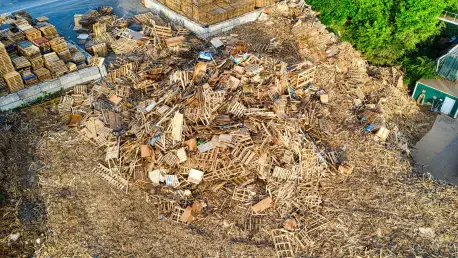

While 100 percent unblended sustainable fuel has already powered commercial flights, the challenge shifts toward achieving scalable and profitable manufacturing levels. Currently, the aviation industry contributes approximately 2 to 3 percent of global carbon emissions, yet sustainable aviation fuel, often abbreviated as SAF, accounts for less than 1 percent of the total fuel consumed worldwide. This stark disparity stems primarily from the high overhead costs associated with existing production methods and a general scarcity of technologies that can handle diverse feedstocks efficiently. However, a significant chemical breakthrough from researchers at the Chinese Academy of Sciences Shanghai Advanced Research is now poised to alter this landscape significantly. By developing an innovative cobalt-manganese catalyst capable of converting agricultural and forestry waste into high-quality kerosene, the scientific community has finally found a way to bridge the gap between environmental goals and financial reality.
Technical Innovation: Refining the Fischer-Tropsch Process
The core of this recent innovation lies in the specific ability of the catalyst to refine and stabilize the Fischer-Tropsch synthesis process, which has traditionally been plagued by efficiency issues. In industrial chemistry, engineers often face a difficult trade-off where attempts to increase the reaction speed lead to the production of unwanted byproduct gases instead of the specific heavy hydrocarbons required for jet engines. By supporting a unique cobalt-manganese catalyst on etched Beta zeolites, the researchers created a sophisticated material that optimizes both the processing speed and the final product selectivity. This molecular engineering allows the reaction to occur under more controlled conditions, ensuring that the carbon chains formed during the process are the correct length for aviation fuel. This precision prevents the waste of energy and raw materials that typically occurs when producing lower-value gases like methane or ethane during the conversion of biomass into liquid energy.
In controlled laboratory environments, the performance of this specific catalyst was remarkable, converting nearly 83 percent of carbon monoxide while ensuring that over 67 percent of the resulting hydrocarbons fell precisely within the range needed for high-performance aviation applications. This level of selectivity is essential because it minimizes the need for secondary refining steps, which are often the most expensive part of the fuel production cycle. By narrowing the output to the desired kerosene fractions from the outset, the CAS team reduced the complexity of the entire manufacturing chain. Furthermore, the use of manganese alongside cobalt helps to mitigate the formation of carbon deposits that usually clog industrial reactors, extending the lifespan of the catalyst significantly. This chemical stability ensures that the production process can run continuously for longer periods, which is a prerequisite for any technology aiming to replace established petroleum-based refinery systems.
Commercial Viability: Industrial Scaling and Economic Strategy
One of the most promising aspects of this technology is its proven durability and its potential for real-world application in varied industrial settings. The catalyst exhibits a high tolerance for carbon-dioxide-rich feeds, which means it can process unrefined synthesis gas derived directly from woody biomass without requiring expensive pre-treatment phases. This robustness was rigorously confirmed during a massive 1,000-tonne pilot test, where the catalyst produced over 5.15 grams of liquid product per gram of cobalt every hour. A commercial-scale facility planned for the Sichuan province is already projected to be fully operational by 2028. This specific plant is expected to produce roughly 100,000 tonnes of fuel annually, generating approximately $302 million in revenue against estimated operating costs of only $114 million. Such figures result in a staggering gross profit margin of approximately 55 percent, a metric that could finally incentivize widespread adoption and investment within the competitive private sector.
The path forward required a coordinated effort to establish localized biomass collection networks to supply the burgeoning number of biorefineries across the globe. Stakeholders focused on standardizing the catalyst manufacturing process to ensure consistent fuel quality across different production sites, which was vital for airline safety certifications. Policy frameworks began to shift away from simple carbon taxes toward providing infrastructure grants that facilitated the construction of similar plants in forestry-rich regions. This approach allowed the aviation sector to decouple its growth from carbon intensity while simultaneously creating new jobs in rural areas focused on waste management and chemical processing. The industry also conducted rigorous testing of the fuel in various climate conditions to verify its performance during extreme temperature fluctuations typical of high-altitude flight. By the time these facilities reached peak capacity, sustainable aviation was finally a viable reality.